Blog/Essay
The best albums of 2006 aren't the ones 2006 picked
Twenty years on, the year's consensus list and the year's surviving records barely overlap. That gap is the interesting part.
Riffiter6 min read
2006 was the last year music circulated mainly through mp3 blogs, MySpace pages and message boards rather than streaming playlists. Spotify was incorporated that April but did not launch until October 2008. Twenty years later, the albums from 2006 that people still play are largely not the ones the year's critics ranked highest.
Go and read a best-of-2006 list written in December 2006. Then look at what people actually still listen to from that year. The overlap is thinner than you'd expect, and the reason isn't that the critics were stupid. It's that 2006 was the last year the machinery for finding music was built out of humans, and the machinery that replaced it sorted the decade's records again, on different criteria, without telling anybody.
Some dates. Spotify was incorporated in Stockholm in April 2006 and did not open to the public until October 2008. In the meantime, the way a record reached you was a chain of people: an mp3 blog, a forum thread, a MySpace page, a friend's LimeWire folder, a Last.fm neighbour whose taste you'd decided to trust. Slow, uneven, biased toward whoever wrote loudest. It also had a memory, which the algorithm doesn't.
The year the pipe changed
Two chart events from 2006 mark the hinge better than any album does.
On 8 April, "Crazy" by Gnarls Barkley entered the UK singles chart at number one on download sales alone, 31,703 of them, a full week before the CD existed. The chart rules had just been rewritten to allow it. It then sat at number one for nine straight weeks, which nothing had done since 1994.
And in January, a band from Sheffield who had spent two years handing out demos that fans ripped and reposted put out their first album.
Whatever People Say I Am, That's What I'm Not sold 363,735 copies in its first week, the fastest-selling debut in British chart history at the time, beating a record set by a manufactured TV pop group five years earlier. Nobody at a label had engineered it. The distribution had happened sideways, through kids with broadband, and the industry spent the next two years trying to reverse-engineer a thing that had already stopped being repeatable.
What the year said was best
Pitchfork, at roughly peak influence, put The Knife's Silent Shout at number one on its 2006 list.
That has held up completely, which is worth saying, because I'm about to be rude about consensus. Silent Shout still sounds like it was beamed in from a colder planet, and the two Swedish siblings who made it went on to be far stranger.
The other pillar of the year's critical consensus was harder to argue with then and impossible now.
Ys came out on Drag City on 14 November: five songs, seven to seventeen minutes each, harp and voice recorded by Steve Albini, orchestrated by Van Dyke Parks, mixed by Jim O'Rourke. It reached 134 on the Billboard 200 and effectively closed the book on the freak-folk moment it emerged from — we mapped that scene in our freak folk guide, and Ys is the point where it stops being a scene and becomes one person's life's work.
So the year got its two biggest calls right. Where it went wrong was everything underneath them.
What actually survived
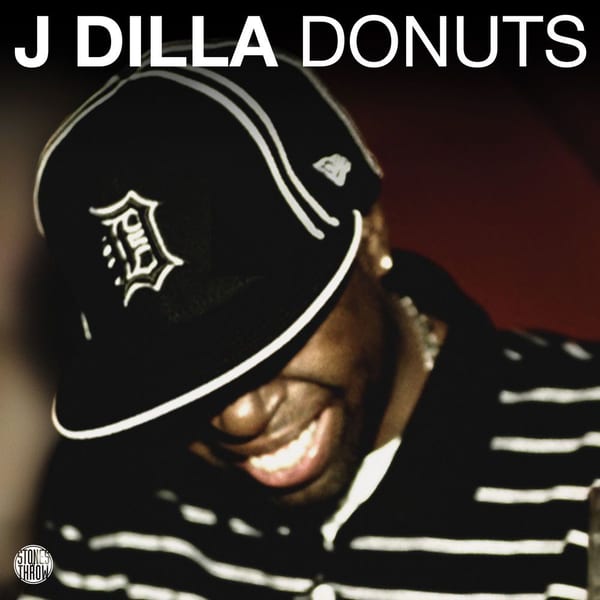
The most important record of 2006 was released on 7 February, on J Dilla's 32nd birthday, and he died three days later.
Donuts is 31 instrumental fragments, most of them under two minutes, assembled largely in a hospital bed. In February 2006 it was a producer's record for producers. It is now one of the most quoted albums in any genre, taught, sampled, imitated by people who have no idea they're imitating it, and the reason a specific kind of woozy off-grid drum programming exists at all. Almost no year-end list in December 2006 had it near the top. Every retrospective since has.
Or take Clipse, who spent three years locked in a contract dispute with Jive and came out the other side in November with the coldest rap album of the decade.
Hell Hath No Fury got the reviews and sold badly, because by then the mixtape audience that had kept the Thornton brothers alive was not the audience the label knew how to reach. It has aged into something close to untouchable. Pharrell's beats on it are barely there, all negative space and snare, and Pusha T has spent twenty years being measured against his own verses on it.
And then the records that were essentially invisible.
Wolves in the Throne Room's Diadem of 12 Stars came out on Vendlus, a tiny label, made by two brothers on a farm in Washington who talked about ecology more than Satan and were treated as suspicious for it. It seeded a whole American branch of black metal; we wrote about it at twenty. Burial's self-titled debut, out in May on Hyperdub, was a niche dubstep 12-inch buyer's record before it became the sound of a decade of rainy-night music. Georgia Anne Muldrow's Olesi: Fragments of an Earth landed on Stones Throw in August and is now the hinge in the whole neo-soul story, which we lay out in the essential albums.
None of those were 2006's story in 2006. All of them are 2006's story now.
Why the gap exists
Critics in December 2006 were ranking what had reached them, and what reached them travelled through a network of writers who mostly read each other. That network had blind spots with an accent: it was good at art-pop and indie rock, bad at metal, uneven on rap, and slow on anything that came out in the fourth quarter.
The thing that replaced it has different blind spots, but it also has a brutal virtue. Twenty years of people voluntarily pressing play is a harder test than one December of people voting. Donuts won that test. Most of the 2006 mid-list did not, and you can watch the same sorting happen to the year across our own catalogue: the 2006 records with the most ratings on this site are not a list any magazine published.
There's a version of this argument that ends with "trust the crowd, not the critics," and I don't believe that either. The crowd took twenty years to work out what a dying producer had done in a hospital bed. It just got there eventually, which is more than any single December can manage.
We've been going back through 2006 one album at a time: The Eraser, The Trials of Van Occupanther, Rather Ripped, The Drift. Rate the albums above and tell me what the year missed. I want the record nobody wrote about in 2006 that you've never stopped playing since.
Discussion
Disagree? Have a better record in mind? Say it — top takes rise.
Sign in to join the discussion.
No one's weighed in yet. Go first.