Blog/Deep Dive
The Trials of Van Occupanther at 20: Midlake's flight into a past that never happened
In 2006, a band of Texas jazz students made a Fleetwood Mac record about a fictional 19th-century recluse. It found a small, devoted cult and never let go of it.
Riffiter4 min read
The Trials of Van Occupanther, Midlake's second album, was released on July 25, 2006, on Bella Union. A warm, analog homage to Bob Welch-era Fleetwood Mac and 1970s soft rock, built around invented 19th-century characters, it became a slow-burning cult favorite and arrived two years ahead of the harmony-folk revival it's rarely credited for.
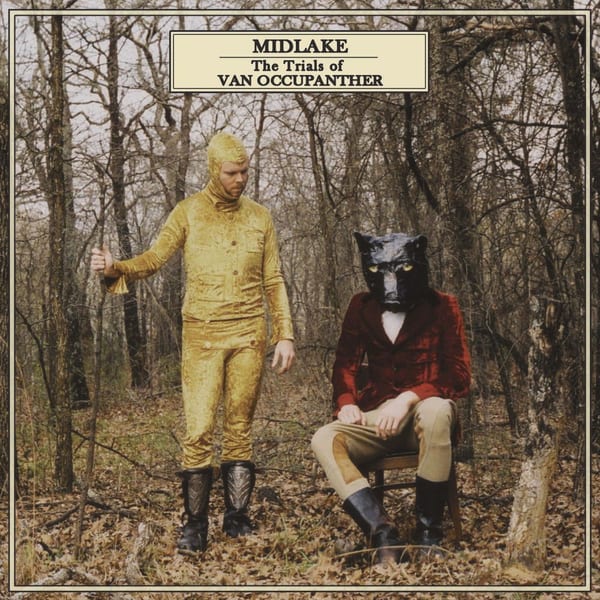
In the summer of 2006, five men who had trained as jazz musicians at a Texas conservatory put out an album that sounded like it was cut in a cabin in 1974. No irony, no wink. The Trials of Van Occupanther landed on Bella Union on July 25, 2006, and it wanted, openly and a little desperately, to be a Fleetwood Mac record from the years nobody talks about. Twenty years later it has the sort of following that outlives trends. Quiet, stubborn, faintly protective of a record it feels like it discovered alone.
Jazz students who wanted to be a bar band
Midlake formed in Denton in 1999, a college town north of Dallas built around the University of North Texas and its famous jazz program. That's where the members met, and on paper they had every reason to make fusion. Frontman Tim Smith, who wrote all of these songs, has said the jazz training is exactly why the band ends up sounding the way it does, even when the surface has nothing to do with jazz.
The first album pointed somewhere else entirely. Bamnan and Slivercork (2004) is a woozy, Mercury Rev-adjacent psych-pop record, all playroom textures and processed vocals.
It's charming and a little weightless, and it gives almost no warning of what came next. Somewhere between the two records the band fell down a hole. By Smith's own account, while they were making Van Occupanther the studio was ringed with old vinyl and 1970s music was more or less all they listened to: Fleetwood Mac, Jethro Tull, Neil Young, Joni Mitchell. You can hear every one of them.
The warmest sound of 2006
Forget the indie of the mid-2000s for a second. Van Occupanther has no angularity, no dance-punk twitch, none of the decade's nervous energy. It has Wurlitzer and Rhodes, close vocal harmonies stacked like a campfire choir, and the loose, live warmth of a band playing in a room together. The reference everyone reached for at the time, correctly, was the Bob Welch years of Fleetwood Mac, the soft and slightly melancholy stretch before Rumours turned them into a stadium.
The door into all of it is "Roscoe," the lead single and still the best thing they ever recorded. That opening keyboard figure, the way the harmonies bloom on the chorus, the odd little lyric that drops the year 1891 as if it were a street address. Rolling Stone later ranked it number 90 on its list of the hundred best songs of the 2000s, which felt low then and feels low now.
A record about missing a life you never lived
Here is the part that keeps Van Occupanther from being a fond genre exercise. Van Occupanther is a made-up person, a recluse who wanders through the album's edges, and the songs around him are set in a vague pre-industrial past of mountains, villagers, chopped wood, and hard weather. It could have been costume-drama kitsch. Instead it aches. The record isn't nostalgic for the 1970s so much as it uses the 1970s to be nostalgic for something older and imaginary, a simpler existence the narrator knows he'll never have and can't stop reaching for.
That's why it sits so comfortably alongside the records in our yearning guide. This is a whole album about longing for what you can't name, dressed in flannel and Rhodes piano. The homesickness is for a home that never existed.
They got there first
The other reason to keep arguing for this album is a matter of timing. Fleet Foxes released their self-titled debut in 2008 and a wave of harmony-drenched, pastoral, beard-and-flannel folk-rock followed it across the next few years. Midlake had already made that record. Two years early, out of Texas, and mostly out of the conversation once the trend had a face that wasn't theirs. Their cult ran deepest in the UK, where Bella Union was based and where the band toured hardest, and it never really spread as wide as the music deserved.
What happened after
The band chased the mood down a darker path. The Courage of Others (2010) traded American soft rock for wintry British folk, closer to Fairport Convention and Pentangle, and it's a genuinely good record that gets unfairly filed as the lesser sequel.
Then it broke. In 2012, deep into recording a fourth album, Tim Smith left to start a new project, later called Harp. Rather than split the material, Midlake threw out two years of recordings and started over, with guitarist Eric Pulido stepping up to sing, and finished Antiphon in roughly six months. They're still going. But Van Occupanther is the one people come back to, the record that turns a casual listener into someone who owns it on vinyl and gets quietly defensive about it.
Twenty years on, that's the whole appeal. It's an album that chose warmth over cool at exactly the moment cool was winning, and it has aged into something a lot of people love in private. Rate it below and make the case. Is it Midlake's peak, or is The Courage of Others the one that got robbed? And did they, or did they not, beat Fleet Foxes to the whole thing?
Discussion
Disagree? Have a better record in mind? Say it — top takes rise.
Sign in to join the discussion.
No one's weighed in yet. Go first.