Blog/Deep Dive
Rather Ripped at 20: Sonic Youth's quiet goodbye to the major label
Twenty years on, the band's most approachable record looks less like a soft landing and more like the smartest exit in their catalog.
Riffiter4 min read
Rather Ripped, released June 13, 2006 on Geffen, was Sonic Youth's tenth and final major-label album — twelve tight songs, no noise jams, and the warmest playing of their career. Two decades later it reads as a deliberate, graceful end to their major-label run rather than a sellout.
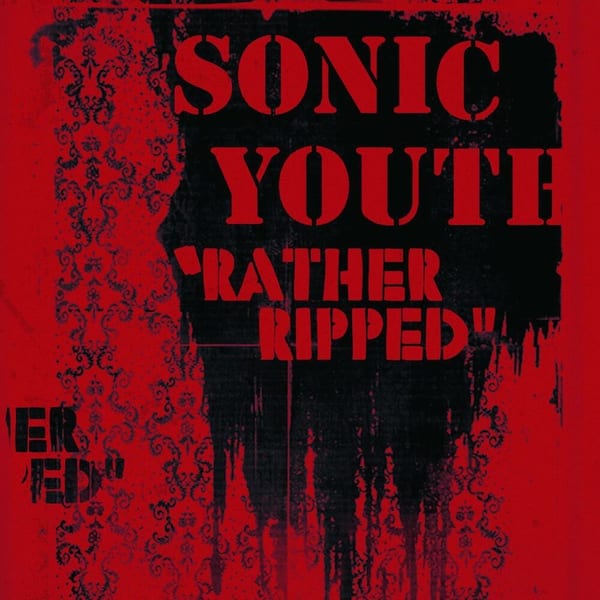
Sonic Youth spent thirty years training their audience to expect a fight. Feedback as a love language, tunings nobody else used, twenty-minute structures that fell apart on purpose. So when Rather Ripped arrived on June 13, 2006 — twelve songs, forty-three minutes, hooks where the noise used to be — a lot of longtime fans treated it like a betrayal. Two decades on, it's clear they had it backward. This is one of the smartest records the band ever made, and the calm at its center was a choice, not a surrender.
A band traveling light
The story starts with a departure. Jim O'Rourke had spent 1999 to 2005 as Sonic Youth's fifth member, thickening their sound and pulling them toward the long, drifting structures of Murray Street and Sonic Nurse.
When O'Rourke left in 2005 to chase film work, the band didn't recruit a replacement. They went back to the quartet — Thurston Moore, Kim Gordon, Lee Ranaldo, Steve Shelley — and into Sear Sound in December, recording fast with John Agnello and barely reworking anything. You can hear the lightness. After a run of dense, exploratory albums, Rather Ripped sounds like four people who decided to stop overthinking and just play the songs.
And the songs are real songs. "Incinerate" opens with a riff that would have embarrassed the band who made Confusion Is Sex, and it's all the better for it — a love-as-arson metaphor delivered over a hook you can actually carry around. "Reena" struts. "What a Waste" snaps. Nothing on here is afraid to be catchy, which from this band was its own kind of nerve.
The Kim Gordon record
The other thing that's aged beautifully is how much room Gordon gets. "Reena" and "Jams Run Free" are hers, and she sings them with a deadpan cool that cuts harder than any scream. There's a clear line from the detachment she's working here to the colder, more mechanical post-punk we just mapped in the coldwave canon — flat affect as its own kind of power. By 2006 Gordon had been doing it for a quarter-century, and on Rather Ripped she sounds like she knows exactly how much she can get away with by underplaying.
Moore and Ranaldo, meanwhile, spend the album proving they never actually needed the noise to be interesting. The guitar interplay is gorgeous and restrained, the texture work patient — closer to the shimmer of the bands in the new shoegaze than to the skronk of their own youth. "Pink Steam" builds for four minutes of pure instrumental drift before Moore even shows up to sing, and it's the most romantic thing in their late catalog.
Why "selling out" was always the wrong frame
Here's the context the 2006 reviews mostly missed: Rather Ripped completed Sonic Youth's contract with Geffen, the label that had put out the previous eight Sonic Youth albums going back to Goo in 1990.
The major-label deal was the great experiment of the band's middle age — the one that let an avant-garde noise group from downtown New York spend sixteen years on a corporation's dime making whatever they wanted, including a $300,000 art project like Washing Machine.
Rather Ripped is the sound of that experiment ending on the band's own terms. Not a cash grab, not a creative collapse — a clean, confident, deliberately accessible record that closed the Geffen chapter with grace. They followed it with The Eternal in 2009 on Matador, back in the indie world where they started.
And then, in 2011, Moore and Gordon's marriage ended, and so did the band. Which makes Rather Ripped the last Sonic Youth album made by people who still had something left to say to each other. It's tender in a way none of their other records are, and you can hear, in hindsight, that the warmth was real.
Twenty years later
Time has been kinder to Rather Ripped than the discourse was. It's still underrated against the wall of Daydream Nation and Sister, and it probably always will be — accessibility rarely wins the long argument with difficulty.
But put it on now, with no expectation that Sonic Youth owe you a fight, and it plays like exactly what it is: a great band traveling light, saying goodbye to an era, and getting every note right on the way out.
Where does Rather Ripped land in your Sonic Youth ranking — late-career gem or pleasant footnote? Rate it above and make your case in the comments.
Discussion
Disagree? Have a better record in mind? Say it — top takes rise.
Sign in to join the discussion.
No one's weighed in yet. Go first.