Blog/Deep Dive
Burial at 20: the cold debut everyone skips on the way to Untrue
Before the diva ghosts of Untrue, there was a colder, lonelier record. Twenty years on, the self-titled debut is the one I reach for.
Riffiter4 min read
Burial, the self-titled 2006 debut by the anonymous South London producer William Bevan, came out on Kode9's Hyperdub label and was named record of the year by The Wire. Overshadowed by 2007's Untrue, it is the colder, more skeletal record: an elegy for UK rave built from 2-step garage, dub, vinyl crackle and field recordings. This is the case for the debut at 20.
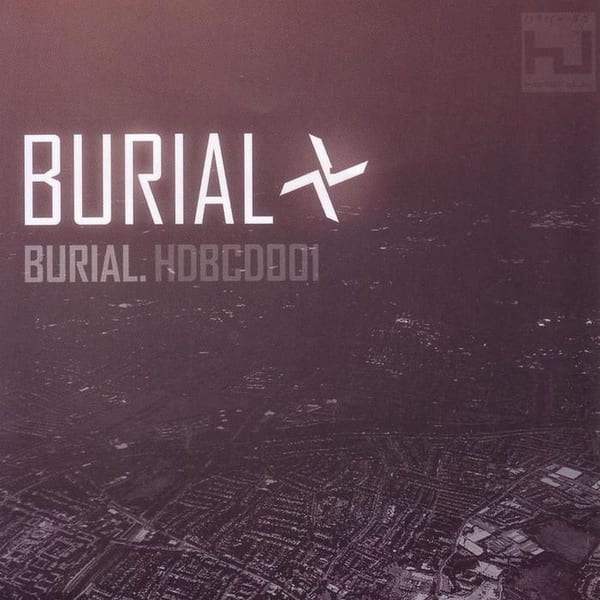
Some debuts announce a talent. Burial announced a place. Twenty years on it still sounds like 4am on the last night bus across South London, and it still does the one thing its more famous sequel never quite manages: it leaves you out there alone.
That sequel is the problem. Untrue (2007) got the Mercury Prize nomination, the think-pieces, and the chopped, pitched vocals that launched a thousand imitators. It is, fairly, one of the most loved electronic records of the century. It has also quietly turned its older sibling into a warm-up act, the thing you nod at on the way to the good stuff. That reading is wrong. The self-titled debut is the colder, stranger, more finished record, and the one I keep coming back to.
Croydon, four in the morning
Released on 15 May 2006 as HDBLP001, Burial was only the second album on Hyperdub, the label run by Kode9, the writer and producer Steve Goodman. Dubstep was barely a year old as a named thing, still mutating out of the South London garage scene in dark clubs and pirate-radio slots. Most of it was concerned with weight: how low the bass could drop, how hard a room could shake.
Burial was after something else entirely. He took the skipping, syncopated pulse of 2-step garage, the music he'd grown up taping off the radio, and drained the joy out of it. What's left is the comedown, the rave remembered from years later by someone who can't go back. The Wire named it the record of the year, and the producer behind it stayed completely anonymous until 2008, when the press finally pinned a name on him: William Bevan. The mystery was never a gimmick. It kept the focus where it belonged, on a city at night rather than a guy at a laptop.
Made by hand, on purpose
Part of why the debut sounds the way it does comes down to how it was built. Bevan didn't use a proper studio setup with a sequencer grid. He worked in a basic stereo audio editor, lining up sounds by eye against a waveform instead of locking them to a click. That is why the beats lurch and stumble the way they do, always slightly ahead of or behind where a machine would put them. The whole record breathes wrong, on purpose, and it makes the rhythms feel human in a way quantised drums never will.
Around the beats he stacked field recordings: rain on pavement, the flick of a lighter, snatches of speech, vinyl crackle thick enough to be its own instrument, samples lifted from films and games and slowed into ghosts. Nothing is clean. Everything sounds like it was found rather than made.
The sound of an empty city
Listen to "Distant Lights" or "Southern Comfort" and you get the template: a vocal sample, female and pitched until it's unreadable, floating over a half-collapsed garage shuffle and a bassline that hums more than it hits. Then there's "Night Bus," ninety seconds of piano and rain with no drums at all, which might be the truest thing here. The debut is full of those gaps, stretches where almost nothing happens and the dread does the work.
The seeds were already there a year earlier. The South London Boroughs EP (2005) sketched the same nocturnal, water-damaged garage, but the album is where it became a world rather than a mood.
What Untrue did, and didn't
To be clear, Untrue is a great record. It is also a warmer one.
The leap on the 2007 album was the voice. Bevan started chopping soul and R&B vocals into little gasped hooks, pitching them up and down until they read as neither man nor woman, then building whole songs around their ache. It reaches for you. It wants you to feel held, and it mostly succeeds, which is why it's the one that broke through.
The debut doesn't reach for anyone. It's emptier and more willing to sit in silence, and it never offers the comfort of a hook you can hum. Where Untrue mourns, the debut just haunts. One is about loss; the other is the cold spot in the room.
Twenty years of weather
Bevan kept moving after this. The EPs piled up, the tracks stretched past ten minutes, the structures dissolved.
Rival Dealer (2013) traded the gloom for something almost euphoric, a refusal to be the sad-rave guy forever. But everything he's done since runs back to the debut: the swing built by hand, the crackle, the conviction that electronic music could carry real grief without a single sung word.
You can hear its fingerprints all over the last two decades of rainy, nostalgic, half-remembered dance music, the same hardcore-continuum hauntings traced in our jungle revival guide. Plenty of records have copied the surface. None have matched the loneliness.
So here's the argument, and the comments are for settling it: debut or Untrue? Rate them both below, and tell me whether the colder record really is the better one, or whether I've just spent too many night buses agreeing with myself.
Discussion
Disagree? Have a better record in mind? Say it — top takes rise.
Sign in to join the discussion.
No one's weighed in yet. Go first.