


Guides/A Riffiter guide
Where to start with Fela Kuti: 19 albums, two songs at a time
Close to fifty LPs, most of them two tracks long, half of them named after whoever had just raided his house. Here is the road in.
Fela Kuti released close to fifty albums between 1969 and 1992, and most of them hold two songs, one per side of the LP. This guide picks 19 of them and puts them in a listening order: Zombie (1976) and Expensive Shit (1975) first, then the Africa 70 run of 1972 to 1977, then the slower Egypt 80 records of the 1980s.
Almost nobody bounces off Fela Kuti's music. They bounce off his catalog. Open it and there are close to fifty titles, several named after whichever branch of the Nigerian state had most recently raided his house, and a good number listed twice because the CD reissues glued two LPs onto one disc around 2000 and streaming inherited the mess.
The format is simple once somebody says it out loud. A Fela album is two songs, one per side, twelve to fifteen minutes each. The groove runs four or five minutes with no singing at all, the horns arrive, and only then does he start talking. Skipping the intro means skipping the album.
One more thing, and it sorts the discography better than any chronology can: Tony Allen played the drums until 1979. He wrote the beat the whole genre still runs on, he left over money, and after he left the records got longer and heavier and a lot less funky. What follows is a listening order rather than a ranking. Get to entry ten and you will know whether you want the other thirty.
- 1
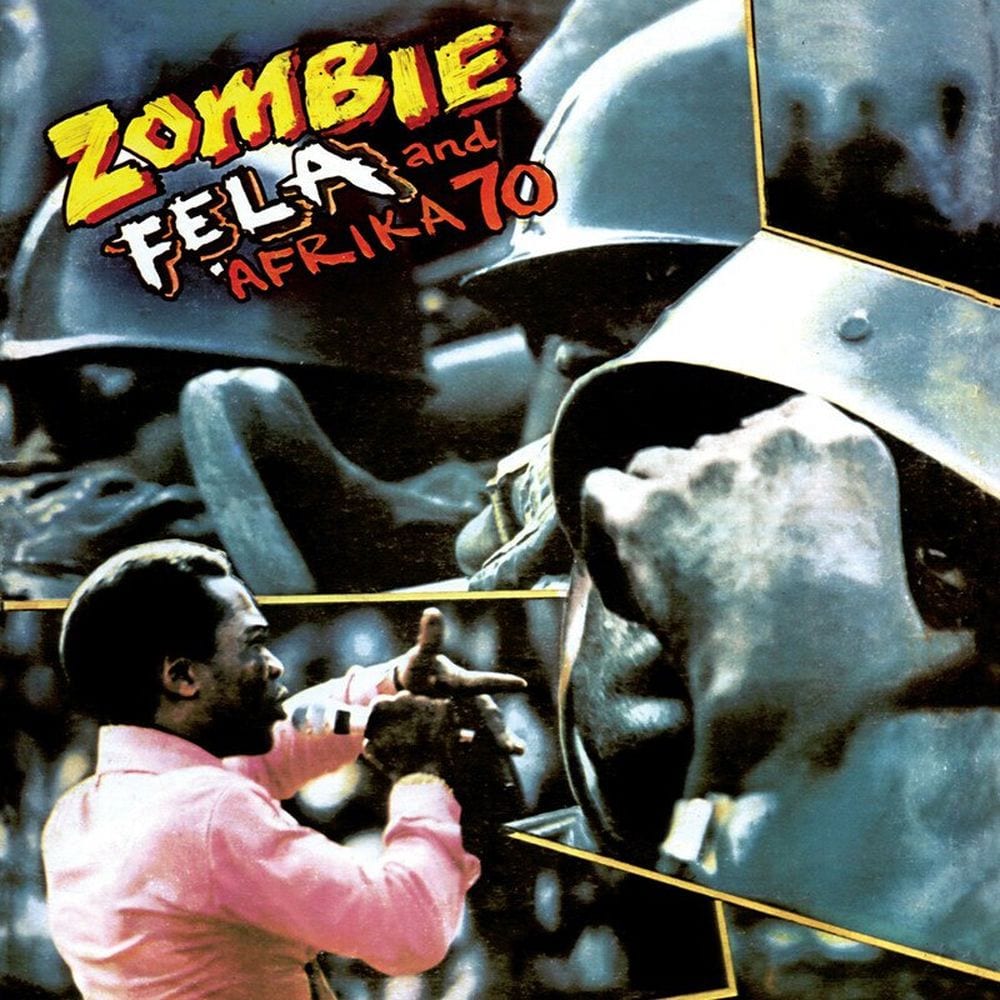
Zombie
★ 3.5 · 1Start here, because nothing else he made lands this fast. Coconut pressed it in Nigeria in 1976 and Creole put it out in the UK the year after; two songs, about 25 minutes. The title track calls Nigerian soldiers the walking dead taking orders, the horn line is the most quoted thing he ever wrote, and in February 1977 the army came over his fence and burned the compound down. Not many records get answered by a thousand troops.
- 2
Expensive Shit
Be the first to rateThe title comes from 1974, when police planted a joint on him, he swallowed it, and they held him at Alagbon waiting for the evidence to reappear. A cellmate supplied a substitute and he walked. The music ignores all of that: Tony Allen's hi-hat and Fela's electric piano lock together for a quarter of an hour, and side two is Water No Get Enemy, the most covered song in the catalog. Sounds Workshop and Editions Makossa, 1975.
- 3

Gentleman
Be the first to rateEMI, 1973, the year Igo Chico quit and left Fela to cover tenor saxophone and electric piano himself. He solos for most of the title track before a word arrives. The sleeve puts a monkey's head on a suited body, and the song spends fourteen minutes on the same joke: the African man sweating inside a European costume.
- 4

Roforofo Fight
Be the first to rateFour songs instead of two, which makes it the friendliest of the early Africa 70 records. Jofabro pressed it in Nigeria in 1972. Trouble Sleep Yanga Wake Am is the nearest he came to a ballad, and Go Slow spends seventeen minutes inside a traffic jam. The 2001 CD adds two Nigerian 7-inch sides, Shenshema and Ariya, both worth having.
- 5
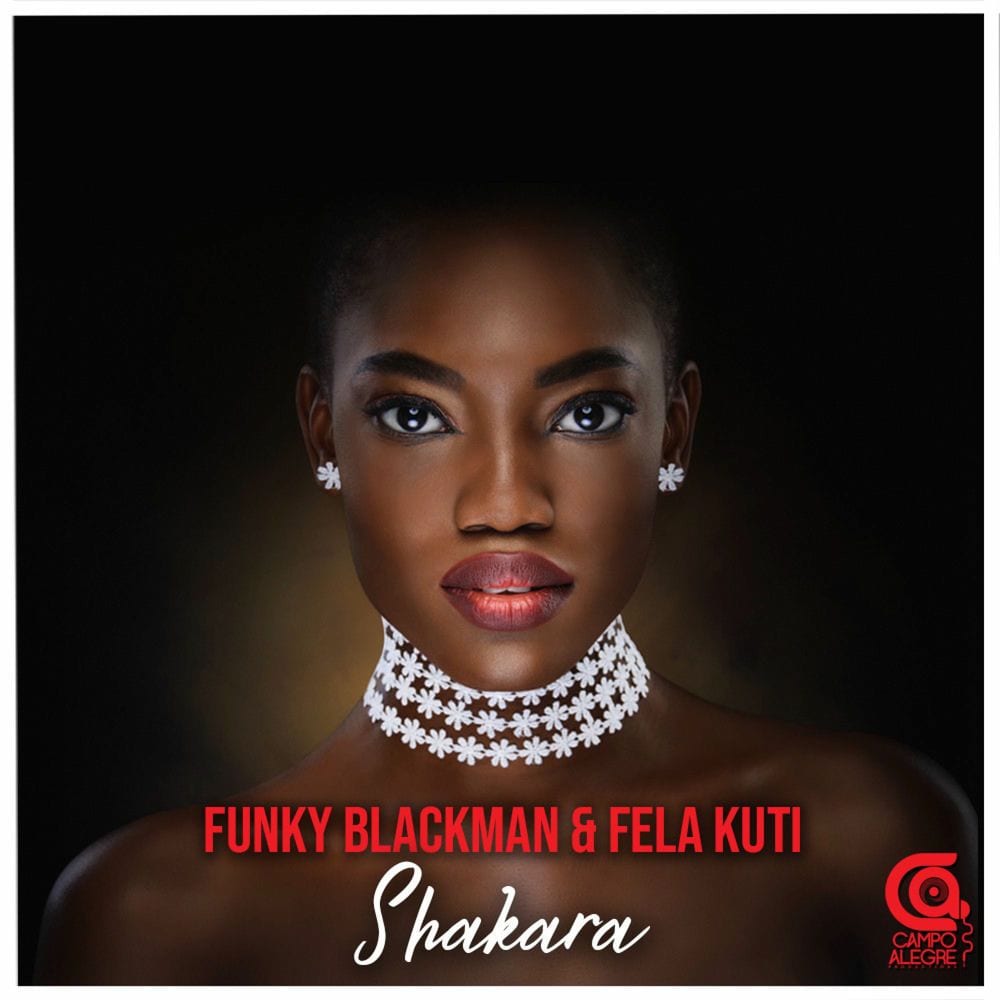
Shakara
Be the first to rateTwo songs, EMI, recorded in Lagos in 1972. Lady is a sermon aimed at Nigerian women who want to be treated as ladies, and it also carries the happiest bassline he ever cut, which quietly ruins the sermon. Play it for anyone who thinks political music has to be joyless.
- 6

Confusion
Be the first to rateIt opens with Fela's electric piano and Tony Allen alone, no band, for minutes on end, and it is the clearest evidence anywhere of what those two heard in each other. Then the horns walk in. EMI, 1975, and the subject is Ojuelegba junction: several languages, several currencies, no traffic policeman. Robert Christgau said it was the one Fela track it would be a waste to edit, and he was right.
- 7

He Miss Road
Be the first to rateGinger Baker produced this one and you can hear him reaching for a different record. The mix is dry and skeletal, the keyboards are tweaked, the horns sit at odd angles. EMI, 1975, three tracks, no padding. Hand it to anybody who tells you afrobeat is all one texture.
- 8

Afrodisiac
Be the first to rateRecorded at Abbey Road in 1972 with Jeff Jarratt producing, out in 1973. It carries Chop and Quench, the single that cleared 200,000 copies in Nigeria and turned him from a club act into a national figure. It is also the Fela record people trace forward when they explain where Talking Heads got Remain in Light.
- 9

Alagbon Close
Be the first to rateNamed after the Lagos headquarters of the Criminal Investigation Department, where he was held in 1974 after two police raids on his house. His cellmates called their cell the Kalakuta Republic and he liked the name enough to give it to his home. This is the first record on which he goes after the state directly, by address. Everything political that follows runs out of it.
- 10

No Agreement
Be the first to rateDecca Nigeria, 1977. Lester Bowie of the Art Ensemble of Chicago was staying in Lagos around FESTAC and ended up in the horn section on four Africa 70 albums. His solo on Dog Eat Dog is the strongest argument going that this was a jazz band with a political singer attached, not a funk band with horns.
- 11
Sorrow Tears and Blood
Be the first to rateOn 18 February 1977 around a thousand soldiers attacked the Kalakuta compound. This is what came next, released on his own Kalakuta label, and the shock of it is how quiet it is: mid-tempo, saxophone unhurried, exhausted rather than furious. Colonial Mentality takes the second side and turns the accusation around to face the audience.
- 12
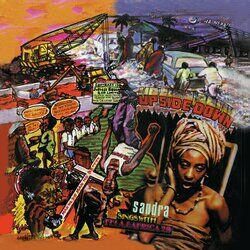
Upside Down
Be the first to rateSandra Izsadore sings lead. She met Fela in Los Angeles in 1969, put Malcolm X and the Black Panthers in his hands, and is the reason his lyrics stopped being about romance. She came to Lagos and cut this with Africa 70 in 1976. Anyone arguing about who invented afrobeat has to account for her.
- 13
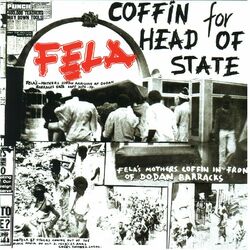
Coffin for Head of State
Be the first to rateSoldiers threw his mother Funmilayo from a window during the 1977 raid and she died the following year. On 30 September 1979 he marched a coffin across Lagos to the head of state's residence at Dodan Barracks and left it there. The record, Kalakuta, 1981, is a single 22-minute piece played twice, vocal on one side and instrumental on the other. The first half is about what Christianity and Islam did to the country and the second half is the march itself.
- 14

I.T.T. (International Thief Thief)
Be the first to rateITT was International Telephone and Telegraph, whose Nigerian chief was Moshood Abiola, who also owned Decca, which was Fela's label. He spends 24 minutes in 1980 calling Abiola and General Obasanjo thieves by name. Musicians insult record executives all the time; almost none of them do it for the length of a side, in Lagos, while still signed.
- 15

Fela's London Scene
Be the first to rateEMI, 1971, cut at Abbey Road with Ginger Baker sitting in beside Tony Allen. You can still see the seams here: highlife horns and a rhythm section studying James Brown, with grooves that have not yet stretched past ten minutes. AllMusic dates the start of his great run to this album, which is about right.
- 16
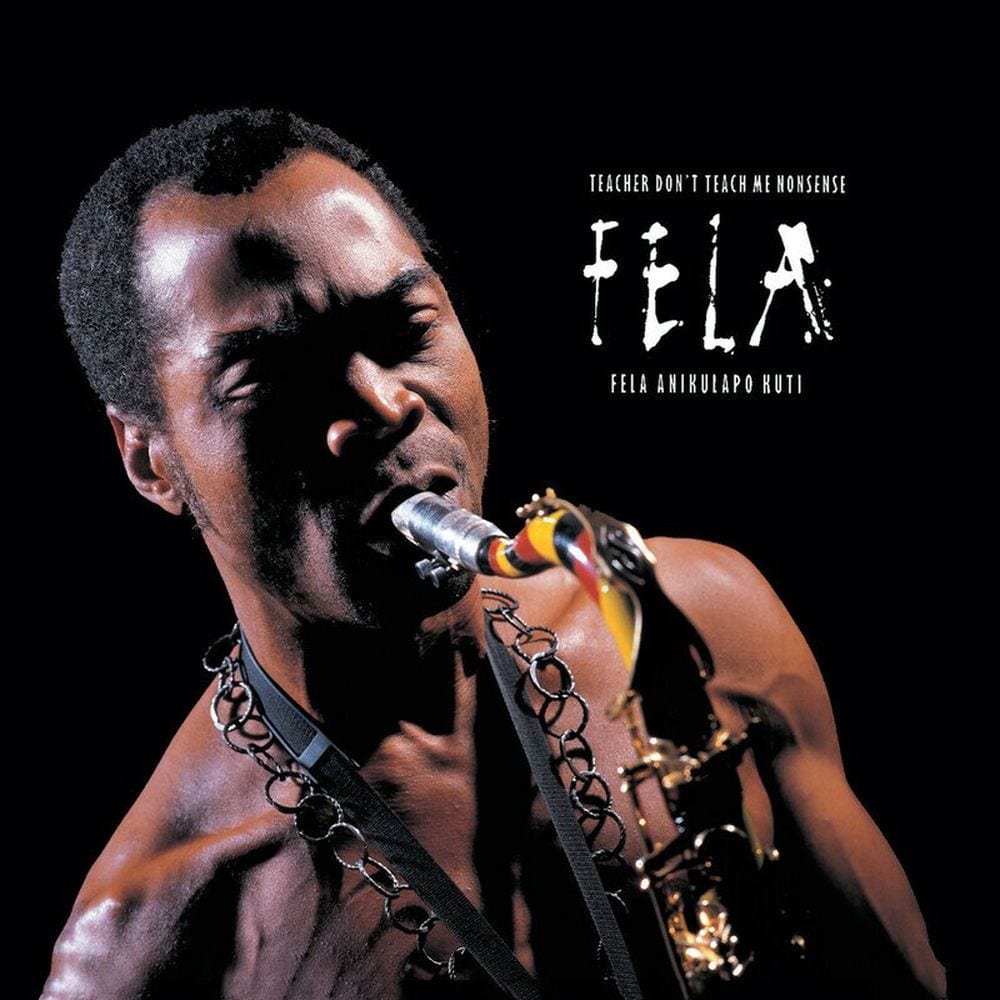
Teacher Don't Teach Me Nonsense
Be the first to rateEgypt 80, produced by Wally Badarou at Studio Davout in Paris, 1986. He had walked out of Kirikiri prison months earlier after twenty months on a currency charge nobody outside the government believed. Two tracks, 56 minutes, everything slower and grander than the Africa 70 years. Look and Laugh is where he finally sings about his mother, and it takes him half an hour to get there.
- 17
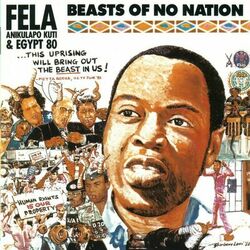
Beasts of No Nation
Be the first to rateShanachie, 1989, Badarou again. The sleeve draws Botha, Reagan and Thatcher as horned bloodsuckers, and he had been playing the title song live on his 1986 North American tour before he ever recorded it. Uzodinma Iweala took the phrase for his 2005 novel, which is how most readers under forty meet it first.
- 18
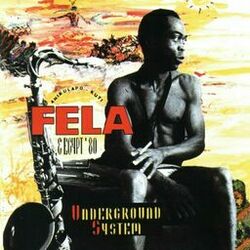
Underground System
Be the first to rateThe last album of new studio material issued in his lifetime, 1992, with Egypt 80 at full size. He died five years later. Late Fela carries a reputation as a slow decline, and this is the record that argues back: the horn writing is thicker than anything from the seventies, even if the songs take four minutes longer than they need to arrive.
- 19
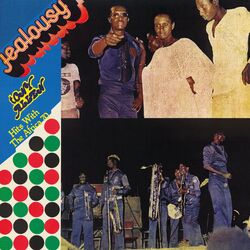
Jealousy
Be the first to rateAllen cut this in Lagos in 1975 with Africa 70 behind him and Fela producing, which puts the credits in the right order for once. If it was the drumming that got you, this is where the second lap starts. Progress followed in 1977 and is nearly as good.

Explore the sound
Artists in this guide
Read next
Gone, not finished: 19 albums that arrived a decade or more late
Ranked by how long the silence lasted, from Linda Perhacs' forty-four years down to Portishead's eleven.
Rock progressivo italiano: 22 albums, and most of these bands only got one
Italy's prog boom lasted about five years, produced a staggering number of records, and left a scene full of one-album bands.
The whole band was one person: 22 albums made alone
Wendy Carlos in a Manhattan apartment, Springsteen in a bedroom, Jane Remover recording guitar one string at a time. Records where a single player covered every part.
Congolese rumba and soukous: a 23-record canon, from Indépendance Cha Cha to the Kinshasa of now
Sixty-five years of dance music from both banks of the river, told through the bands that kept splitting up.
Got your own ranking? Build a list or tier of your own.