

Guides/A Riffiter guide
Kankyō ongaku: a canon for Japanese ambient music
Music built to be half-heard: the Japanese composers who treated ambient as architecture, and the records worth living with.
Kankyō ongaku ('environmental music') is the Japanese ambient and minimalist movement that ran from roughly 1980 to 1990, built by composers like Hiroshi Yoshimura, Satoshi Ashikawa and Midori Takada and pulled back into daylight by Light in the Attic's 2019 compilation. These are the records that define it, from the Wave Notation series to the reissue-era grails.
Kankyō ongaku translates roughly to "environmental music," and the name is the whole idea. Through the 1980s a loose group of Japanese composers wrote music meant to sit inside a space rather than command it, often on commission for museums, showrooms, building lobbies and product launches. They took Erik Satie's "furniture music" and Brian Eno's ambient records as a starting point, then made something quieter and more exact than either.
For years this was a collector's secret, pressed in tiny runs and close to impossible to find outside Japan. That changed in 2019, when Light in the Attic's compilation Kankyō Ongaku, assembled by Visible Cloaks' Spencer Doran, gathered it under one name and picked up a Grammy nomination. Streaming and the YouTube algorithm did the rest.
Below are the records that hold up, ordered to tell the story: the Wave Notation series that started it, the scene that grew up around installation and corporate commissions, and the modern albums that carry it forward. Most are short. All of them reward being left on.
- 1
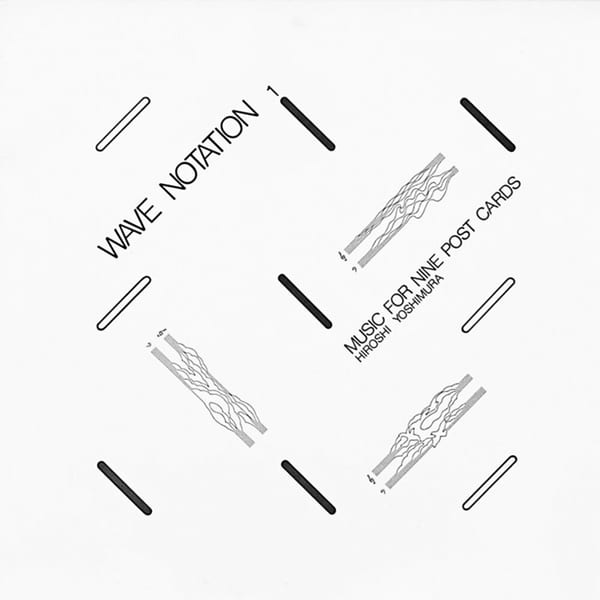
Music for Nine Post Cards
Be the first to rate—The record that starts the story. Yoshimura wrote it in 1982 for the Hara Museum of Contemporary Art, recorded at home on a Fender Rhodes and a single synth, then handed it to Satoshi Ashikawa as the first release in the Wave Notation series. Nothing on it asks for your attention; phrases surface and dissolve like condensation on glass. People reach for Eno's Music for Airports as the obvious cousin, but Yoshimura is colder and more patient, closer to Satie left running overnight.
- 2

Still Way (Wave Notation 2)
Be the first to rate—Ashikawa ran the Sound Process shop in Tokyo and co-founded the label that gave the scene its spine. Still Way, scored for harp, piano, flute and Midori Takada's percussion, is the movement's manifesto in album form: composition stripped to the point where silence does most of the work. It was the only full-length he finished. He died in a car accident in 1983, a year after its release, at thirty.
- 3

Midori Takada: Through the Looking Glass
Be the first to rateThe grail. Takada cut this solo suite in two days at an Aoyama studio in Tokyo, playing marimba, gongs, reed organ and, on one track, Coca-Cola bottles. RCA pressed it in 1983, it sold almost nothing, and for years original copies traded for several hundred pounds among collectors who knew. The 2017 reissue turned it into the record that pulled the whole movement back into view. It still isn't on streaming services, which is part of its legend, so this one points to Takada's catalogue rather than the album itself.
- 4

Kakashi
Be the first to rate—Shimizu came out of the new-wave band Mariah and never sat still inside a genre. Kakashi (1982) is his strangest, warmest record: saxophone, marimba and early sampling folded into pieces that play like folk songs from a country that doesn't exist. It's less austere than the Wave Notation albums and far more playful, proof the scene had plenty of room for personality.
- 5

Commissions: 1977-2000
Be the first to rate—The duo of Makoto Inoue and Yasushi Yamashita came out of the band Hikashu and made music for museum installations and aquariums. Their 1983 debut Danzindan-Pojidon was produced by Haruomi Hosono of YMO; this Light in the Attic set gathers that era of burbling, friendly synth patches in one place. It's the most childlike corner of the canon, and the easiest to fall for.
- 6

Une Collection des Chaînons: Music for Spiral
Be the first to rate—Ojima composed this for the Spiral building in Tokyo, an arts complex designed by Fumihiko Maki, and meant it to play in the lobby and walkways all day. He called the pieces "programmed" rather than performed. It's some of the most genuinely functional music here, written for one specific room, yet it holds up fine on headphones with no room at all.
- 7
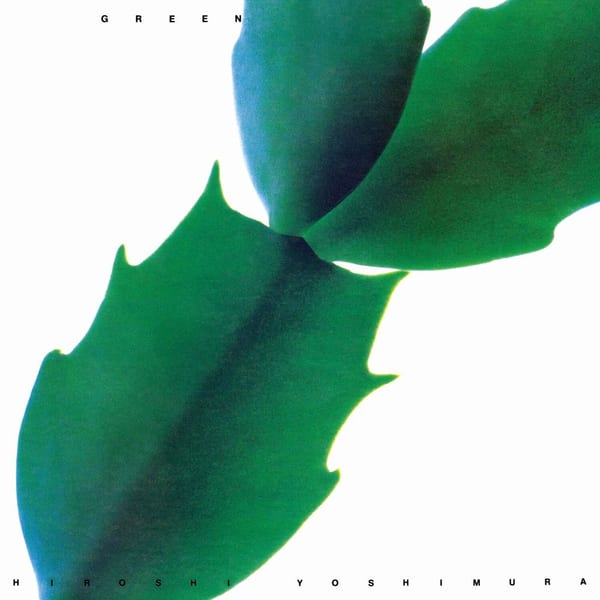
Green
Be the first to rate—Yoshimura's most loved record, and the one the YouTube algorithm adopted in the 2010s and never let go. Recorded over the winter of 1985-86 on a Yamaha FM synth, Green is warmer and rounder than Nine Post Cards, all soft tones and bird-like figures. Original AIR Records pressings have gone for close to four figures. Start here if the word "ambient" usually bores you.
- 8

Sarah's Crime
Be the first to rate—Hinata trained in Western classical music and it shows; his work drifts toward chamber-pop and film-score romance more than pure ambient. Sarah's Crime (1985) carries "Chaconne," one of the most quietly devastating things the scene produced, all aching strings and held piano. This is the entry for people who think ambient has to mean cold.
- 9

Get at the Wave
Be the first to rate—Kokubo is a sound designer who later wrote the earthquake-warning chime heard on millions of Japanese phones. Get at the Wave (1987) was commissioned as a promotional release for an air conditioner, of all things, and it's gorgeous: shimmering, ocean-themed digital ambient with no business being this good. The most charming origin story in the canon.
- 10

Nova
Be the first to rate—Hirose, like Yoshimura, worked in sound design, building environmental music for the model houses of a homebuilding company. Nova is his one proper album from that period, and it's deep, watery and slow, closer to the negative space of dub than to new age. It came back into print in 2019 on the same wave of reissues that rescued the rest of these.
- 11

Notes of Forestry
Be the first to rate—Hamase was a jazz bassist who wandered into ambient through fretless bass and field recording. Notes of Forestry (1988) sets his playing against electronics and birdsong, and it sits at the headier end of the scene, more abstract than Yoshimura, more rhythmic than Ashikawa. A grower, and a favourite of the people who go furthest down this rabbit hole.
- 12

Design
Be the first to rate—Interior were signed to Windham Hill's Japanese arm, which tells you the register: clean, pastel, faintly corporate in the best possible way. Design (1987) pushes their sound toward something brighter and more pop-shaped without losing the calm. Spencer Doran reissued their first album on his Empire of Signs label, which is most of why anyone outside Japan knows the name.
- 13

Jomon-Sho
Be the first to rate—Yas-Kaz was a percussionist who studied gamelan in Bali, and Jomon-Sho (1984) carries that training: ritual rhythm and ringing metal under ambient washes. It takes its name from Japan's prehistoric Jōmon period and it feels ancient on purpose. The most physical record on this list, ambient you can feel in your chest.
- 14
Sakura
Be the first to rate—Proof the tradition didn't die with the eighties. Yokota came up as a techno producer and turned, on Sakura (2000), toward looped strings and tape hiss that owe everything to Yoshimura and Takada. It's the bridge between the original kankyō ongaku and the modern ambient that scrobbles next to it on Last.fm. If the older records are doorways, this is the one that opens onto now.


Explore the sound
Artists in this guide
Read next
Yearning: albums that ache for what they can't name
Not heartbreak, not grief. The other feeling. Records built around a longing with no object.
Made in Sheffield: the steel city's essential albums
Cabaret Voltaire to Arctic Monkeys: how a declining steel town became Britain's strangest, most influential music city.
Ethio-jazz: from Swinging Addis to the global revival
Mulatu Astatke invented it. The Derg curfews nearly buried it. A French reissue series dug it back up. Fourteen records that map Ethiopia's pentatonic golden age and its long second life.
Better than the studio: live albums that became the definitive version
Eighteen records where the concert beat the studio, in the order they were taped.
Got your own ranking? Build a list or tier of your own.