Blog/Essay
Trip-hop got sold as dinner music. The best records are about dread
A genre named by a magazine, disowned by its own artists, and remembered for exactly the wrong thing.
Riffiter5 min read
Trip-hop — the downtempo, sample-heavy sound that came out of Bristol and London in the early 1990s — got flattened in memory into background music. The foundational records, from Massive Attack's Blue Lines to Portishead's Dummy and Tricky's Maxinquaye, are darker and stranger than that: built on dub sound-system culture, cut through with paranoia and comedown.
Say "trip-hop" to most people and they picture a café. Soft beats, a woman singing something wistful, the volume low enough to talk over. Somewhere in the late 1990s the genre got filed under "chillout," pressed onto compilations with sunsets on the cover, and quietly agreed to be furniture.
That is a lie the marketing won. Go back to the records that started it and there's nothing relaxing about them. They're about surveillance, sex as a kind of threat, the grey morning after a long night, a Britain that had stopped believing its own optimism. The best trip-hop is dread music. It just happened to be slow.
A word nobody asked for
Nobody in the scene coined the term, and almost nobody wanted it. It came from a journalist. In June 1994, Andy Pemberton used "trip hop" in Mixmag to describe DJ Shadow's instrumental "In/Flux," out on the London label Mo' Wax — a way of naming the woozy, head-nodding drift the record put you in. The label spread fast and stuck to a whole cluster of British acts who had little in common beyond a tempo.
The Bristol bands hated it. Massive Attack, Portishead and Tricky all spent years swatting the word away in interviews; to them it flattened three very different projects into one lifestyle-supplement category. They were right, and they lost. The name outlived the objection, and it dragged the reputation down with it.
Bristol was a sound system, not a lounge
Start where the whole thing actually starts.
Blue Lines came out on 8 April 1991, before anyone had the word for it. Massive Attack were three men — Robert "3D" Del Naja, Grantley "Daddy G" Marshall and Andrew "Mushroom" Vowles — who'd come up through the Wild Bunch, a Bristol sound system that DJed the city's Dugout club. That lineage is the whole point. This is music built by people who'd spent years watching what dub, reggae and hip-hop did to a room full of bodies. It has the weight of sound-system culture: enormous bass, patient space, guest voices (Shara Nelson, a young Tricky, the reggae veteran Horace Andy) drifting in and out like the mic was being passed.
Nothing about Blue Lines is wallpaper. "Unfinished Sympathy" is a full-blown orchestral heartbreak; "Safe from Harm" prowls. It sounds like a city at night, which is not the same as sounding like a spa.
The dread records
Three albums built the deep end, and none of them are comfortable.
Portishead's Dummy (1994) won the Mercury Prize and got mistaken for mood lighting for the next thirty years. Listen again. Beth Gibbons sings like someone confessing under interrogation; Geoff Barrow and Adrian Utley built the beats by pressing their own recordings to vinyl so they could sample them back with the crackle and hiss baked in. The result borrows the language of spy-film soundtracks — John Barry strings, theremin, that queasy sense of being watched — and turns it inward. "Glory Box" is a torch song with a knife in it. This is a panic attack played at 70 beats per minute.
Tricky's Maxinquaye (1995) is stranger and more claustrophobic still. Named after his late mother, Maxine Quaye, it's built around the voice of a teenage Martina Topley-Bird, half-whispering over beats that sound waterlogged. "Black Steel" takes Public Enemy's furious "Black Steel in the Hour of Chaos," hands it to a woman, and buries it in grunge guitar; "Aftermath" is fog you could get lost in. Tricky made paranoia into a working method — you're never quite sure who's singing, or from how far away.
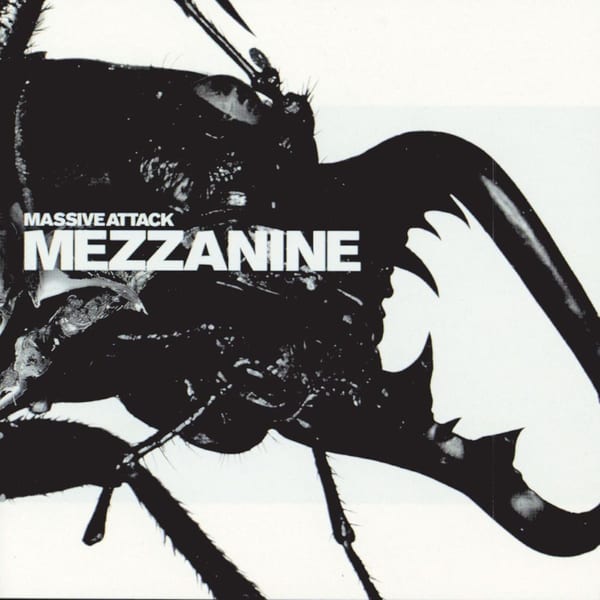
By 1998 Massive Attack had followed the shadows all the way down. Mezzanine nearly broke the group apart — Vowles left soon after — and you can hear the tension in every airless track. "Angel" stalks; "Teardrop," sung by Elizabeth Fraser of the Cocteau Twins, is the prettiest thing here and still sounds like grief. It's the heaviest record any of these bands made, and the clearest proof that the genre's home key was never contentment.
The other bloodline: the crate-diggers
Pemberton's original coinage pointed at something slightly different — the instrumental, hip-hop-rooted side, built by producers hunched over samplers rather than bands in a studio.
DJ Shadow's Endtroducing..... (1996, Mo' Wax) is the monument here: a record assembled almost entirely from second-hand vinyl on an Akai sampler, dusty and melancholy and enormous. It proved you could make something that felt composed out of nothing but other people's forgotten records. And it travelled — DJ Krush was doing his own version in Tokyo, and up in Leeds the Warp signing Nightmares on Wax made the warmest record of the whole movement.
Smokers Delight (1995) is the one place the "chillout" reputation half-earns itself, and even George Evelyn's blissed-out grooves have a low, watchful undertow. This was never just one city or one mood.
Why we remember it wrong
The softening was real, and it happened fast. By the turn of the millennium the tempo had been detached from the dread and sold on its own — café bars, Ibiza sunset compilations, a whole economy of pleasant downtempo that borrowed the surface and dropped the unease. That version is what most people mean when they say "trip-hop" now, and it's why the word carries a faint whiff of embarrassment.
But the source material never went soft. It's comedown music in the truest sense — the sound of coming down off something and not liking where you've landed. If that's the register you're after, our comedown guide sits right next door, and the sound-system DNA underneath all of it runs straight back through the dub records where the engineer became the author.
Rate the six above and tell me where I've got it wrong. Is Mezzanine really heavier than Maxinquaye? Does Dummy still hold up, or has thirty years of imitators worn the shock off it? The comments are open, and this is a genre that rewards an argument.
Discussion
Disagree? Have a better record in mind? Say it — top takes rise.
Sign in to join the discussion.
No one's weighed in yet. Go first.