Blog/Essay
Hypnagogic pop had the worst name in music criticism. The records were right.
A critic coined it in 2009, the artists disowned it, the scene's institutions were dead by 2011, and its central idea now runs half of Bandcamp.
Riffiter6 min read
David Keenan coined hypnagogic pop in issue 306 of The Wire in August 2009, describing music that sounded like pop refracted through the memory of a memory. Most of the artists he named, among them Ariel Pink, James Ferraro, Oneohtrix Point Never and Ducktails, rejected the label, and the scene's blogs and labels collapsed in 2011. The method outlived the argument about what to call it.
In August 2009 David Keenan published a piece in The Wire, issue 306, called "Childhood's End." He was writing about a scattered group of American musicians who had come up through noise and drone and were now making something that sounded like eighties radio pop heard through a wall. He needed a word for it. He picked hypnagogic pop, after the state between waking and sleep.
The magazine, by its own account, received a slew of semi-hate mail. Readers called it the worst genre ever invented by a journalist. Dorian Lynskey in the Guardian called the term pretentious. Jon Pareles in the New York Times called the music annoyingly noncommittal. Neon Indian and Toro y Moi wanted nothing to do with the tag. John Maus refused it outright. James Ferraro, whose offhand remark gave Keenan the idea in the first place, said he wasn't sure he belonged under it either.
Seventeen years on, the word is still a genre tag on RateYourMusic and still the only term anyone has for what those records actually do. The name lost every argument it was in. The idea won quietly.
What Ferraro actually said
The remark that started it was about toddlers. Ferraro's notion, roughly, was that eighties television and radio had seeped into the unconscious of his generation while they were half asleep in the next room, absorbing music that was never played for them. Keenan turned that into a phrase: pop music refracted through the memory of a memory.
Which is a description of a method, not a sound. That distinction matters, because it explains why the records under this tag have so little in common on the surface and so much in common underneath.
The founding text was six years old by the time anyone had a name for it. Ariel Pink recorded The Doldrums in Val Verde, California, between September 1999 and April 2000, on a Yamaha MT8 cassette eight-track, making the drum sounds with his mouth. He put it out himself as a CD-R. Animal Collective found a copy on a west coast tour and released it on Paw Tracks in October 2004, the label's first record by anyone outside the band.
People still call it nostalgic, which is exactly wrong. Nostalgia is fond. The Doldrums sounds like a stack of AM radio hits left in a hot car for a decade: the melodies are intact and everything around them has warped. That gap between a perfectly good hook and the ruined thing carrying it is the whole genre in one record.
The autumn everything landed at once
Keenan wrote the piece in the middle of a pile-up. Daniel Lopatin had spent two years releasing Oneohtrix Point Never records in tiny runs, and in October 2009 No Fun Productions collected the lot as Rifts: three albums plus CD-R material going back to 2003, dumped out as a double disc. It is a lot of synthesiser to hand someone at once, and it worked anyway.
Two months earlier, Olde English Spelling Bee had put out Ducktails' Landscapes. Matt Mondanile was playing guitar in Real Estate at the same time, which tells you how thin the wall between this scene and ordinary indie rock was. OESB, run by Todd Ledford since 2004, became the house label for the whole idea and then folded with it.
Chillwave was the pleasant version
One month before Keenan's piece, in July 2009, the pseudonymous blogger Carles at Hipster Runoff coined chillwave, mostly as a joke about how quickly music writing invents categories. Glo-fi was the third synonym. For one summer all three words pointed at the same handful of artists and nobody could agree which was least embarrassing.
They are not the same thing, though, and the difference is easy to hear. Chillwave is nice. Washed Out's Life of Leisure came out in September 2009 and it is a genuinely lovely record, all warm reverb and slowed vocals and no unease whatsoever.
Hypnagogic pop, at its best, is unpleasant on purpose. The tape hiss isn't a filter, it is damage. Ferraro's records from that period are actively hard to sit through, and that is the argument they are making about memory: the thing you half remember is not soothing, it is wrong, and the wrongness is the interesting part.
2011, when the scaffolding came down
Pitchfork launched Altered Zones in July 2010 as a collective of fourteen blogs covering exactly this material. It closed on 30 November 2011, sixteen months later, with a farewell note explaining that most of the original contributors had left to start labels and bands of their own. OESB went defunct the same year. Keenan, writing in The Wire's end-of-year Rewind issue, said the music had gone from liberation to being a carrot in the mouth of a corpse, propped up for mainstream consumption.
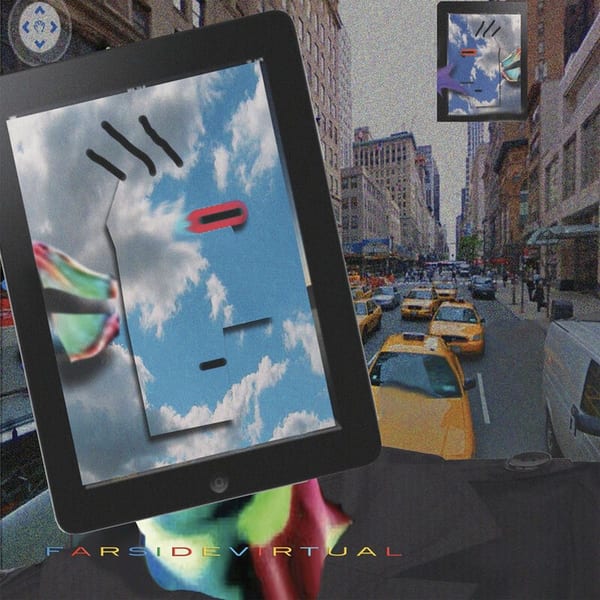
A month before Altered Zones shut, Ferraro released Far Side Virtual on Hippos in Tanks: MIDI, ringtones, cafe ambience, the sound of a hotel lobby in a country that does not exist. The Wire named it album of the year. Its readers were not pleased.
The method escaped the scene
I think Far Side Virtual is where hypnagogic pop stopped being a scene and became a technique that anyone could pick up. Lopatin had already released Chuck Person's Eccojams Vol. 1 in 2010, a limited cassette of slowed and looped chart pop, and by 2011 Macintosh Plus had made Floral Shoppe out of the same trick. Vaporwave took the whole apparatus online, gave it a colour scheme, and outlived every blog that covered its parents. We mapped that family in the vaporwave field guide if you want the branches.
Meanwhile Ariel Pink got a real studio for Before Today in 2010 and "Round and Round" turned out to be the pop song the whole thing had been mumbling about for a decade. Fifteen years later, recording something so it sounds like the memory of a recording is a default setting. Bedroom pop does it without thinking. So does half of what turns up on Bandcamp on any given Friday. The hauntology field guide covers the British cousin of the same instinct, the one that came at it through library music and public information films rather than through Californian cable TV.
Why the tag is still there
Lo-fi describes a production budget. Chillwave describes a mood. Hypnagogic pop describes an intention, and that is why it survived a decade of people insisting it was a stupid word. When someone tags a record with it on RateYourMusic they are not saying it is fuzzy. They are saying the artist is doing something specific to a shared cultural memory, on purpose, and expecting you to notice the damage.
Keenan probably picked the wrong word. He was right about the thing.
Rate the records above if you have lived with them. And if you think the whole category was always a critic's invention with no music underneath it, say so in the comments. That argument has been running since 2009 and nobody has won it yet.
Discussion
Disagree? Have a better record in mind? Say it — top takes rise.
Sign in to join the discussion.
No one's weighed in yet. Go first.