Blog/Deep Dive
The Sun Awakens at 20: Six Organs of Admittance and the long shadow of New Weird America
Twenty years on, Ben Chasny's 2006 record still ends with one of the strangest things in American folk — and it's the best door into a whole vanished scene.
Riffiter4 min read
Six Organs of Admittance's The Sun Awakens, released June 13, 2006 on Drag City, turned twenty this month. Ben Chasny's eighth album closes with the 24-minute drone-raga "River of Transfiguration," and stands as one of the high-water marks of the early-2000s New Weird America scene. This is a deep dive on the record and the free-folk underground it came from.
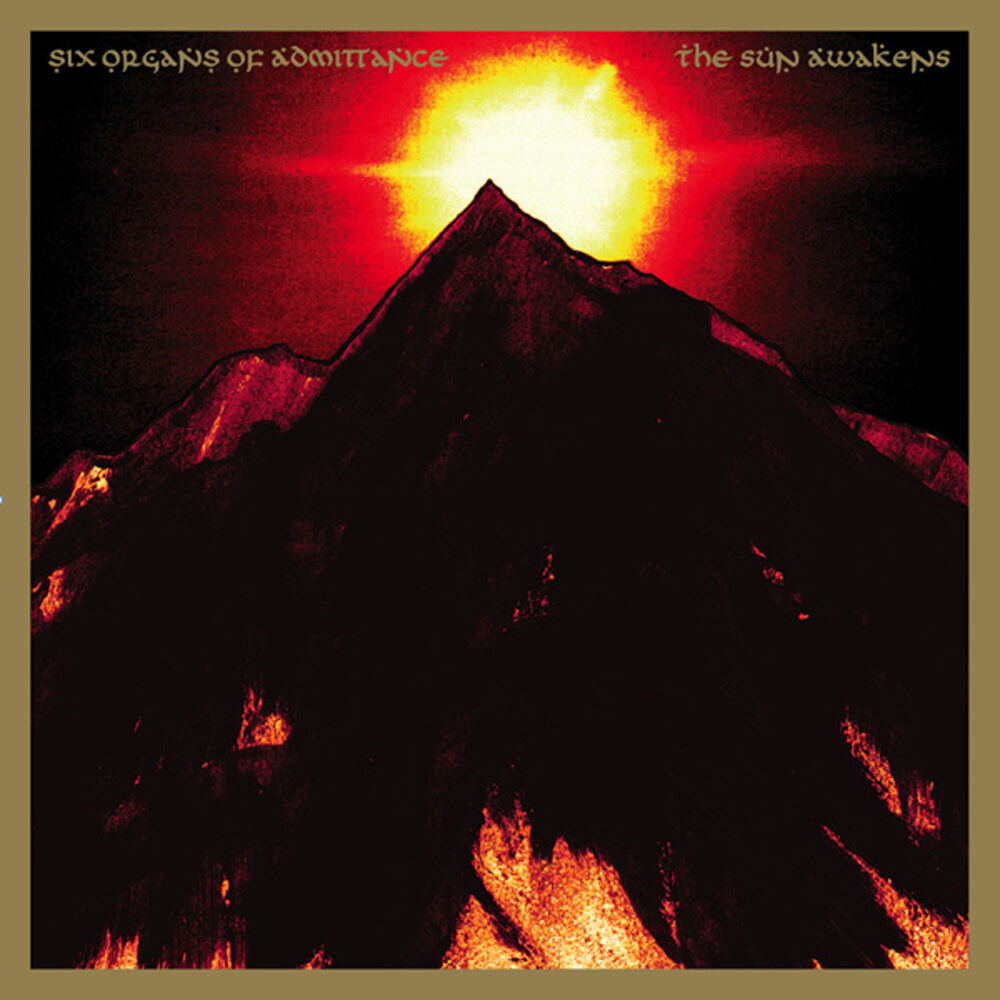
Twenty years ago this month — June 13, 2006 — Drag City released The Sun Awakens, the eighth album under Ben Chasny's Six Organs of Admittance name. It sold modestly, got an 8 from Pitchfork, and then did what the best records of its scene tend to do: it sank quietly into a corner of the catalog where a particular kind of listener keeps it alive by word of mouth. Two decades on, it's still the album I hand people when they ask where New Weird America actually went.
If you've never heard it, here's the shape of the thing. Six of its seven tracks are gorgeous, fingerpicked acid-folk — Chasny's nylon-string guitar circling raga-like figures, his voice high and reverbed, the whole thing sounding like John Fahey beamed through a heat haze. And then there's the seventh.
The 24-minute closer that swallows the album
"River of Transfiguration" runs nearly twenty-four minutes. It abandons the songs entirely: drones, wordless chants, a ney (a Middle Eastern reed flute) winding through a slowly building wall of sound until the album doesn't end so much as evaporate. Chasny brought in his Comets on Fire bandmates — Noel Harmonson and Ethan Miller — to help push it over the edge into something genuinely overwhelming.
It's the move that separates Six Organs from the merely pretty. Chasny was, by 2006, also the guitarist in the great California psych-burnout band Comets on Fire, whose Blue Cathedral (2004) is one of the loudest, most blown-out records of the decade.
The Sun Awakens is what happens when that volcanic side and the contemplative folk side stop taking turns and fuse. The album spends forty minutes earning your trust with beauty, then spends its last twenty-four detonating it. People who only know Six Organs as "the quiet guitar guy" have usually not made it to the end of this record.
What was New Weird America, anyway?
Here's the context that makes the album matter beyond its own runtime. In August 2003, the critic David Keenan wrote a piece in The Wire (issue 234) about a festival in Brattleboro, Vermont, and gave the loose scene around it a name: New Weird America — a play on Greil Marcus's "old, weird America," the phantom folk tradition he'd traced through Harry Smith's anthology and Dylan's basement tapes.
The new version was a sprawl of homemade psychedelia, drone, and back-porch folk made by people who'd absorbed John Fahey, Indian ragas, free jazz and 60s acid-folk in roughly equal measure. It had no center, no sound you could pin down, and a deep allergy to professionalism. Chasny was one of its founding figures — Six Organs had been going since the late 90s — but the scene was wide.
There was Espers, the Philadelphia group who took the same impulse somewhere darker and more baroque:
And there was the late Jack Rose, a Takoma-school guitar genius who took Fahey's American Primitive style and made it heavier, drone-ier, more trance-inducing than anyone since the master himself. His Luck in the Valley (2010) was one of the last things he finished before his death that year, at 38.
What tied them together wasn't a sound. It was a stance: that you could make transcendent music in a basement, that virtuosity and weirdness weren't opposites, that the "weird old America" of mountain ballads and raga drones was a living thing you could plug back into. For a few years in the mid-2000s, it felt like a genuine underground — the kind of scene that RateYourMusic users still chart obsessively and that almost never broke the surface.
Where it went, and why The Sun Awakens still works
The honest answer is that the scene dispersed. Devendra Banhart, its most visible figure, went pop. Comets on Fire went on hiatus. Jack Rose died. The blogs that championed it folded. By the 2010s "freak folk" had curdled into a punchline, the way every micro-scene eventually does.
But the records didn't go anywhere, and The Sun Awakens aged better than almost any of them — because it was never really about the scene. It's about the tension Chasny has been working his whole career: between the song and the drone, the human voice and the cosmic wash, control and surrender. He's still at it; the algorithmic, deliberately depersonalized Hexadic records of the 2010s are the same question asked a different way.
School of the Flower (2005), the album right before, is the gentler companion piece and the easier place to start. But The Sun Awakens is the one that goes all the way out. If you want the whole map of where this kind of music sits, our albums that reinvented their genre guide is a decent compass — but really, just put on "River of Transfiguration," turn it up, and give it the full twenty-four minutes. It rewards the patience. Most of the best records from this lost scene do.
Heard it? Rate it above and tell me where you'd send a newcomer in the comments — the New Weird America rabbit hole is deep, and half the fun is arguing about the entrance.
Discussion
Disagree? Have a better record in mind? Say it — top takes rise.
Sign in to join the discussion.
No one's weighed in yet. Go first.