Blog/Deep Dive
Hissing Prigs in Static Couture at 30: the noise rock record that wanted to be pop
Brainiac spent 1996 building dance music out of broken gear. Fourteen months later Tim Taylor was dead and the album froze into a legend it never asked for.
Riffiter5 min read
Hissing Prigs in Static Couture, released 26 March 1996 on Touch and Go, was Brainiac's third and last album. Eli Janney of Girls Against Boys produced most of it at Water Music in Hoboken; Steve Albini recorded one track, 'Nothing Ever Changes,' in his basement. Singer Tim Taylor died in a car crash on 23 May 1997 and the band ended that day.
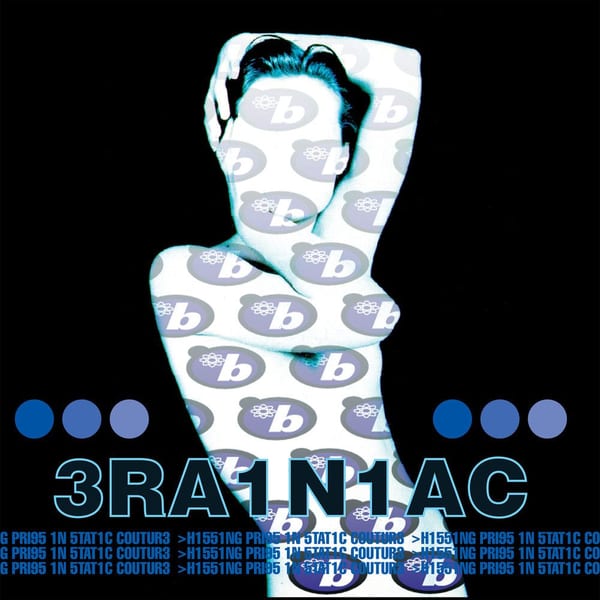
Every noise rock canon has a shape, and it is usually a shape made of men in their thirties standing very still while a bass player does the work. Touch and Go, Amphetamine Reptile, a lot of Chicago, a lot of Minneapolis. Brainiac fit in that world on paper and almost nowhere in practice. They were from Dayton, Ohio, they had a synthesizer, and their singer wanted to make you dance.
Their third album turned thirty this March. It has spent most of those thirty years being described as a lost classic, which is a polite way of saying nobody bought it.
The Dayton problem
Brainiac formed in January 1992: Tim Taylor on vocals and keyboards, Juan Monasterio on bass, Tyler Trent on drums, Michelle Bodine on guitar. Dayton at that moment was quietly one of the best places in America to be a weird band. Guided by Voices were down the road taping records onto whatever was in the room. Kim Deal was about to be everywhere.
The first two albums came out on Grass, and they are good in a way that is easy to file. Smack Bunny Baby is a scrappy 1993 record by a band who have heard the Jesus Lizard.
Bonsai Superstar is where it gets strange. Bodine left in late 1993 and John Schmersal replaced her, and Schmersal's guitar had a nasty, seasick quality that pushed Taylor further into his keyboards rather than reining him in.
Then Touch and Go picked them up, Kim Deal produced the Internationale EP in 1995, and the band walked into 1996 with a plan that sounds insane written down: make a record that would not date. Taylor said as much in interviews at the time. He wanted futuristic pop. He got it by using gear that was already broken.
What Eli Janney did
Most of Hissing Prigs was cut at Water Music in Hoboken with Eli Janney of Girls Against Boys producing, and mixed at Oz in Baltimore. One track, "Nothing Ever Changes," was recorded by Steve Albini in his basement, which tells you roughly everything about where this band sat on the map. They could get either man on the phone.
Janney's contribution is the thing people miss. He did not clean the band up. He arranged the mess so you could hear the individual failures inside it: a keyboard cutting out, a vocal shredded through a broken amp, a drum track that stays weirdly polite while everything above it comes apart. Taylor had largely put the Moog down by this point in favour of whatever noise-making junk was to hand, and the result is a record where the electronics sound less like instruments and more like appliances with a grudge.
Thirteen tracks, thirty-four minutes. "Pussyfootin'" is a funk song wearing a hazmat suit. "This Little Piggy" swings. "I Am a Cracked Machine" closes the thing by naming the whole aesthetic out loud, which should be too neat and somehow isn't.
The pop record hiding inside it
Here is the argument I would make to anyone who files this under difficult listening: Hissing Prigs is a pop album with the safety rails removed. The hooks are relentless. Taylor's vocal tics, the yelps and the pitch-shifted whines, function exactly like hooks function on a record you would hear in a car. He was writing verses and choruses. He was just refusing to let a single sound in the room behave.
That is why the record aged the way it did. Nothing here is trying to convince you the band is heavy. Compare it to almost any 1996 album with the same rack of pedals and the difference is nerve: Brainiac wanted rhythm, and rhythm is what dates last. Pitchfork later put it at number 73 on their list of the best albums of the nineties and included it among the twenty-five best things Touch and Go ever put out. Both feel low to me.
The follow-up EP went further into the machine.
Electro-Shock for President came out in 1997 and is basically an electropunk record. It sounds like a band about to sign somewhere bigger and get very strange on someone else's money.
Then 23 May 1997
Taylor crashed his 1972 Mercedes into a lamppost in Dayton. The post-mortem found carbon monoxide poisoning: the car's undercarriage had rusted through and the exhaust had been leaking into the cabin. The band stopped that day.
I want to be careful here, because the tragedy has done something unhelpful to how this album gets heard. Read enough retrospectives and Hissing Prigs becomes a premonition, a last transmission, an artifact of a doomed man. It isn't. It is a very funny, very physical record made by a man who was having a good year. Treating it as a eulogy flattens the joke out of it, and the joke is half the point.
What the death did do is freeze the influence in place. Schmersal went on to form Enon. Monasterio moved into video. Everyone else who was listening carried a piece of it off: you can hear Brainiac in the Mars Volta, and in every band since who has run a vocal through something it was not designed for. Eric Mahoney's documentary Transmissions After Zero premiered at SXSW in 2019 and lined up Albini, David Yow, Buzz Osborne, Cedric Bixler-Zavala and Matt Berninger to say so on camera. Touch and Go reissued the album the same year.
The part nobody expected
In 2022 the surviving three came back, with Schmersal singing. They supported Mogwai in the UK in early 2023 and put out The Predator Nominate EP that January.
Reunions of this kind are usually unbearable. This one isn't, mostly because it never pretends to be the old band. It's people who were there, playing music that still sounds like nothing else, thirty years after the record that should have made them famous failed to.
If you want the wider map of the label world this came out of, our guide to SST Records covers the American underground's other great engine. And if you have never sat with Hissing Prigs front to back, do it once with headphones on and the volume higher than is sensible.
Then rate it. Tell me I'm wrong about the pop thing in the comments, ideally at length.
Discussion
Disagree? Have a better record in mind? Say it — top takes rise.
Sign in to join the discussion.
No one's weighed in yet. Go first.