Blog/Deep Dive
Spiderland: the album that broke up the band and rewired guitar music
Six songs, recorded by a band that fell apart before anyone heard them, that quietly reshaped the next thirty years.
Riffiter2 min read
Spiderland (1991) is the second and final album by Louisville band Slint — a stark, tense, quietly menacing record that sold poorly on release and went on to become one of the most influential albums in post-rock and math rock. The band had broken up before it came out.
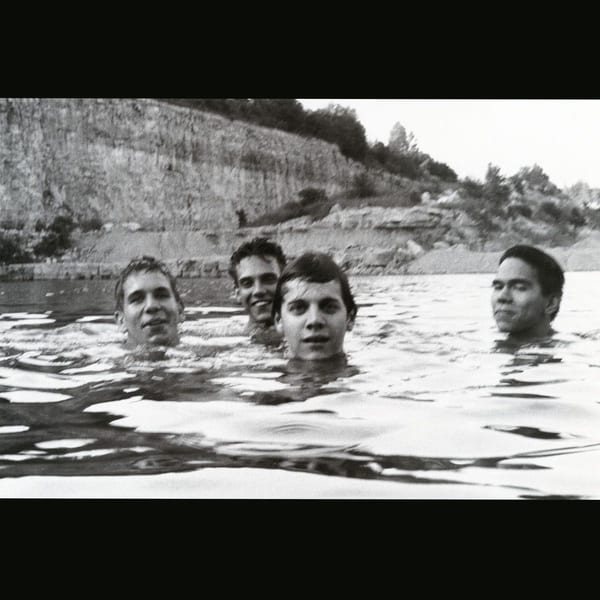
Some albums are loved. Spiderland is studied.
It arrived in 1991 from four young men in Louisville, Kentucky, sold almost nothing, and was met with near silence. The band had already broken up. There was no tour, no follow-up, barely a photograph — just six songs and a now-famous black-and-white cover of four heads bobbing in a flooded quarry, shot by a teenage Will Oldham.
What's on the record is harder to describe than its legend. Guitars that don't distort so much as tighten. Spoken-word verses that snap, without warning, into screams. Long stretches where almost nothing happens, charged with the sense that something terrible is about to. It's an album about dread that never names what it dreads — which is exactly why it has never stopped sounding modern.
The myth and the music
The mythology came fast: rumors of band members hospitalized by the sessions (mostly exaggerated), the cryptic liner note asking for a female vocalist, the way the group seemed to dissolve the instant the work was done. Their debut had been a noisier, Albini-recorded curio.
Tweez (1989) gave little hint of what was coming. Spiderland sounds like a different band — or the same band having seen something.
Why it matters
Listen to almost any post-rock or math-rock band of the last three decades and you're hearing Spiderland's DNA: the quiet-loud tension, the unconventional structures, restraint used as a weapon.
Mogwai, Godspeed You! Black Emperor and a thousand others took the blueprint and made it bigger; Slint just made it first, then vanished — which is why they sit at the root of our post-rock guide. Few records this influential were heard by so few people on release. Fix that: rate it below, then tell us where you first fell into it.
Discussion
Disagree? Have a better record in mind? Say it — top takes rise.
Sign in to join the discussion.
No one's weighed in yet. Go first.