Blog/Lists
Same name, twice: the strange ritual of the non-debut self-title
A self-titled debut is nothing. These twelve artists already had a name, a discography and a reputation — and used their own name again anyway.
Riffiter7 min read
A self-titled first album is the default, not a statement — every band needs to call its debut something. This is a rundown of twelve artists who self-titled a LATER album instead: Prince's second record (1979), Metallica's Black Album (1991), Weezer's ongoing color-coded joke, Beyoncé's 2013 surprise drop, and more, with what each reset was actually for.
A self-titled debut is barely a decision. Every first record needs to be called something, and reaching for the band's own name is the path of least resistance — no concept required, no wordplay, just get the thing out the door.
What's actually strange is the artist who already has a discography, a reputation, maybe a few flops, and chooses to use their own name again, years or decades later. That's not a lack of imagination. It's a move — a way of saying this is a reset, this is the real version of us, forget what came before. Sometimes it's a commercial pivot. Sometimes it's a mid-career crisis that turned into a running joke the band never quite explained. One entry here didn't even end up with a title at all, and the artist's own name became the fallback by elimination.
Twelve of them, in the order they happened.
Peter Gabriel calls three more albums by his own name
His first solo record after leaving Genesis, in 1977, was self-titled — normal enough for a debut. Then he did it again in 1978. And again in 1980. And again in 1982.
Fans needed a shorthand, so the four records got nicknamed after their Hipgnosis-designed covers instead: Car, Scratch, Melt, Security (the last one only in the US and Canada, where Geffen insisted on an actual word for the sleeve). Melt, the third, is the one people reach for first — it's got "Games Without Frontiers" and "Biko" — but the whole run reads like a man refusing to let a title tell you where he'd already been.
Prince does it on album two
"Prince" isn't his 1978 debut. That one's called For You. This is the follow-up, released less than a year later, the one where he plays every instrument himself and lands his first real hit with "I Wanna Be Your Lover."
Naming your second album after yourself before anyone particularly knows who you are is a strange kind of confidence to have this early. It turned out to be earned.
Genesis need a new audience, so they reach for an old name
By 1983, Phil Collins was fronting a band that had already lived through one full identity change — the Peter Gabriel years, the twenty-minute prog suites, the fox-head stage costumes. The self-titled twelfth album (sometimes called Shapes, after the geometric cover) is where Genesis finish turning into a singles band.
"That's All" and "Mama" got them onto top-40 radio in a way "Supper's Ready" never could. The blank title works like a shrug: this is just Genesis now, whatever you thought that meant before.
Duran Duran's self-title, twelve years later
Their actual debut, in 1981, is also called Duran Duran. This one, from 1993, is a different animal — a comeback record built to prove a band already written off as an '80s relic could still land a hit.
It worked. "Ordinary World" became their biggest US single since "The Reflex," and the album picked up the nickname The Wedding Album because so many of its songs ended up soundtracking first dances. Reusing the name was the whole pitch: this is the real Duran Duran, not the punchline.
The Cult try to outrun grunge with their own name
Five albums into a career built on goth-tinged hard rock, the Cult self-titled their sixth record in 1994, right as the sound they'd helped popularize was getting buried under Nirvana's fallout.
It didn't save them commercially — the band split not long after — but it's the sound of a group trying to reintroduce itself as exactly what it had always been, in case anyone had started to forget.
Alice in Chains let a three-legged dog explain the title
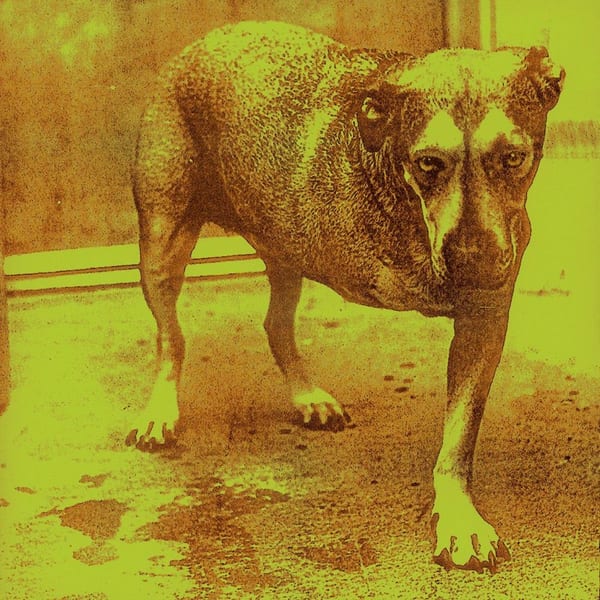
Drummer Sean Kinney wanted to call the 1995 record Tripod, after a stray dog that used to chase him on his childhood paper route. The rest of the band said no — so it went out self-titled instead, with a three-legged dog on the cover anyway.
The nickname stuck regardless: Tripod, or just the Dog Record. It's the last album the band made with Layne Staley before his decade-long disappearance from the studio, and nobody who's actually heard it thinks the title on the spine is the real one.
Weezer keep doing this — five times and counting
The 1994 debut is the Blue Album. Nobody thought much of it when the Green Album turned up self-titled again in 2001.
Then came Red (2008), White (2016), and Black (2019) — five records, one band name, zero new titles between them. At some point a coincidence becomes a bit, and the bit becomes an actual artistic statement about a band that keeps insisting on starting over without ever quite starting over. Rivers Cuomo has never fully explained it, which might be the whole point.
Smash Mouth let the fans pick the non-title
Two hit albums in, Smash Mouth ran a contest and let listeners name their 2001 self-titled record — and the winning entry was, in effect, no name at all.
It's the goofiest version of this trope on the list, a self-title as marketing gimmick rather than statement, which tracks for the band that also gave the world "All Star."
blink-182 grow up and drop the joke titles
After Enema of the State and Take Off Your Pants and Jacket, dropping the puns for a flat self-title in 2003 was itself the punchline — proof the band knew exactly how far it had traveled.
It's their most musically adventurous record, all space and mood where the earlier albums had speed and hooks. The plain title is doing the same job as a warning label: don't expect the old jokes here.
Pearl Jam call theirs Pearl Jam, everyone else calls it Avocado
Eighth album, 2006, built to sound like a return to the loud, direct band from Ten after a decade of side paths and slower records.
The title tells that story in the plainest way it can. The guacamole-adjacent cover art — reportedly dreamed up during a Super Bowl party — gave fans a far better nickname than the label ever managed.
Nas gets so close to no title at all, it barely counts
Nas wanted to call his 2008 album a word that got a New York State pension fund threatened with an $84 million divestment before he backed down. What actually shipped had no title printed on it — just his name on the spine, because a record needs to be called something on a shelf.
It's the mirror image of everything else on this list: an artist so committed to refusing a normal title that his own name became the fallback by elimination, not the plan.
Beyoncé turns her own name into an event
Her first four albums all had titles. The fifth, dropped without warning at midnight in December 2013, had none. Just BEYONCÉ, in capitals, with a full-length visual attached to every track.
This one isn't a reset so much as a coronation — fourteen years into a career, she didn't need a title to tell you whose record it was. The surprise-release format she used here became the industry standard within about two years.
The pattern, if there is one
Line these up and a shape appears. Nobody reaches for this move on album two feeling comfortable — Prince is the exception that proves it, and even he'd had a full album already flop under a real title first. It's mostly a move for a band in crisis, a band that's outgrown its old audience, or an artist secure enough to skip the concept entirely and let the name carry the whole thing.
Rate the one you think earned the reset. Argue in the comments about the one you think didn't — that's what they're there for.
Discussion
Disagree? Have a better record in mind? Say it — top takes rise.
Sign in to join the discussion.
No one's weighed in yet. Go first.