The 50 Most Provocative Album Covers Ever Made
Banned, recalled, airbrushed, and fought over in court — the artwork that made record stores nervous, and the story behind every one.
ListsRiffiter10 min read
Album covers have been banned, recalled, and censored for nudity, blasphemy, gore, and political shock since the 1960s. This is a curated guide to 50 of the most provocative album covers in music history — from Andy Warhol's Velvet Underground banana and Nirvana's naked-baby Nevermind to Scorpions' withdrawn Virgin Killer and Cannibal Corpse's banned death-metal art — each with the real story behind the image, and each one rateable on Riffiter.
An album cover gets about one second to stop you in a record-store bin. For sixty years, the surest way to do that has been to make somebody uncomfortable — a flash of skin, a defaced cross, a body on the ground, or simply a cow where the band's name should be.
The covers below were pulled from shelves, prosecuted in court, airbrushed by nervous labels, and argued about for decades. Some you've never actually seen as intended: where the original art was banned or recalled, the image here is usually the replacement that really shipped, and we tell you what it's covering up. A handful are not safe for a shared screen — and one or two require a strong stomach.
Every record on this page is in the Riffiter catalog, so you can react as you scroll: tap the stars under any cover to rate it. When you're done, the argument continues in the comments.
Sex sells — and gets records banned
The oldest provocation in the book: put a body on the sleeve and watch the chains panic.
The pinnacle of the form — Andy Warhol's working-zipper crotch shot. Early copies of the zipper actually gouged the vinyl inside, and Franco-era Spain swapped the whole thing for a can of fingers oozing treacle.

Roxy Music posed two models in translucent lingerie in the dark; squeamish US and European outlets sold it shrouded in opaque shrink-wrap or cropped down to just the foliage.

Hipgnosis stuck a wad of chewing gum on a woman's bare breast in the back of a car — and the sleeve was banned in the United States and replaced with a plain band photo, even as the design world handed it awards.

Scorpions made getting banned a brand. A woman kneeling before a man, a Doberman standing guard: Animal Magnetism was censored about as often as it was sold.

Prince announced his entire persona in a trench coat, bikini briefs and a bedspring backdrop — sex and funk, no apologies.

He went further on Lovesexy: nude (and strategically posed) atop a giant flower. There's nothing explicit on show, yet plenty of retailers still sold it in black plastic.

Mötley Crüe's debut answered Sticky Fingers with their own crotch-and-belt-buckle close-up — glam-metal sleaze as a mission statement.

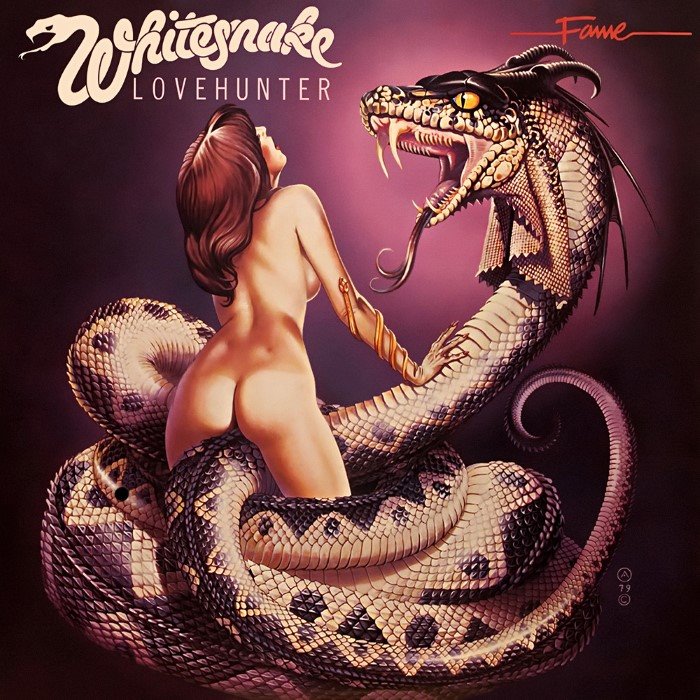
Chris Achilleos painted a nude woman draped across a giant serpent; the fantasy-art provocation got Lovehunter banned in several markets and is precisely why anyone remembers the record.
The Ohio Players turned their sleeves into glossy fetish editorials. Honey is the most infamous — and spawned the enduring (and false) legend that a model's scream is buried in "Love Rollercoaster."

Same formula, shot like a perfume ad: the Ohio Players made their covers as notorious as their grooves.

Funkadelic matched the title's dare with a nude figure rising from the swamp — pure 1970 countercultural provocation.

The UK cover of Is This It — a leather-gloved hand on a nude hip — was too much for America, which got a particle-collision photo instead, instantly making the original a collector's flex.

Two women mid-kiss in moody monochrome green: Type O Negative wrapped goth-metal sensuality around their breakthrough.

Liz Phair's stark, partly-exposed self-portrait framed a record that talked about sex as plainly as any man's — the image was every bit as confrontational as the songs.

Released alongside her steel-bound Sex book, Madonna's Erotica pushed mainstream pop far enough that the album carried a parental warning and the title-track video was yanked from rotation.

Jeff Koons sculpted Lady Gaga nude behind a blue gazing ball, splicing in Bernini and Botticelli — high-art nudity that still made some chains flinch.

Rihanna, nude beneath blocks of text scrawled across her body — the title delivered as a dare.

André 3000, bare-chested before a black-and-white American flag: OutKast's image read as defiant enough to draw comment in 2000.

Banned, recalled, and quietly swapped
Some of the most famous covers in history are ones you've barely seen. These shipped as hasty replacements — here's what they're hiding.
A naked baby underwater, chasing a dollar bill on a fishhook: capitalism as bait. Geffen briefly weighed censoring the infant, and decades later the grown-up baby, Spencer Elden, sued alleging exploitation — a case that's bounced through dismissal and appeal ever since. Still the most argued-over cover of the '90s.

What you see is the dull "steamer trunk" photo Capitol pasted over the recalled butcher cover — the Beatles draped in raw meat and dismembered baby dolls. Peeled, first-state copies are among the holy grails of record collecting.

This is the band photo that shipped. The 1976 original — a nude pre-teen girl behind cracked glass — was pulled worldwide, and as recently as 2008 it briefly got the album's Wikipedia page blocked across the UK. We show only the replacement.

John Lennon and Yoko Ono posed full-frontal, front and back. Retailers hid the record in a brown paper bag with only their faces peeking through — and the bag became the cover most people actually know.

Hipgnosis' nude children clambering up the Giant's Causeway at dawn: a dreamlike composite that was banned in Spain, altered in the American South, and debated ever since.

Guy Peellaert painted Bowie as a half-canine hybrid — genitalia included. RCA frantically airbrushed the dog parts off the pressing, and the few uncensored copies are the stuff of legend.

The drill-in-a-skull is the replacement. Pantera's original — a drill bit boring into a human anus — was refused by every major chain and swapped before release.

Poison's demon-tongued temptress was loud enough that most pressings cropped the painting down to just her eyes and tongue; the full image only resurfaced years later.

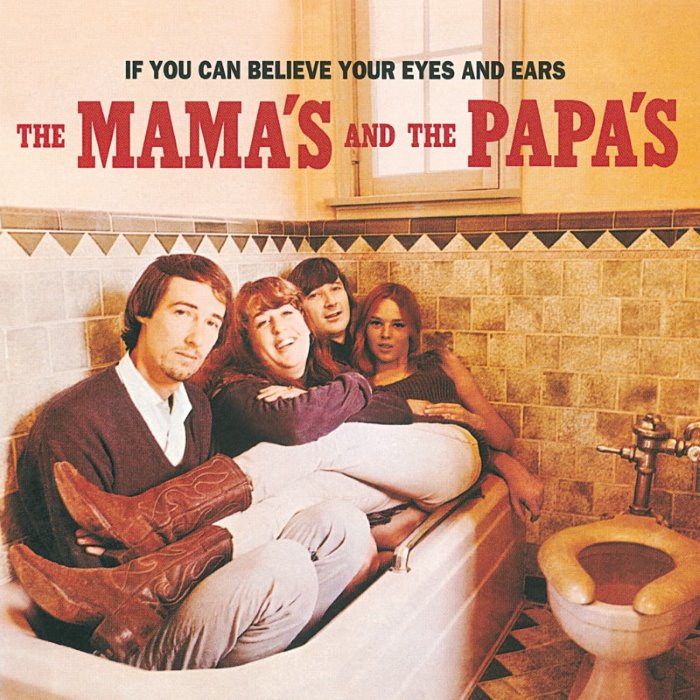
Look at the bottom of the bathtub: the Mamas & the Papas piled in with a toilet in frame. A sticker hid it at first, and later pressings simply airbrushed the toilet away.
The cocktail glass is the safe second cover. The Coup designed the original — the group detonating the World Trade Center — months before 9/11, then pulled it after the attacks.

Death Grips leaked their own album for free against the label's wishes, with an erect penis (the title scrawled across it) as the cover. Stores and streamers still censor it; we show the blurred version.

Blasphemy, horror, and the macabre
When skin isn't the point — when the point is to desecrate something.
Slayer's nailed, blood-spattered Bible was confrontational enough to ship with an alternate slipcase. Its release date, of all days, was September 11, 2001.

Larry Carroll painted a maimed Christ presiding over a sea of amputees and severed heads; after protests, Christ Illusion was withdrawn and reissued with new art in India.

Marilyn Manson as a gaunt, fascistic icon — the visual centerpiece of an album engineered to trigger American religious panic. It worked.

Manson reborn as a nude, sexless glam alien; several big-box chains refused to stock Mechanical Animals without a sticker or sleeve.

That smeared red-and-cream abstraction is Andres Serrano's Blood and Semen III — literally the artist's bodily fluids pressed under glass. Metallica's most divisive sleeve, entirely on purpose.

A heads-up: graphic horror art ahead. Among the most-banned covers ever made — Cannibal Corpse's gleefully grotesque death-metal artwork is illegal to display in several countries and was sold censored for years.

A screaming woman's head erupting from the soil — beautiful and unsettling at once, the perfect frame for Funkadelic's ten-minute guitar cry.

A photograph of a weeping figure at the Appiani tomb in Genoa's Staglieno cemetery. Chosen before the fact, it turned unbearably funereal weeks later when Ian Curtis took his own life.

Guns, shock, and the parental-advisory era
The covers that turned into congressional hearings, courtroom trials, and evening-news segments.
The listener staring down the barrel of a handgun from the pavement: N.W.A put the threat of the street directly in your face.

An overhead shot of the group standing over a corpse; the title alone kept it behind the counter and out of every ad.

Ice Cube beside a flag-draped body with an "Uncle Sam" toe tag, splitting the record into a "Death Side" and a "Life Side." The lyrics inside drew even louder calls for a ban.

The cover that became a national news story. The "Cop Killer" firestorm of 1992 had police groups, politicians and Charlton Heston demanding Time Warner pull the record — and eventually it did.

No image needed: the ransom-note word "Bollocks" triggered an actual UK obscenity prosecution, which a record-shop manager fought and won in court.

The sleeve is tame; the H.R. Giger poster folded inside — Penis Landscape — put Jello Biafra and Dead Kennedys on trial for distributing "harmful matter," a landmark censorship case.

Look closely at the crashing jet: its tail number, 3MTA3, reads "EAT ME" in a mirror. Juvenile, deliberate, and very Beastie Boys.

The Bloodhound Gang committed all the way to the pun, and the artwork (and title) got the album stickered or re-sleeved across several territories.

Provocation without a single nude
Shock doesn't require skin. Sometimes the most provocative move is what you leave off — or what you dare to borrow.
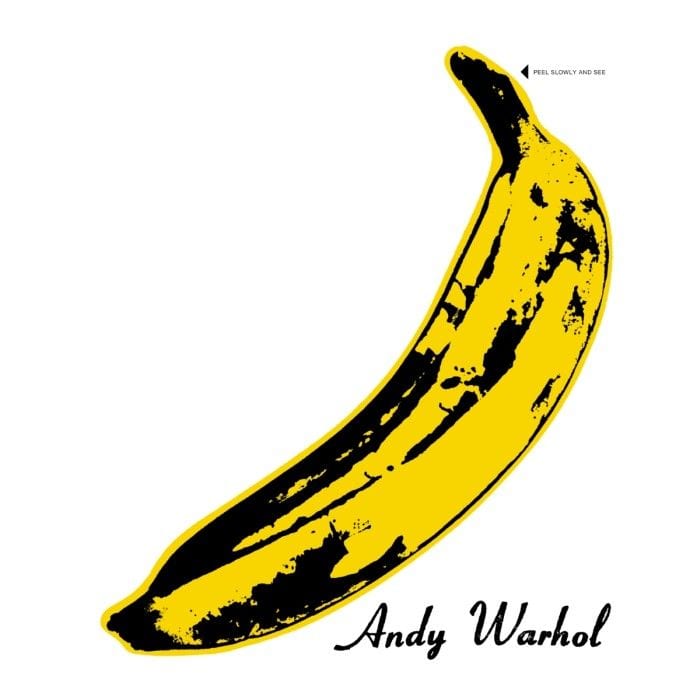
Andy Warhol's banana told you to "Peel slowly and see," and early copies literally peeled back to a pink fruit underneath. A sly, sexual, era-defining piece of pop art — whose famous signature nearly buried the band's own name.

Pink Floyd's quiet rebellion: no band name, no title, no text — just a Friesian cow staring out of a field. In 1970, an anti-cover was its own kind of provocation.

Morrissey cropped a still of Joe Dallesandro from Andy Warhol's underground film Flesh down to a bare torso — opening the Smiths' long run of borrowed, loaded imagery.

A tear-streaked beauty queen clutching her bouquet, mascara running: Hole skewered the prom-night ideal of American girlhood as sharply as the songs did.

Hole's debut went all the way into lurid, hot-pink riot-grrrl excess — a sleeve as abrasive as the noise it wrapped, and like nothing else on the shelf in 1991.

Fifty covers, six decades, one shared instinct: art that makes you look twice. Rate the ones you love — and the ones that still make you wince — then settle it below: which banned or provocative cover did we leave off?
Frequently asked questions
What is the most controversial album cover of all time?
There's no single answer, but the covers cited most often are Nirvana's Nevermind (the naked baby), the Beatles' recalled "butcher cover," Scorpions' withdrawn Virgin Killer, John & Yoko's full-frontal Two Virgins, and the banned death-metal art of Cannibal Corpse. Each was pulled, censored, or fought over before — or instead of — reaching shelves.
Why was the cover of Nevermind controversial?
It shows a naked four-month-old baby underwater, swimming toward a dollar bill on a fishhook. Geffen briefly considered obscuring the infant's genitals, and in 2021 the now-grown baby, Spencer Elden, sued alleging child exploitation — a case that has been dismissed and revived on appeal in the years since.
What is the "butcher cover"?
The Beatles' 1966 US compilation Yesterday and Today originally pictured the band in white smocks covered in raw meat and dismembered doll parts. Capitol recalled it within days and pasted a tame "steamer trunk" photo over the existing sleeves; "peeled" first-state copies are now among the most valuable records in the world.
Are these the original covers or the censored versions?
Both. Where the original art was banned or recalled, the image shown is usually the replacement that actually shipped — Virgin Killer, the butcher cover, Two Virgins, Far Beyond Driven, Party Music — and the caption explains what it replaced. The rest appear as released.
Can I rate these album covers on Riffiter?
Yes. Every album on this page is in the Riffiter catalog: tap the stars beneath any cover to rate the record (you'll be prompted to create a free account on your first rating), and open any album's page to write a review or see how the community scored it.
Discussion
Disagree? Have a better record in mind? Say it — top takes rise.
Sign in to join the discussion.
No one's weighed in yet. Go first.