Blog/Deep Dive
D.I. Go Pop: the 1994 album that sampled the room, not the record
Disco Inferno wired their guitars to a sampler and triggered car crashes, birdsong and breaking glass mid-song. Thirty years on, it still sounds like the future nobody followed.
Riffiter5 min read
D.I. Go Pop (1994) is the second album by English band Disco Inferno, who rewired their instruments to trigger samples of found sound — water, glass, sirens, birdsong — instead of melodies. Released on Rough Trade to little notice, it is now regarded as one of the most innovative and overlooked records in the history of post-rock.
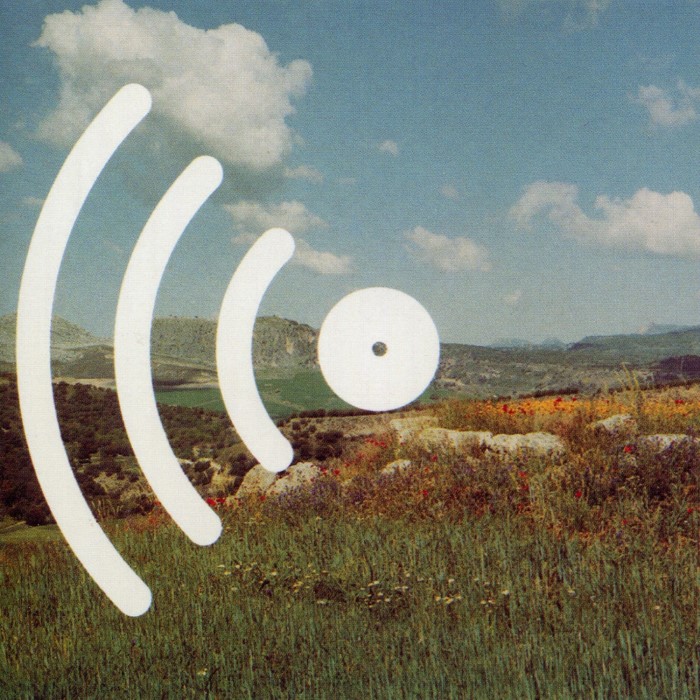
Most sampling records of the early 1990s sampled other records. Disco Inferno sampled the world.
On D.I. Go Pop, released on Rough Trade in February 1994, a guitar string struck by Ian Crause might sound a chord — or it might trigger the smash of a window, the wash of running water, a burst of birdsong, a car crash, a snatch of laughter. The band had each rigged their instruments to a sampler, so every note was also a switch. Three people stood on stage with guitar, bass and drums and produced something that sounded like a building falling down in slow, melodic motion. Nobody else was doing this. Almost nobody since has tried.
It is one of the strangest, most beautiful records of its decade, and it sold almost nothing.
How a guitar band became a found-sound machine
Disco Inferno did not start out strange. Their 1991 debut was a serviceable, gloomy guitar record in thrall to Joy Division and the more austere end of the 4AD roster — competent, derivative, the kind of thing that would have left no trace at all.
What changed everything was a sampler. Crause bought a Roland S-750 and spent roughly six months programming it, reportedly inspired by two records pulling in opposite directions: My Bloody Valentine's Loveless, where the guitar dissolved into pure texture, and Public Enemy's Bomb Squad productions, where sampling was a collage weapon. He wanted both at once — the texture and the collage — and he wanted to play it live, in real time, with his hands.
So the band MIDI-wired their instruments to the sampler. Crause's and drummer Rob Whatley's parts became triggers; Paul Willmott's bass stayed clean, an anchor holding the whole unstable contraption to earth. When Crause strummed, you didn't necessarily hear a guitar. You heard whatever sound he'd loaded into that string that day. The technique had a name the band hated — "sampledelia" — and an effect that no description quite prepares you for: melody and noise, music and environment, collapsed into the same gesture.
The sound of D.I. Go Pop
The eight songs on D.I. Go Pop are not difficult listening in the way that phrase usually implies. They are tuneful, even tender. Crause sings, plainly and a little defeatedly, about isolation and disappointment, and the band swells underneath him with something close to conventional post-punk feeling. Then a wave of seagulls crashes through "In Sharky Water," or the rhythm dissolves into the sound of glass and water, and you remember you are not listening to a normal record at all.
The miracle is that the found sound never feels like a gimmick. The samples are the emotion — the disintegration of the arrangements mirrors the disintegration the lyrics describe. "Even the Sea Sides Against Us," one of the most quietly devastating things the band recorded, earns its title: the whole world, rendered in field recordings, turning against a single small voice.
It is the rare experimental record where the experiment serves the feeling rather than the other way round.
The post-rock that history skipped
Here is the part that should make this record famous. In March 1994 — the same month D.I. Go Pop arrived — the critic Simon Reynolds published a review of Bark Psychosis's Hex in Mojo, and used a word that would define a decade of music criticism: post-rock.
Reynolds developed the idea two months later in The Wire, defining post-rock as using rock instrumentation for non-rock purposes — guitars as sources of "timbre and texture rather than riffs and power chords." And the bands he cited as the new form's pioneers were Bark Psychosis, Seefeel, and Disco Inferno. (The two bands were even directly linked: keyboardist Daniel Gish left Disco Inferno to join Bark Psychosis.)
So Disco Inferno were there at the naming. They were a charter member of the genre. And yet when the post-rock canon hardened over the following years, it hardened around other names — the ones who happened to be louder, or American, or simply better at being around when the press caught up.
The records that became the genre's foundation stones — Slint's Spiderland, Talk Talk's Laughing Stock, later Tortoise's Millions Now Living Will Never Die — are magnificent, and all of them earned their place. But D.I. Go Pop was doing something none of them attempted: not slow builds and crescendos, but the live, real-time sampling of reality itself. It is arguably the most genuinely radical record of the entire early-90s British post-rock moment, and it is the one most likely to be missing from your collection.
The end, and the long afterlife
There was no happy ending. The band followed with one more album — 1996's Technicolour, which dialled back the chaos for something more song-shaped and almost, briefly, accessible — before splitting acrimoniously under the usual combined weight of artistic and financial pressure.
Crause has spoken since about the toll the method took: the obsessive programming, the impossibility of touring a setup that fragile, the sheer effort of building a sound the wider world wasn't ready to hear. They never broke through. They barely charted. And then they were gone.
But the record refused to die. On RateYourMusic, where the deepest-listening crowd does its slow, decades-long re-sorting of the canon, D.I. Go Pop has drifted steadily upward into the ranks of the era's quiet masterpieces. Every few years a new generation of crate-diggers stumbles onto it and reacts the same way: how did this exist in 1994? How is this not famous?
It isn't famous because it was thirty years early. The idea of triggering the physical world from an instrument, of building songs from environmental sound played live — that's now everywhere, from glitch and electronica to the laptop-and-guitar hybrids that fill the underground. Disco Inferno got there first, with three people and a Roland sampler, and then vanished before anyone noticed.
If you want the genre's deep end mapped, our guide to post-rock beyond the crescendo is the place to start — but begin here, with the album that built the future and then watched the future arrive without it. Put a number on it below, and tell us: how did you find it?
Discussion
Disagree? Have a better record in mind? Say it — top takes rise.
Sign in to join the discussion.
No one's weighed in yet. Go first.