Blog/Field Guide
The wordless voice: a field guide to singing without saying anything
From Elizabeth Fraser's invented syllables to Sigur Rós's Hopelandic, a small lineage that treats the human voice as pure sound.
Riffiter5 min read
A handful of artists sing in no language at all: Cocteau Twins in private syllables, Sigur Rós in invented Vonlenska, Julianna Barwick in looped vowels, Lisa Gerrard in pure idioglossia. This field guide maps the wordless-vocal lineage and argues it's an aesthetic position, not a gimmick.
Most singers are in the meaning business. The voice carries the words, the words carry the point, and we judge the result partly on what it says. Then there's a smaller tradition that opts out entirely. Singers who use the human voice the way a guitarist uses a guitar: as a sound, an instrument, a thing with grain and pitch and zero semantic content.
People reach for the word "gimmick" here, and I understand the reflex. Singing in no language can look like a dodge, a way to avoid the hard work of having something to say. But the best of this music makes the opposite case. Strip the words out and you don't get less. You get a voice that can mean ten things at once because it's been pinned down to none.
The 4AD source: Elizabeth Fraser
The patient zero is Elizabeth Fraser of Cocteau Twins. By their second and third albums she had drifted away from intelligible English toward something nobody, including her, could fully transcribe. Critics called it glossolalia. Fans called it the most beautiful sound on the label.
What's striking on Treasure (1984) is how unbothered it all sounds. Fraser isn't straining toward meaning and missing. She's found a register where the emotional information rides entirely on tone and melody, and the absence of decodable words turns out to be a feature. You project. The song becomes a mirror. That's the whole trick, and it built a genre around her: the ethereal wave lineage that ran from 4AD in London to the American underground, which I mapped out in the ethereal wave canon.
The technique has a sibling on the same label. This Mortal Coil, Ivo Watts-Russell's studio project, used Fraser and others as instruments inside arrangements that treated the voice as one more color in the fog.
It'll End in Tears (1984) is mostly cover versions, but the famous one, "Song to the Siren," works precisely because Fraser sings it like the words have come loose from their meanings. You feel the grief before you parse a single line. That gap, between feeling something and understanding it, is where this entire field lives.
The pure case: Lisa Gerrard
If Fraser drifts out of language, Lisa Gerrard never entered it. The Dead Can Dance singer has spoken about composing in idioglossia, an invented private tongue she's used since childhood, improvising syllables to fit the music rather than the other way round.
On Within the Realm of a Dying Sun (1987) her wordless contralto sits against an actual orchestra, and the effect is closer to a wind instrument than a vocalist. There's no lyric to wait for, no chorus to anticipate. You get pure melodic line, ancient-sounding and placeless, which is exactly why film composers spent the next two decades putting her on soundtracks. Hans Zimmer built half of Gladiator around it. The voice reads as emotion without a passport.
The invented language: Sigur Rós
Iceland's Sigur Rós took the idea and formalized it. Singer Jónsi developed Vonlenska, nicknamed Hopelandic, a made-up vocabulary of meaningless syllables shaped to the phonetics of the band's sound rather than to any dictionary.
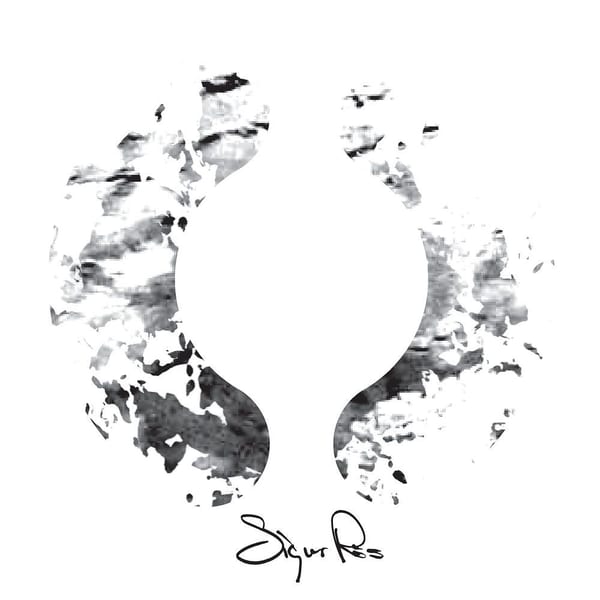
Their 2002 album is officially untitled, written as a pair of brackets, and Jónsi sings the whole thing in Vonlenska built from a single eleven-syllable phrase, varied across eight tracks. The band has said the songs had been played live for two years before recording, and they didn't want to nail them down with real lyrics. The brackets are the point: an empty space for the listener to fill. It's the most deliberate version of the gambit Fraser stumbled into, and it scaled to arenas, which tells you something about how much an audience will accept when the feeling is doing the talking.
The American ambient turn: Julianna Barwick
The newest chapter moves the technique away from bands entirely. Julianna Barwick, raised on church choral singing in Louisiana and Missouri, builds her records almost alone, looping her own wordless vowels into cathedrals of sound.
Nepenthe (2013), recorded in Iceland with members of Sigur Rós's circle, is the clearest statement of her method: voice as the only real instrument, multiplied into a choir of one. There are no lyrics to miss because there were never lyrics. It's the ethereal-wave idea rebuilt with a laptop and a loop pedal, and it lands somewhere between ambient and hymn.
Then there's Liz Harris, who records as Grouper, working the same territory from the opposite direction. Where Barwick stacks her voice into a wall, Harris buries hers under tape hiss until the words dissolve whether she meant them to or not.
On Dragging a Dead Deer up a Hill (2008), there probably are real lyrics down there somewhere. You just can't reach them. The fog does to her voice what Fraser did on purpose, and the result is the same: a song you feel your way through instead of reading.
So is it a cop-out?
I don't think so, and the test is simple. A gimmick is a thing you notice once and then it's spent. This music survives repeat listening for years precisely because there's nothing to "get" and then be done with. The meaning never resolves, so it never empties out.
There's a real limit to it. Without words you give up everything language is good at: argument, specificity, jokes, the line that stops you cold because of what it actually says. Nobody is going to quote a Sigur Rós lyric at a funeral. This is mood music in the most literal sense, and if you need your records to tell you something, the whole lineage will leave you cold.
But mood is not nothing. Half of why we listen is to feel a specific way, and these singers go straight at the feeling without routing it through sentences first. That's not avoiding the work. That's a different job.
Rate the records above, and tell me in the comments: is the wordless voice the purest form of singing, or an elegant way to dodge having something to say? I genuinely go back and forth.
Discussion
Disagree? Have a better record in mind? Say it — top takes rise.
Sign in to join the discussion.
No one's weighed in yet. Go first.