Blog/Debate
Spirit of Eden vs Laughing Stock: the Talk Talk argument with no losers
Two hushed, improvised masterpieces that ended a synth-pop band and started post-rock. RYM has argued for thirty years. There are no losers.
Riffiter5 min read
Spirit of Eden (1988) and Laughing Stock (1991) are Talk Talk's twin late masterpieces — improvised, near-silent records that helped invent post-rock and ended the band's career. Which is better is one of the longest-running arguments among catalog listeners. Here's the case for each, plus the solo album that settles it.
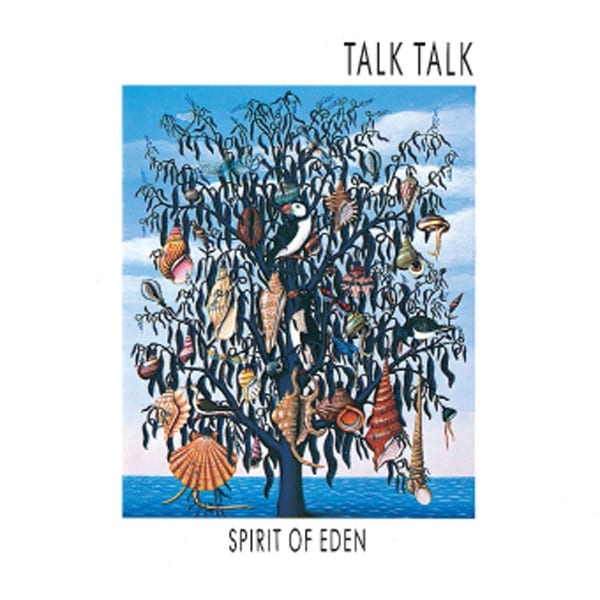
Talk Talk started the 1980s as a synth-pop band with a name so generic it was a joke even then — Duran Duran adjacent, "It's My Life" on the radio, the works. They ended the decade having quietly invented one of the templates for post-rock and then walking away from music almost entirely. The two albums that close that arc, Spirit of Eden and Laughing Stock, are sister records: hushed, improvised, allergic to choruses, beloved by exactly the kind of listener who keeps a rated discography. Ask which one is better and you've started a fight that's been running on message boards and RateYourMusic for thirty years.
The good news about this argument is that nobody loses it. Both records are extraordinary. But the case for each tells you something different about what you actually want from music.
How they got here
You can't weigh the two without The Colour of Spring, the 1986 album that bought Mark Hollis the freedom to make them.
It was Talk Talk's commercial peak — actual hits, actual sales — and Hollis spent the money not on a follow-up but on disappearing. EMI handed him a budget and a long leash, expecting another Colour of Spring. What they got instead was a band recording in a darkened, church-like space at Wessex Studios over the better part of a year, capturing hours of improvisation and then carving songs out of the silence between the takes.
The case for Spirit of Eden
Spirit of Eden (1988) is the braver record because it had no idea it would be allowed to exist. Hollis told the players to perform as if it were one in the morning in November 1967, recorded much of it in the dark, and assembled six tracks with no real singles and no structure a radio programmer could use. EMI listened to the cassette and asked him to re-record something more sellable. He refused. The label took the band to court.
That's the context, but the music earns it. Spirit of Eden is the sound of a pop band unlearning pop in real time — a trumpet entering like a thought half-formed, a guitar that waits whole bars before it speaks, Hollis singing as if raising his voice would break something. It moves from near-silence to a gospel surge on "I Believe in You" (a song about a friend's heroin addiction, which EMI somehow tried to release as a single) and back down again. There is more drama in its quiet than most bands manage at full volume.
If your idea of a great album is a leap into the void, this is the one. It had to be willed into being against everyone's interests, and that tension lives in every bar.
The case for Laughing Stock
Then there's the counterargument, and it's a strong one: Laughing Stock (1991) is the album where Talk Talk stopped resisting and simply arrived.
Free of EMI — the band signed to Verve, of all labels, the jazz imprint — Hollis pushed the method further. Laughing Stock is even sparer, even more patient, even less interested in handing you a melody to hold. "After the Flood" hangs on a single drone for minutes before it resolves; "New Grass" might be the most beautiful seven minutes the band ever recorded, a slow exhale that never tightens into a hook. Where Spirit of Eden still bears the marks of a fight, Laughing Stock sounds like a band that has stopped fighting and started floating.
The people who pick it tend to value resolution over rupture. Spirit of Eden is the breakthrough; Laughing Stock is the mastery. If you think the second time you do a brave thing — calmly, with total command — counts for more than the first nervy attempt, Laughing Stock is your album.
The tiebreaker nobody mentions
Here's the move that makes the whole debate suspicious: nearly everyone who loves one loves the other. The split isn't 80/20. It's closer to a coin flip, and the deciding factor is almost always the listener's temperament, not the records. Do you want the document of the risk, or the document of the calm after?
And there's a third option that quietly settles it for some people. Eight years later, with Talk Talk dissolved, Hollis released one album under his own name and then vanished from music for good.
Mark Hollis (1998) takes the Talk Talk method to its logical end: even quieter, even more skeletal, jazz musicians playing as softly as instruments will allow. It's the sound of a man who decided he'd said everything and wanted to say it once more, gently, before stopping. If Spirit of Eden is the leap and Laughing Stock is the flight, this is the landing. Hollis died in 2019 having released nothing since. He'd already finished the sentence.
Why this matters beyond Talk Talk
The reason RYM users still argue about this is that the argument seeded a genre. Both records taught a generation of bands that dynamics could replace volume and that space was an instrument.
Bark Psychosis named the whole thing — a critic coined "post-rock" reviewing their 1994 album Hex, which is unimaginable without Talk Talk's two quiet bombs.
Slint's Spiderland arrived from the other direction in 1991, and the loud-quiet cathedrals that followed — every band that built drama from restraint — drank from the same well. If you want the lineage laid out, our guide to the first wave of post-rock starts right around here.
So: which one? Rate both above, then tell me below. I'll say my piece — Spirit of Eden, because I'll always take the version where you can hear the fear — but the only wrong answer is refusing to pick. Defend your record in the comments.
Discussion
Disagree? Have a better record in mind? Say it — top takes rise.
Sign in to join the discussion.
No one's weighed in yet. Go first.