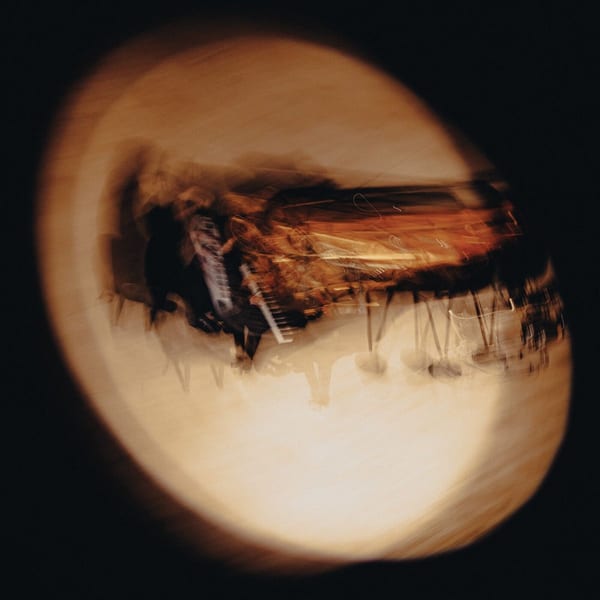
Cameron Winter's Live at Carnegie Hall and the live-album argument RYM can't settle
Three of 2026's most-loved records were recorded in front of an audience. They are three different kinds of record, and the site rates them as one.
DebateRiffiter6 min read
Live at Carnegie Hall is Cameron Winter's first live album, released October 9, 2026 on Partisan and PIAS. It documents his sold-out solo piano show at Carnegie Hall's Stern Auditorium on December 11, 2025, with songs from his 2024 debut Heavy Metal and three new ones. Its arrival near the top of RateYourMusic's ratings restarted the site's oldest argument: should a live album count like a studio one?
On December 11, 2025, Cameron Winter sat down at a Steinway in Carnegie Hall's main auditorium and played a sold-out room most of his debut album, a few older singles and three songs nobody had heard. Paul Thomas Anderson and Benny Safdie were filming from the stage on 16mm and 35mm, and within hours the phone footage from the seats was everywhere.
Ten months later the recording is out as Live at Carnegie Hall (Partisan/PIAS, October 9), eleven tracks across two LPs, and RateYourMusic has spent the weeks since arguing about it.
The numbers moved fast. A week after release a thread on r/rateyourmusic had it around 4.3 from roughly 3,000 ratings and inside the site's chronological top 1,000, and the replies split exactly where you'd expect. Same week, same subreddit: "Is anyone else not really a fan of live albums?", "Can someone explain live albums to me?", "How are live albums weighted on RYM compared to albums" The Winter record didn't start this fight. It just gave everyone a reason to have it again.
The case against
The skeptic's argument is simple and not stupid. A live album is usually songs you already know, played with less control, rated by people who were fans before they pressed play. Hardly anyone's first Cameron Winter record is going to be the Carnegie Hall one. RYM doesn't publish how its charts weight anything, but regulars take it as given that live releases get discounted for exactly this reason, and that a live album doesn't count toward the year's album chart at all.
And the studio record is the obvious comparison.
Heavy Metal came out on December 6, 2024, and what people love about it is the arranging: odd instruments in odd places, a voice that slurs and mumbles and then suddenly commits. Strip that to voice and piano and you lose things. Plenty of Winter's biggest fans said exactly that in the threads: beautiful, and it sent them straight back to the studio versions.
That reaction is fair. Where the skeptics go wrong is treating "live album" as one kind of object.
Three live records, three different things
Live records have done unusually well on RYM this year, and the three that keep coming up in these arguments aren't the same kind of record at all.
Ichiko Aoba's 15th Anniversary Concert was recorded at Tokyo Opera City Concert Hall on January 20, 2025 and released on January 28 this year. It runs from her earliest songs to her newest, with Anmi Yamada turning up as a surprise guest. This is the live album the skeptics are describing: a retrospective, a thank-you to people who already know every song. It's lovely. It's also the one record of the three where the discount makes sense, because almost everyone rating it is a fan rating a career.
Swans' Newly Sentient Being is the opposite case. It's the band's last "Big Sound" show of the era that began with the 2010 reunion, recorded in Berlin on November 28, 2025: five tracks, about two and a half hours, and a lot of music Swans never recorded anywhere else. Calling it a live album is technically correct and tells you almost nothing. It's a new Swans album that happens to have an audience on it, and discounting it for that is like discounting a studio record for having room mics.
Winter's record sits between the two. Most of it is Heavy Metal, rearranged for one man and a piano. But it also opens with "It All Fell in the River," a song that exists nowhere else, and "Emperor XIII in Shades" and "If You Turn Back Now" are new too. The other songs aren't recreations. The Line of Best Fit's review talks about new piano arrangements whose tempo bends with each song, and the point fans who prefer it keep making is about the voice: on this record he sings out, in tune and at full volume, where the studio takes keep him half-hidden.
One rule, three kinds of record. That's the problem.
The shelf it actually belongs on
If you want to know whether Live at Carnegie Hall deserves its rating, comparing it to Heavy Metal is the wrong test. The right comparison is the small group of live records RYM already treats as albums in their own right, and every one of them is a person alone with an instrument, or a band at a moment that can't happen twice.
Townes Van Zandt's Live at the Old Quarter, Houston, Texas was taped over five nights in July 1973 on a portable four-track and sat on a shelf until Tomato Records put it out in 1977. Nobody ranks it against the studio albums those songs came from. It's the Townes record people tell you to start with, because the room is part of the song.
Jeff Mangum's Live at Jittery Joe's is the closer cousin. He played a coffee shop in Athens, Georgia, on March 7, 1997, almost a year before In the Aeroplane Over the Sea came out, with no setlist and some songs picked by the audience. The tape circulated, bootlegs of it were reportedly going for silly money on eBay, and Mangum put it out himself in 2001 on Orange Twin to undercut them.
And then there's Fishmans' 98.12.28 Otokotachi no Wakare, recorded at Akasaka Blitz in Tokyo on the last night of a tour meant as a farewell to bassist Yuzuru Kashiwabara. Singer Shinji Sato died on March 15, 1999, less than three months later, and the album came out that September. It sits high on RYM's all-time chart, and you can't separate the recording from what happened after it. Nobody calls that a problem.
Where I land
The discount is right about Aoba's record and wrong about Swans'. Winter's belongs on the shelf with the Old Quarter and Jittery Joe's, which means rating it as its own album and leaving Heavy Metal out of the sum.
The Mangum comparison is the one that explains the ratings rush. Jittery Joe's had a reputation before it had a release, because people had been passing the bootleg around for years. Live at Carnegie Hall had ten months of phone clips. Thousands of people had already watched the shaky phone videos, and by October 9 they'd made up their minds. The 9s and 10s that showed up on day one weren't a reaction to a record. They were the record catching up with a reputation the audience had built without it.
That isn't a reason to dock it. It's how every live album on that shelf got there. What will decide whether it stays near the top is the same thing that kept Old Quarter there for nearly fifty years: whether people who never saw the clips, never cared about Geese and never heard Heavy Metal still put it on twice. Anderson's film, picked up by Janus and Criterion, starts a 35mm theatrical run in North America on November 20. That'll bring in a wave of people who meet these songs at the piano first, and their ratings are the ones worth watching.
For the older canon of records that beat their studio versions, starting with James Brown's Live at the Apollo, our guide to live albums that became the definitive version is the place to start.
Rate the Carnegie Hall record and Heavy Metal above, then tell us in the comments which one you'd keep if you could only have one. Bonus points for anyone willing to defend the Swans discount.
Discussion
Disagree? Have a better record in mind? Say it — top takes rise.
Sign in to join the discussion.
No one's weighed in yet. Go first.