Discography
18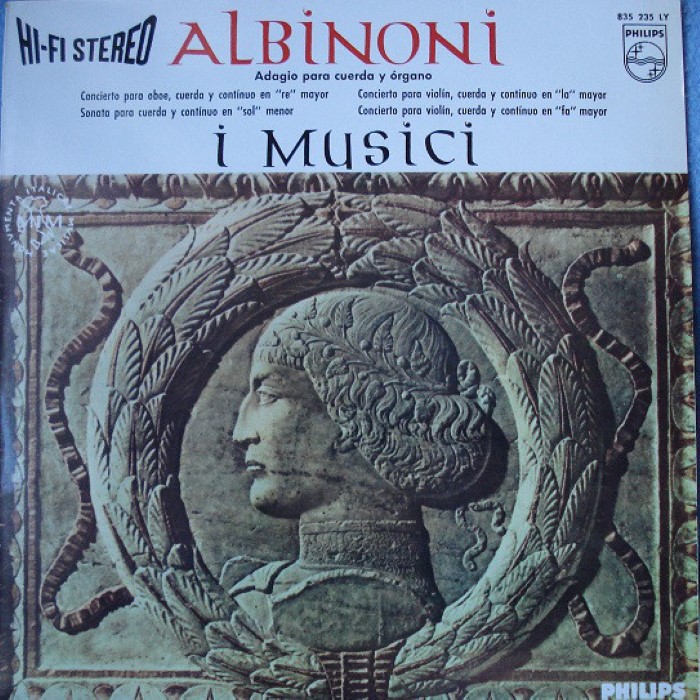
Most popular
Adagio - Sonata - 3 Conciertos
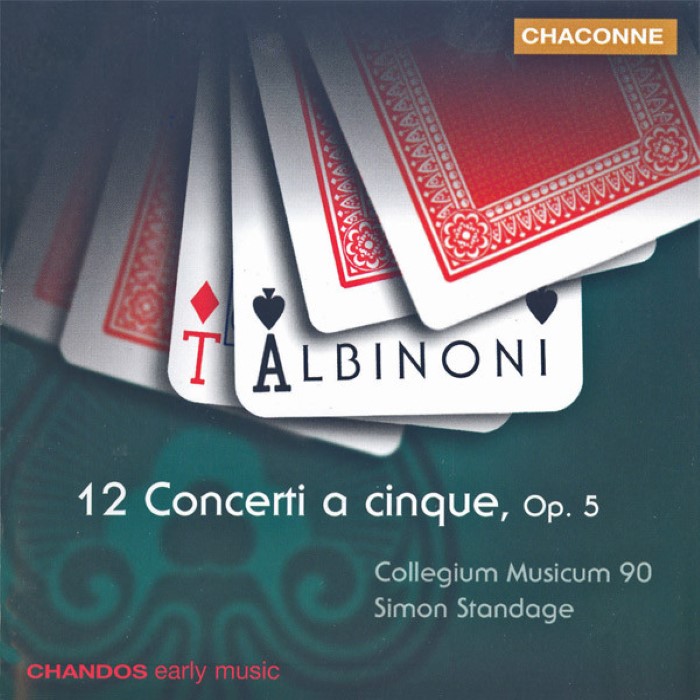
12 Concerti a cinque Op. 5 (Simon Standage & Collegium Musicum 90)
-
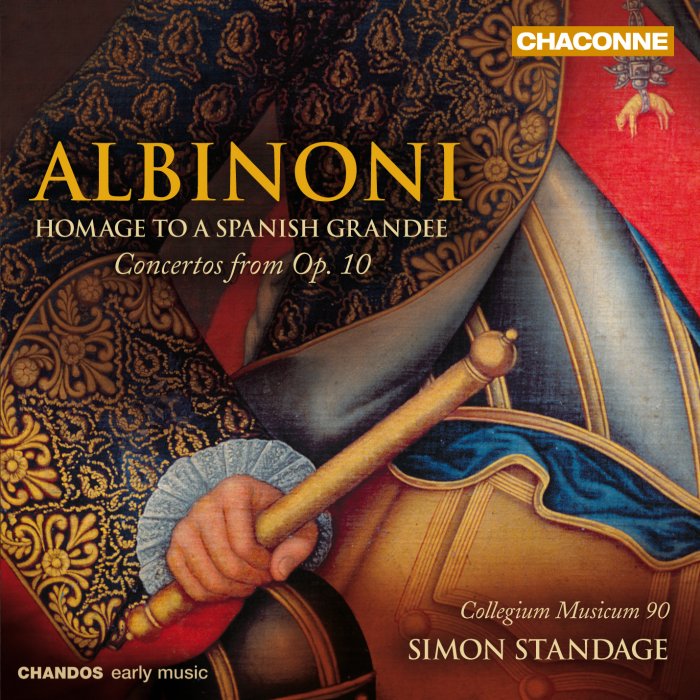
Homage to a Spanish Grandee: Concertos from op. 10
2010
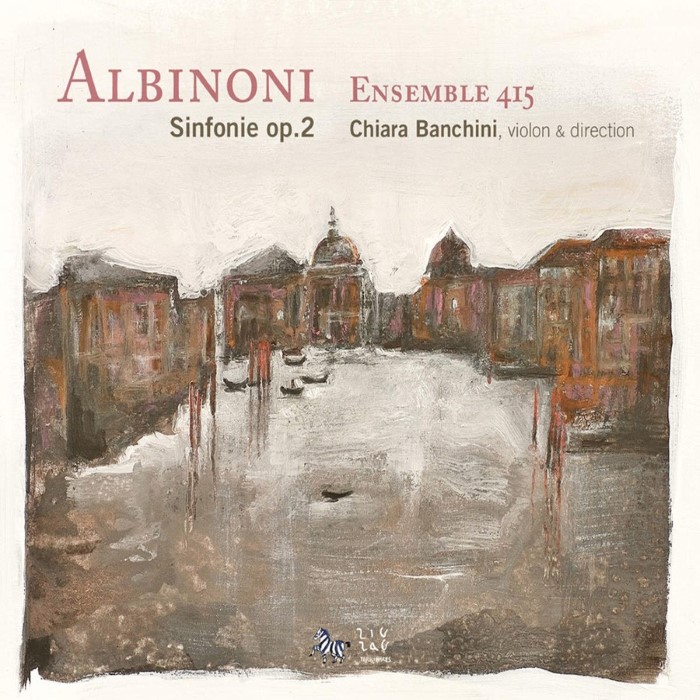
Sinfonie a Cinque Op. 2 (Ensemble 415 feat. Violin & Direction: Chiara Banchini)
2009
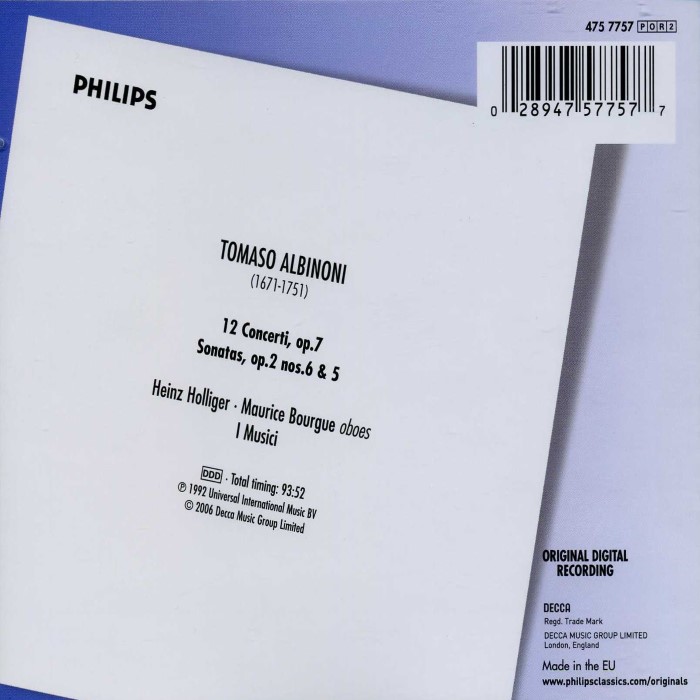
12 Concerti, Op. 7 (I Musici)
2006
Concertos, op. 10, nos. 1-6
2004
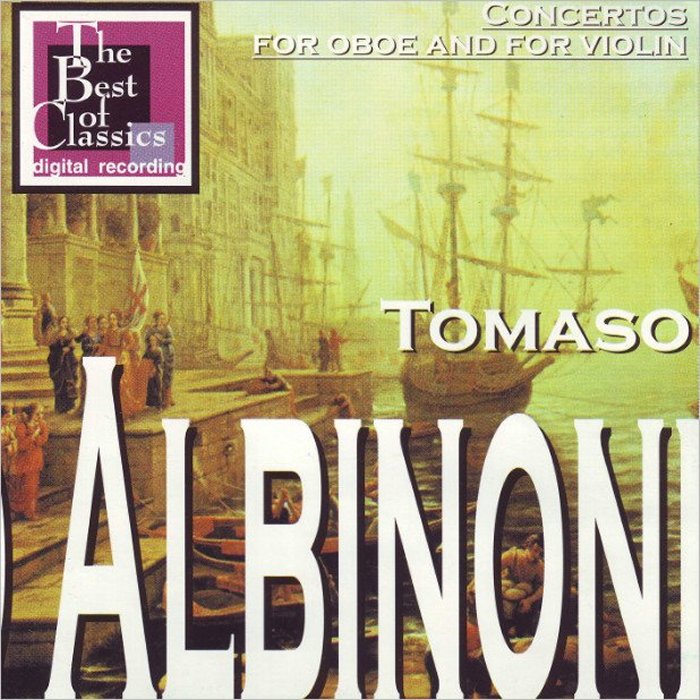
Concertos for oboe and for violin (Eduard Kaufmann, Gunars Larsen, Festival Strings Lucerne, Rudolf Baumgartner, Pierre Pierlot)
2001
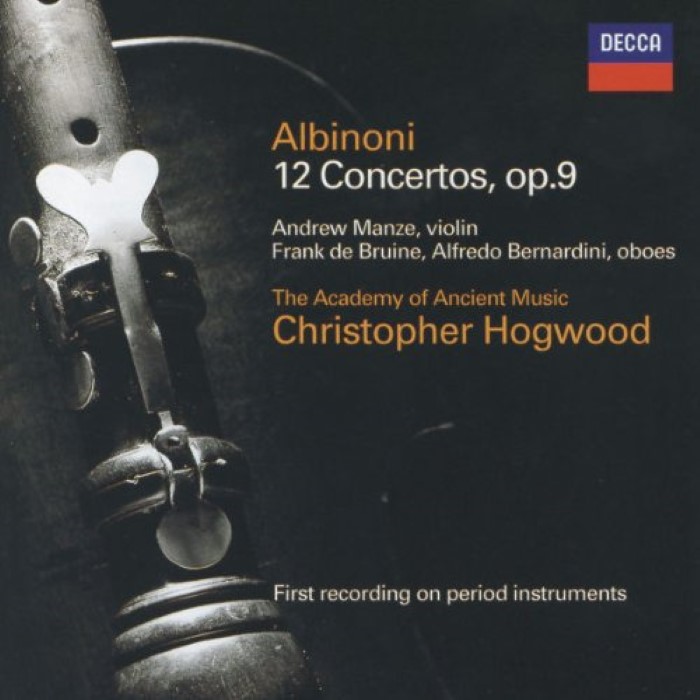
12 Concertos, Op. 9 (The Academy of Ancient Music feat. conductor: Christopher Hogwood)
1999
Adagio
1997
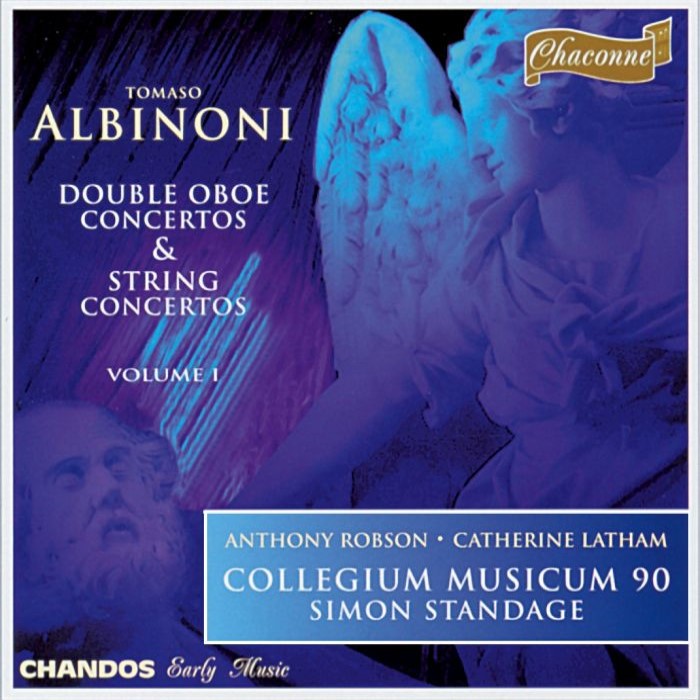
Double Oboe Concertos & String Concertos, Volume I
1996
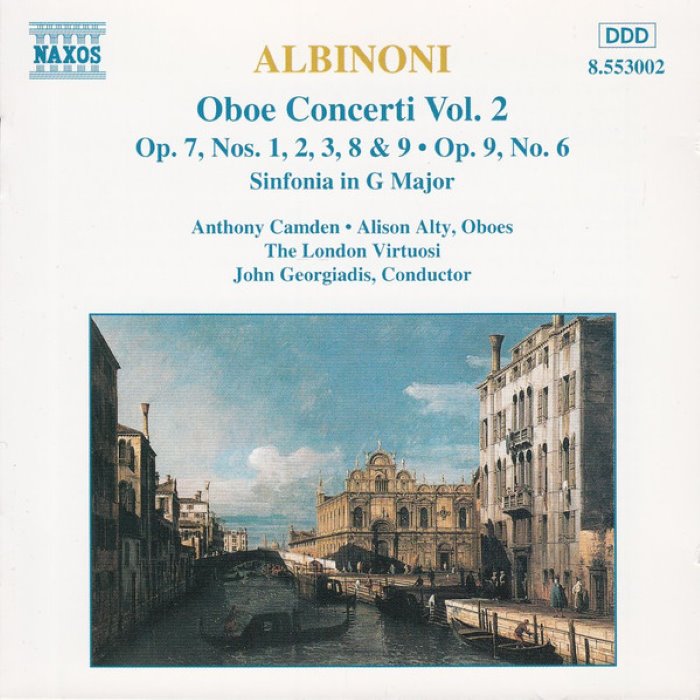
Oboe Concerti, Volume 2 (The London Virtuosi feat. conductor: John Georgiadis, oboe: Anthony Camden)
1995
- Oboe Concerti, Volume 3 (The London Virtuosi feat. conductor: John Georgiadis, oboe: Anthony Camden)
Oboe Concerti, Volume 3 (The London Virtuosi feat. conductor: John Georgiadis, oboe: Anthony Camden)
1995
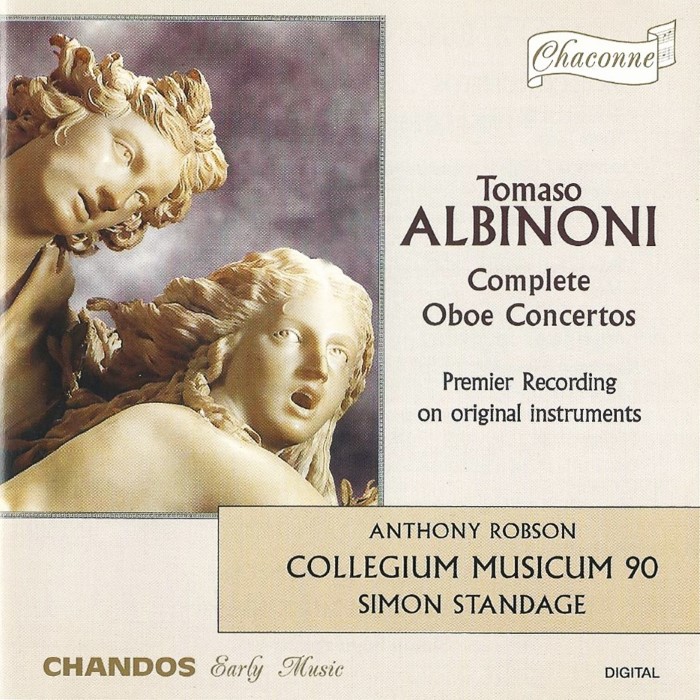
Complete Oboe Concertos
1995
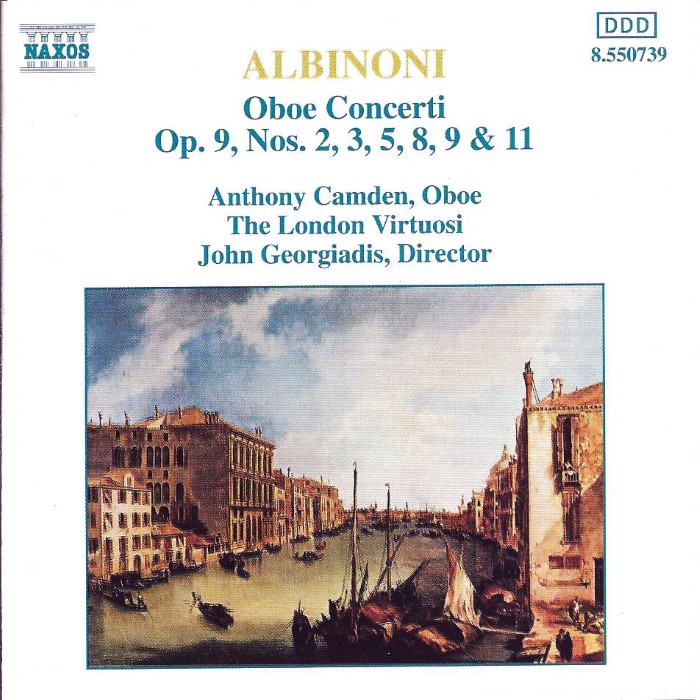
Oboe Concerti (The London Virtuosi feat. conductor: John Georgiadis, oboe: Anthony Camden)
1993
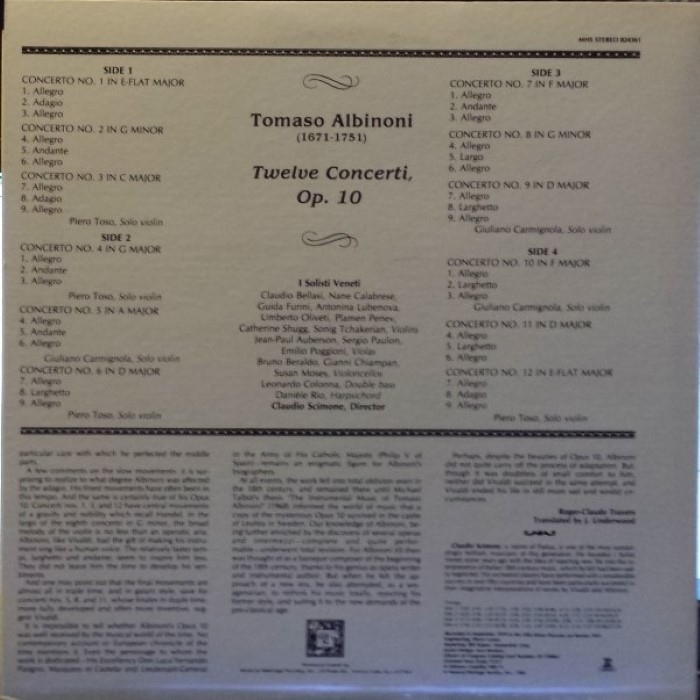
12 Concertos, op. 10
1981
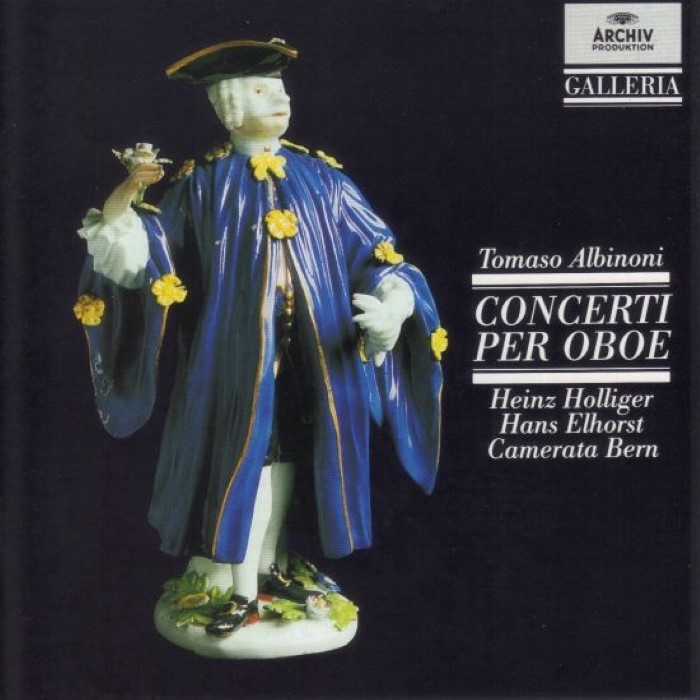
Concerti per Oboe, Op. 7 (Camerata Bern feat. oboe: Heinz Holliger, oboe: Hans Elhorst)
1979
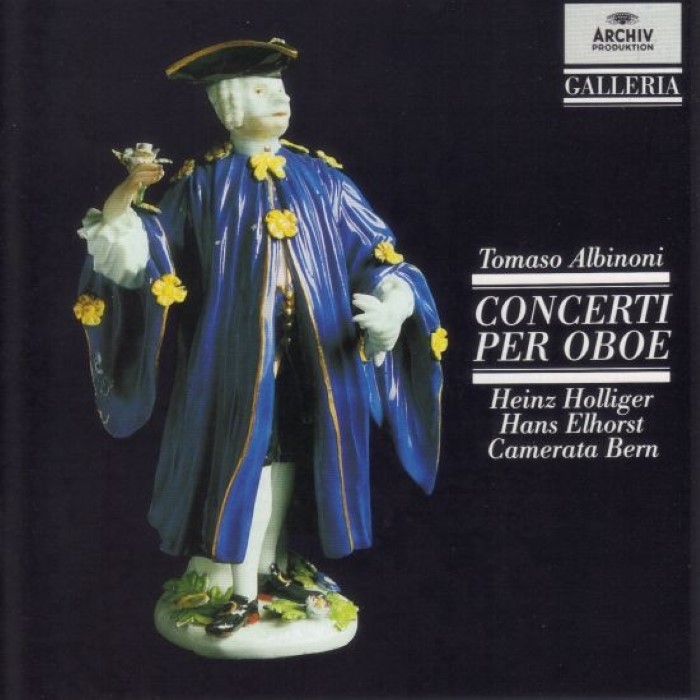
Oboe Concertos Op. 7
1979
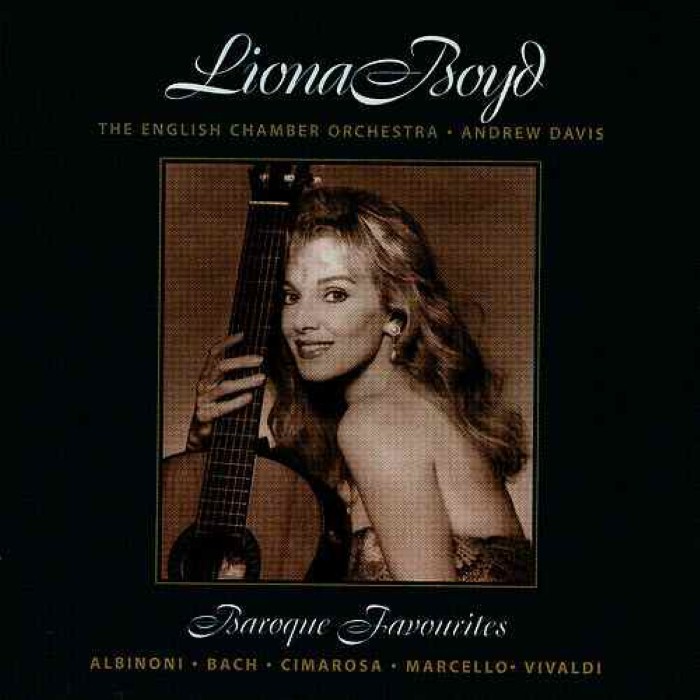
Baroque Favorites
1979
Upcoming shows
Community
More about Tomaso Giovanni Albinoni
About
Tomaso Giovanni Albinoni was an Italian Baroque composer. While famous in his day as an opera composer, he is mainly remembered today for his instrumental music, such as the concertos, some of which are regularly recorded. Born in Venice, Republic of Venice, to Antonio Albinoni, a wealthy paper merchant in Venice, he studied violin and singing. Relatively little is known about his life, especially considering his contemporary stature as a composer, and the comparatively well-documented period in which he lived. In 1694 he dedicated his Opus 1 to the fellow-Venetian, Cardinal Pietro Ottoboni (grand-nephew of Pope Alexander VIII); Ottoboni was an important patron in Rome of other composers, such as Arcangelo Corelli. His first opera, Zenobia, regina de Palmireni, was produced in Venice in 1694. Albinoni was possibly employed in 1700 as a violinist to Charles IV, Duke of Mantua, to whom he dedicated his Opus 2 collection of instrumental pieces. In 1701 he wrote his hugely popular suites Opus 3, and dedicated that collection to Cosimo III de' Medici, Grand Duke of Tuscany.
Read moreRead less
In 1705, he was married; Antonino Biffi, the maestro di cappella of San Marco was a witness, and evidently was a friend of Albinoni's. Albinoni seems to have no other connection with that primary musical establishment in Venice, however, and achieved his early fame as an opera composer at many cities in Italy, including Venice, Genoa, Bologna, Mantua, Udine, Piacenza, and Naples. During this time he was also composing instrumental music in abundance: prior to 1705, he mostly wrote trio sonatas and violin concertos, but between then and 1719 he wrote solo sonatas and concertos for oboe. Unlike most composers of his time, he appears never to have sought a post at either a church or noble court, but then he was a man of independent means and had the option to compose music independently. In 1722, Maximilian II Emanuel, Elector of Bavaria, to whom Albinoni had dedicated a set of twelve concertos, invited him to direct two of his operas in Munich. Around 1740, a collection of Albinoni's violin sonatas was published in France as a posthumous work, and scholars long presumed that meant that Albinoni had died by that time. However it appears he lived on in Venice in obscurity; a record from the parish of San Barnaba indicates Tomaso Albinoni died in Venice in 1751, of diabetes mellitus. Most of his operatic works have been lost, having not been published during his lifetime. Nine collections of instrumental works were however published, meeting with considerable success and consequent reprints; thus it is as a composer of instrumental music (99 sonatas, 59 concertos and 9 sinfonias) that he is known today. In his lifetime these works were favorably compared with those of Corelli and Vivaldi, and his nine collections published in Italy, Amsterdam and London were either dedicated to or sponsored by an impressive list of southern European nobility. Albinoni wrote at least fifty operas of which twenty-eight were produced in Venice between 1723 and 1740. Albinoni himself claimed 81 operas (naming his second-to-last opera, in the libretto, as his 80th). In spite of his enormous output of operas, today he is most noted for his instrumental music, especially his oboe concertos. He is the first Italian known to employ the oboe as a solo instrument in concerti (c. 1715, in his 12 concerti a cinque, op. 7) and publish such works, although earlier concerti featuring solo oboe were probably written by German composers such as Telemann or Händel. In Italy, Alessandro Marcello published his well known oboe concerto in D minor a little later, in 1717. Albinoni also employed the instrument often in his chamber works. His instrumental music greatly attracted the attention of Johann Sebastian Bach, who wrote at least two fugues on Albinoni's themes (Fugue in A major on a theme by Tomaso Albinoni, BWV 950, Fugue in B minor on a theme by Tomaso Albinoni, BWV 951) and frequently used his basses for harmony exercises for his pupils. Part of Albinoni's work was lost in World War II with the destruction of the Dresden State Library. As a result, little is known of his life and music after the mid-1720s. The famous "Albinoni Adagio in G minor" for violin, strings and organ, the subject of many modern recordings, is now thought to be a musical hoax composed by Remo Giazotto, although the recent discovery by musicologist Muska Mangano, Giazotto's last assistant, of a modern but independent manuscript transcription of the figured bass portion and six fragmentary bars of the first violin, "bearing in the top right-hand corner a stamp stating unequivocally the Dresden provenance of the original from which it was taken," provides some support for Giazotto's account that Albinoni was his source.
Tomaso Giovanni Albinoni in brief
- How many Tomaso Giovanni Albinoni releases are on Riffiter?
- 18 releases are catalogued, spanning 1979 to 2010.
- What is the most recent Tomaso Giovanni Albinoni release on Riffiter?
- Homage to a Spanish Grandee: Concertos from op. 10, released in 2010.