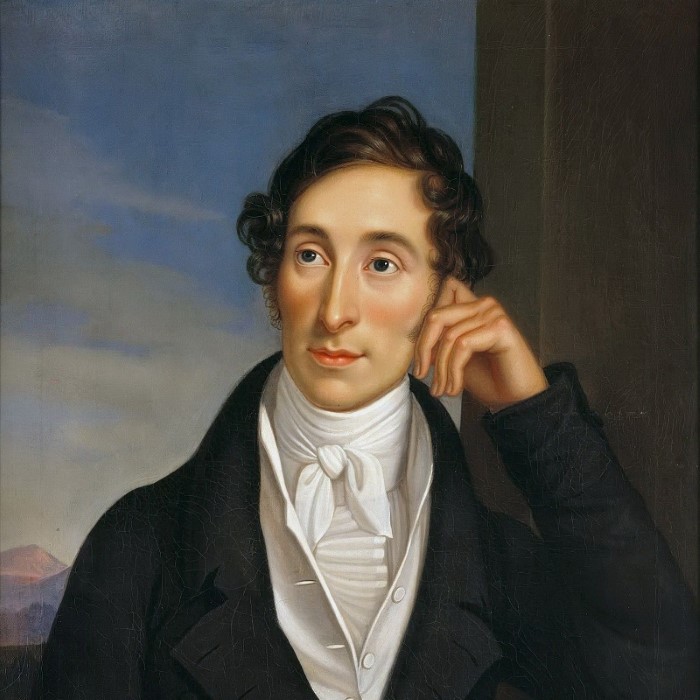
Discography
22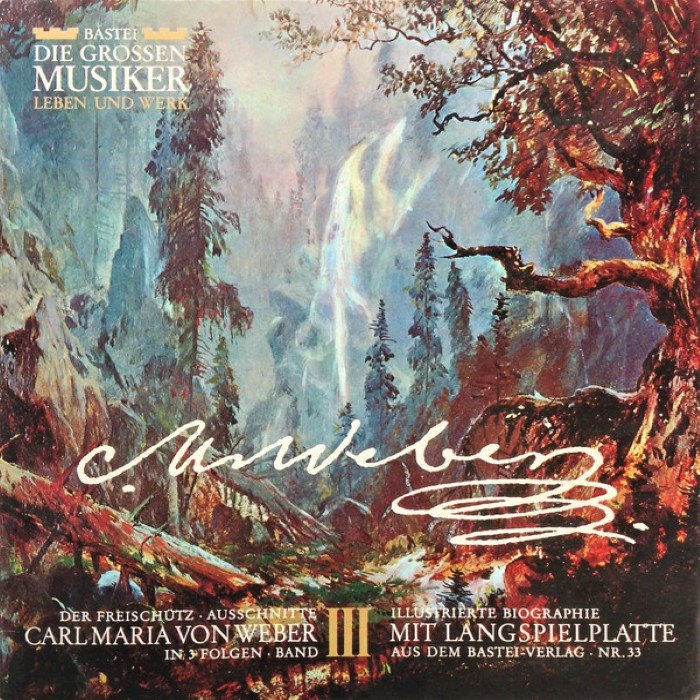
Most popular
Der Freischütz (Chor & Orchester der Deutschen Oper Berlin) (feat. conductor: Lovro von Matačić)
1995
- Der Freischütz (Chor & Orchester der Bayrischen Staatsoper München, feat. conductor: Robert Heger, singers: Anheisser, Weller, Nilsson, Koth, Berry)
Der Freischütz (Chor & Orchester der Bayrischen Staatsoper München, feat. conductor: Robert Heger, singers: Anheisser, Weller, Nilsson, Koth, Berry)
1995
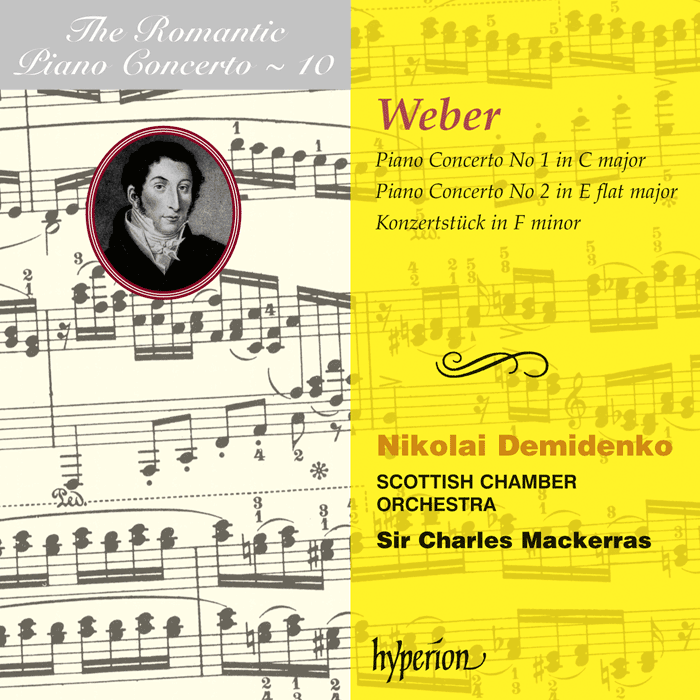
The Romantic Piano Concerto, Volume 10: Piano Concertos Nos. 1, 2 / Konzertstück in F minor
1995
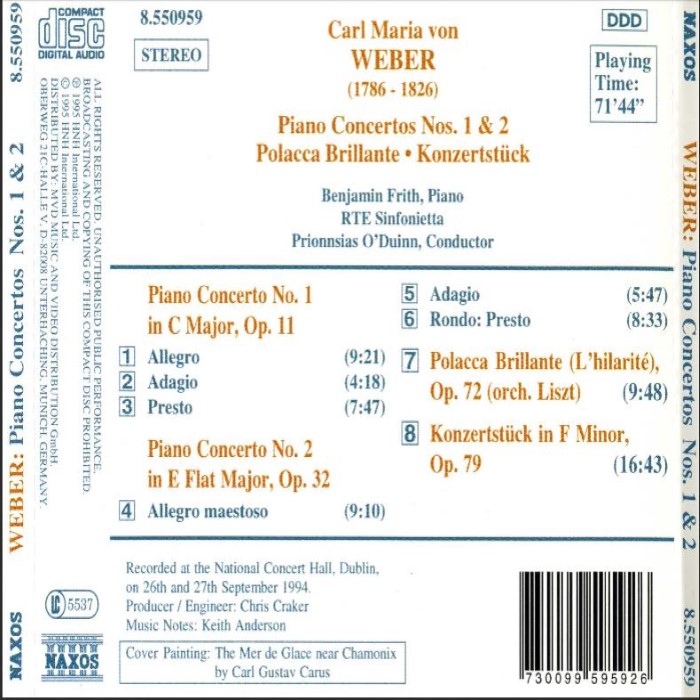
Piano Concertos Nos. 1 & 2
1995
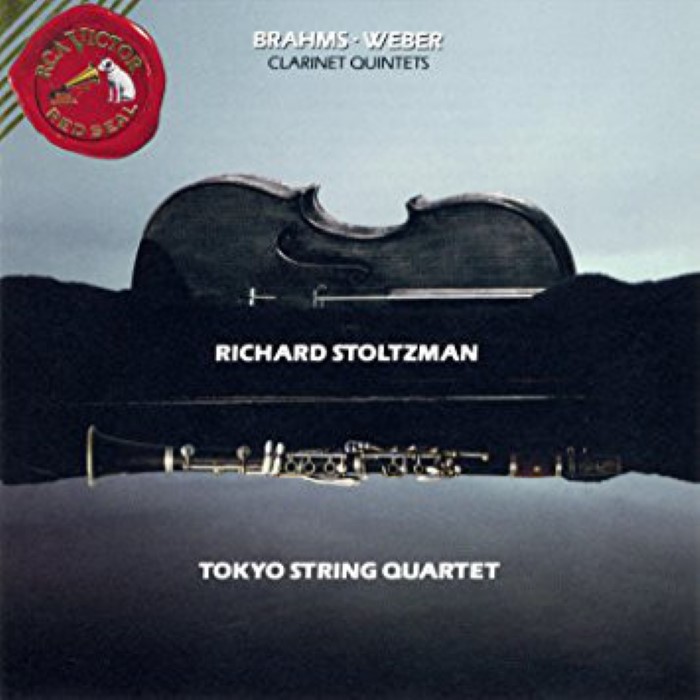
Clarinet Quintets & Quartet (L'Archibudelli feat. clarinet: Charles Neidich)
1995
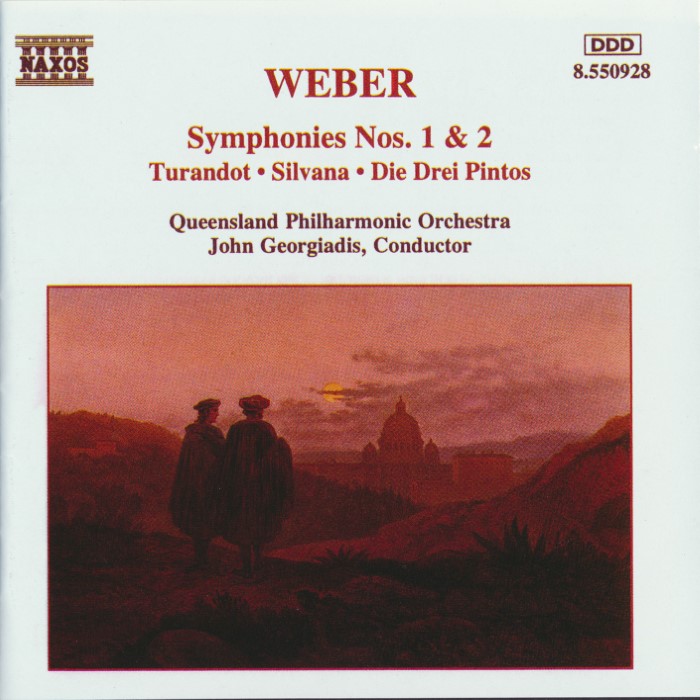
Symphonies Nos. 1 & 2 / Turandot / Silvana / Die Drei Pintos (Queensland Philharmonic Orchestra, feat. conductor: John Georgiadis)
1994
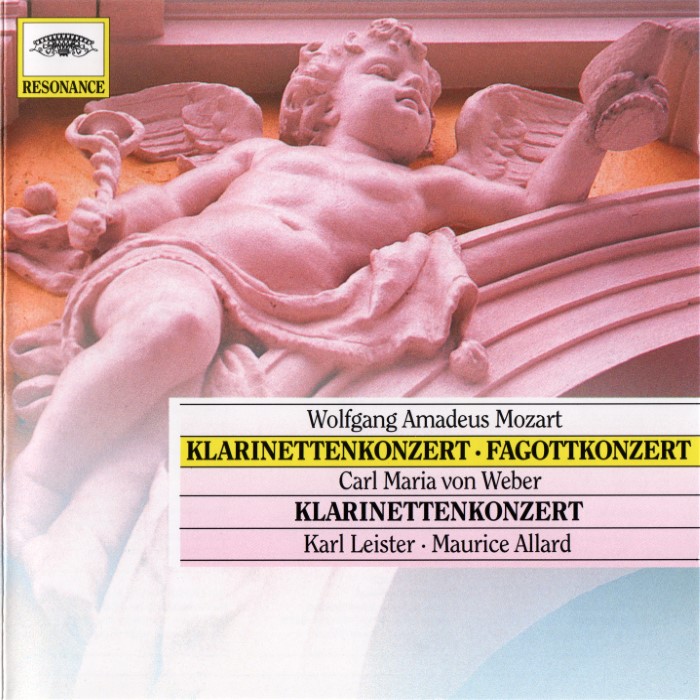
Mozart: Klarinettenkonzert - Fagottkonzert / Weber: Klarinettenkonzert (feat. clarinet: Karl Leister, bassoon: Maurice Allard)
1994
Euryanthe-Overture / Clarinet Concertos Nos. 1 & 2a
1994
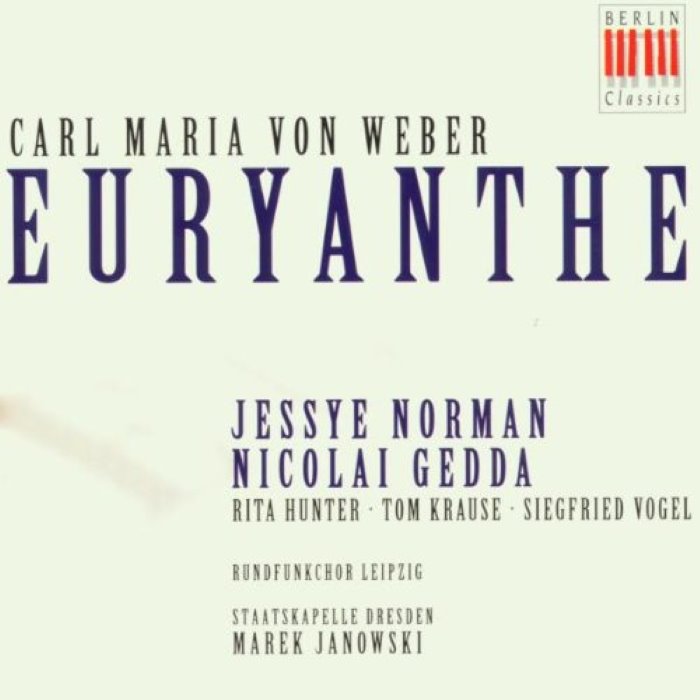
Euryanthe (Rundfunkchor Leipzig, Staatskapelle Dresden, feat. conductor: Marek Janowski, singers: Norman, Gedda, Hunter, Krause, Vogel)
1994
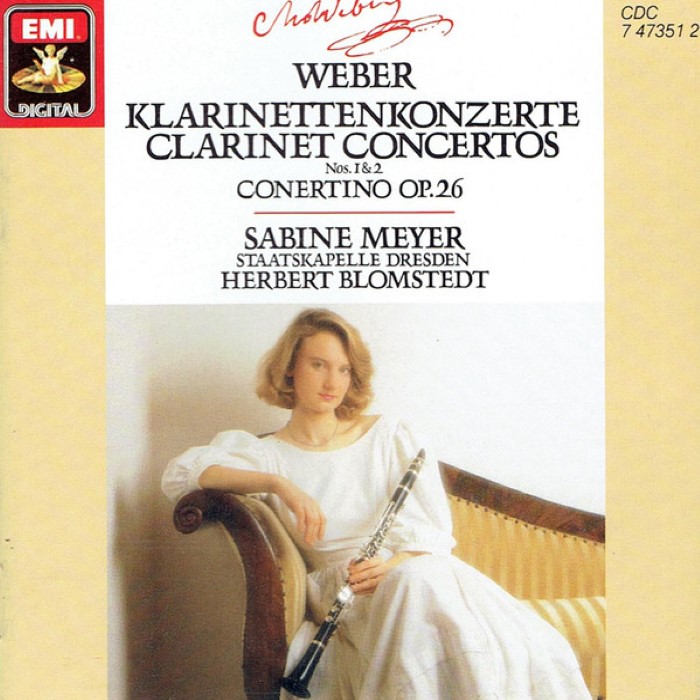
Clarinet Concertos Nos. 1 & 2 / Concertino for Clarinet Op. 36 (Staatskapelle Dresden, feat. clarinet: Sabine Meyer)
1993
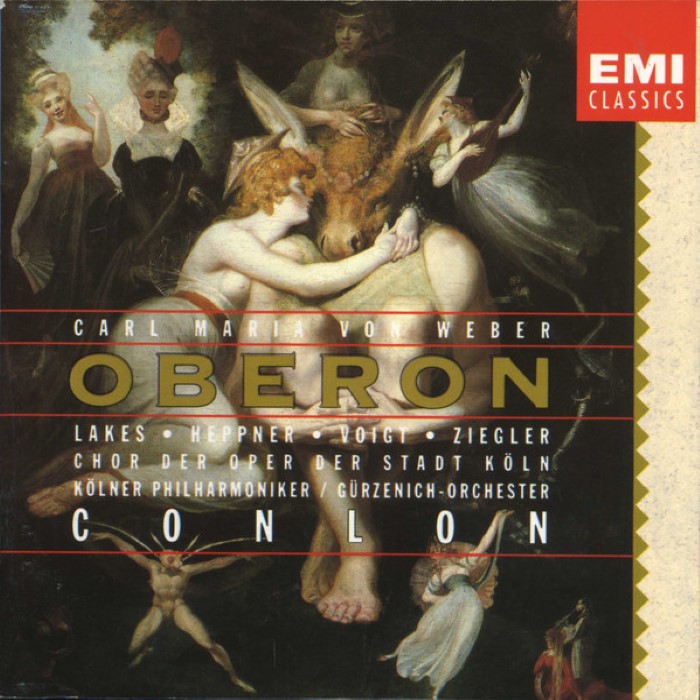
Oberon (Chor der Oper der Stadt Köln, Kölner Philharmoniker & Gürzenich-Orchester feat. conductor: James Conlon)
1992
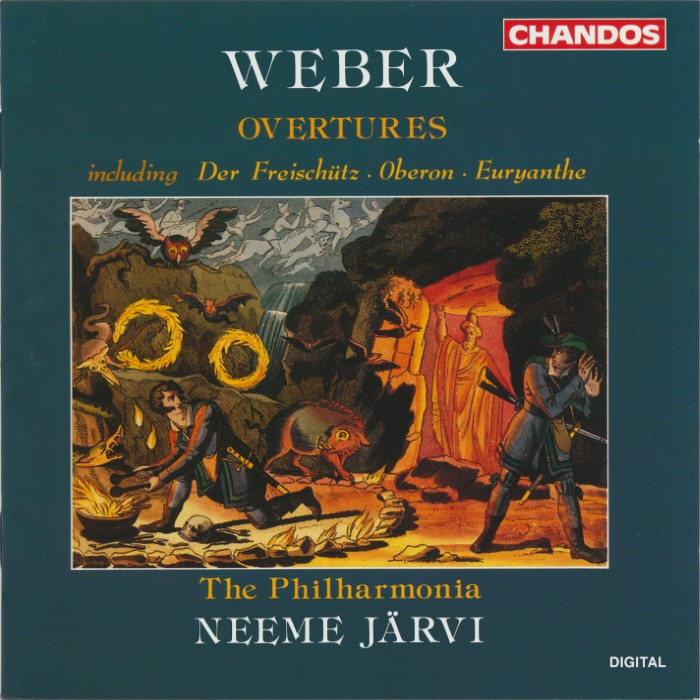
Overtures
1992
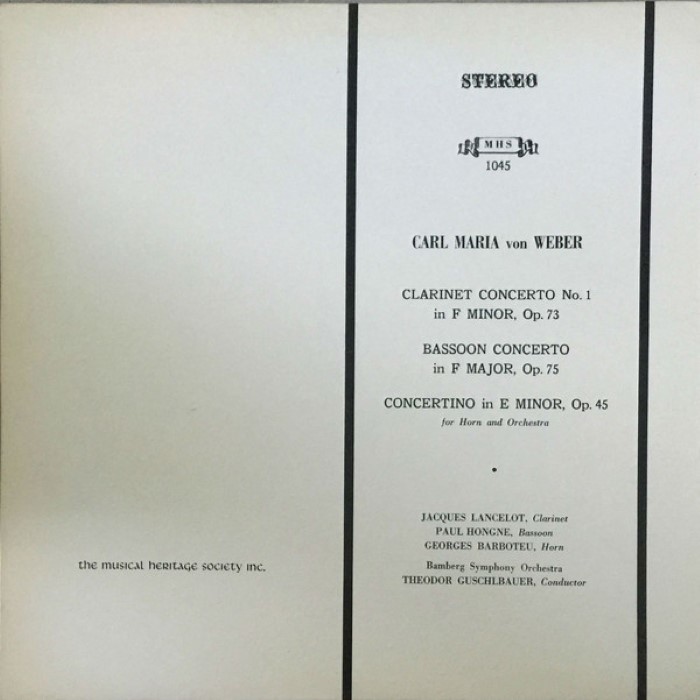
Bassoon Concertos
1991
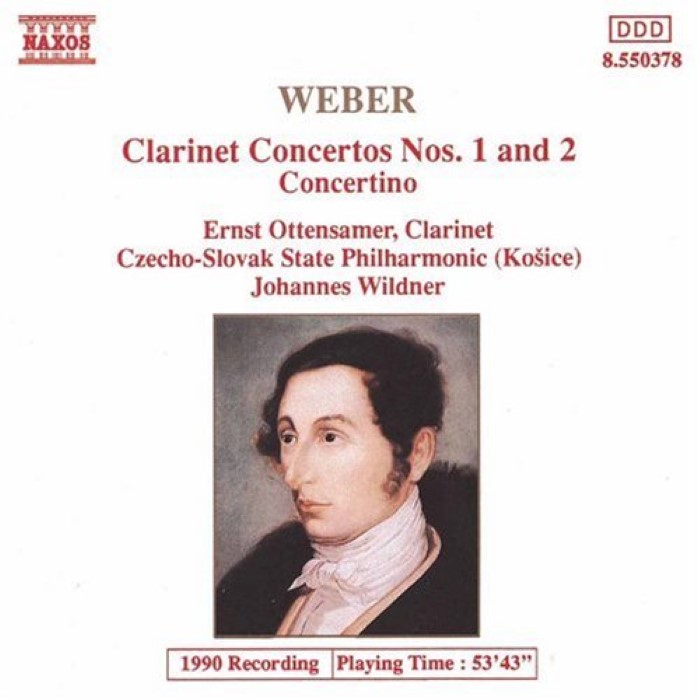
Clarinet Concertos Nos. 1 & 2, Concertino (Czecho-Slovak State Philharmonic, Košice feat. conductor: Johannes Wildner, clarinet: Ernst Ottensammer)
1990
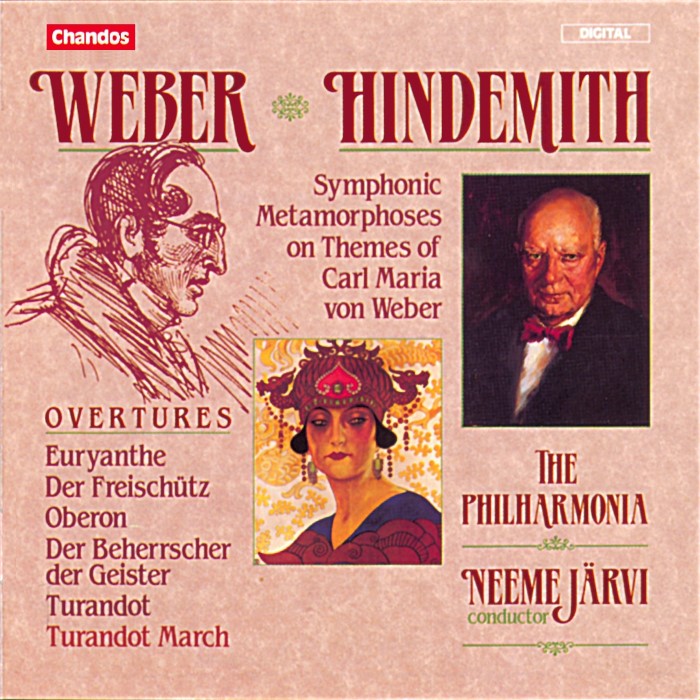
Weber: Overtures / Hindemith: Symphonic Metamorphoses on Themes of Carl Maria von Weber
1989
Piano Sonatas (Garrick Ohlsson)
1988
- Der Freischütz (Wiener Philarmoniker feat conductor: Wilhelm Furtwängler)
Der Freischütz (Wiener Philarmoniker feat conductor: Wilhelm Furtwängler)
1988
- Flute Trio and Sonatas (feat. flute: Stephen Preston, cello: Jennifer Ward Clarke, fortepiano: Richard Burnett)
Flute Trio and Sonatas (feat. flute: Stephen Preston, cello: Jennifer Ward Clarke, fortepiano: Richard Burnett)
1988
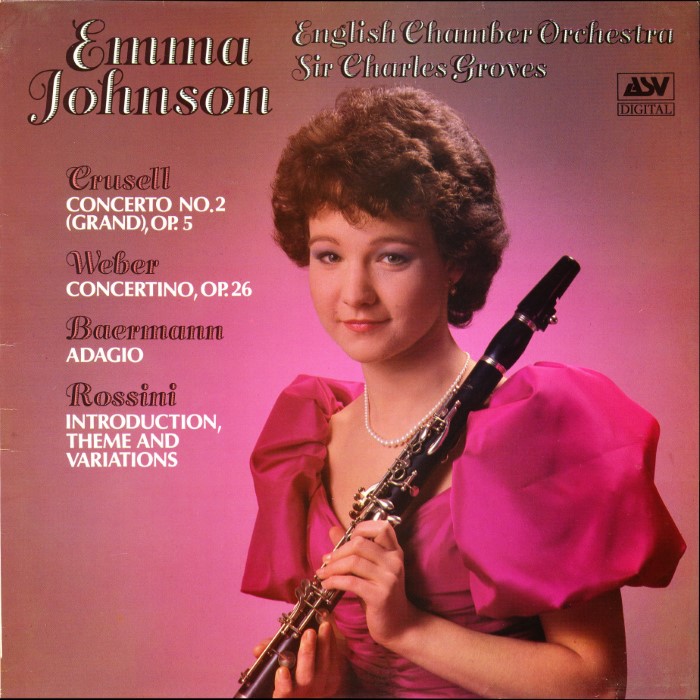
Emma Johnson / English Chamber Orchestra / Sir Charles Groves
1986
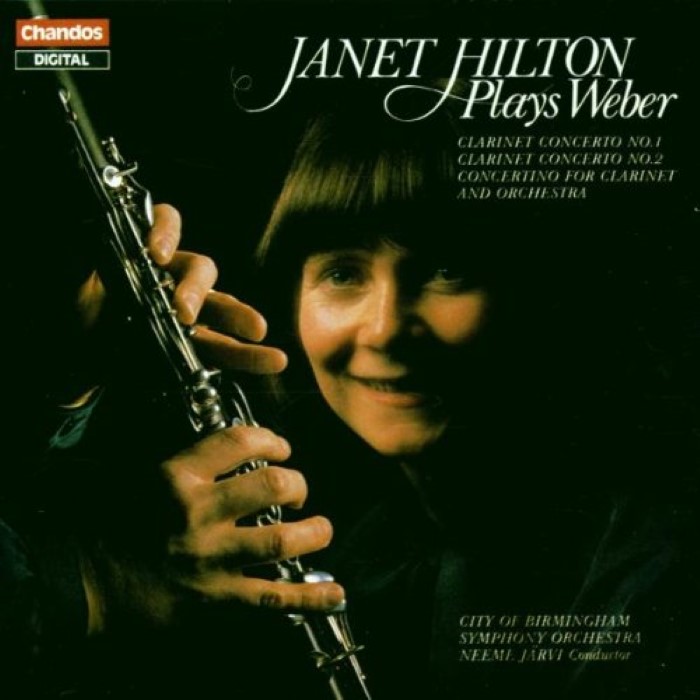
Clarinet Concertos & Clarinet Concertino
1982
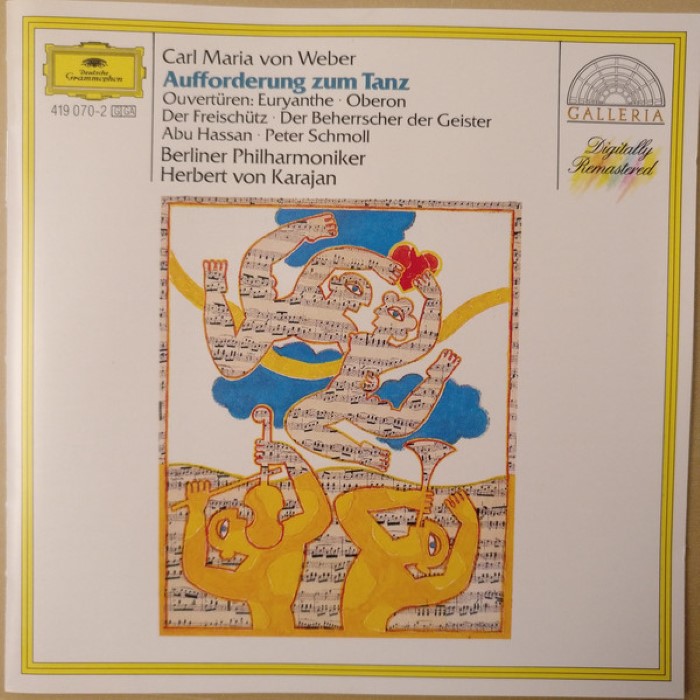
Aufforderung zum Tanz, Overtures
1972
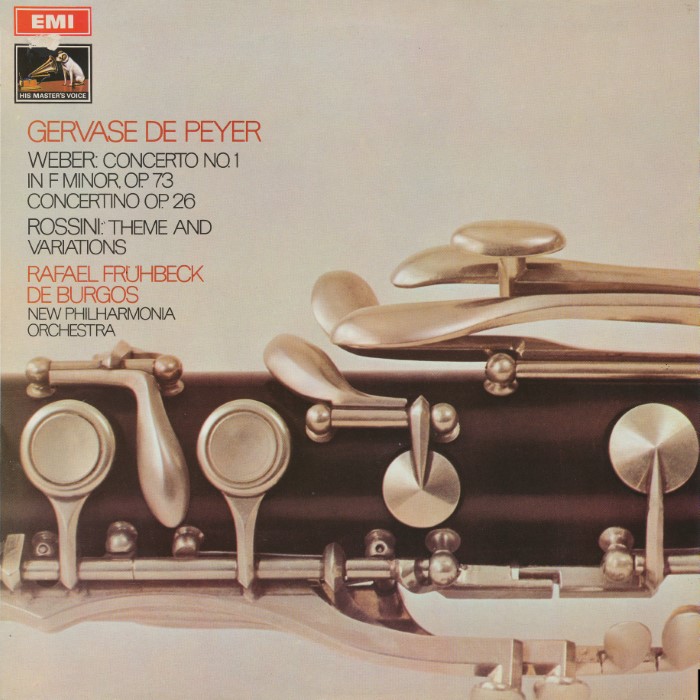
Weber: Clarinet Concerto No. 1 / Weber: Concertino / Rossini: Theme and Variations
1969
Upcoming shows
Community
More about Carl Maria von Weber
About
Carl Maria Friedrich Ernst von Weber was a German composer, conductor, pianist, guitarist and critic, one of the first significant composers of the Romantic school. Weber's operas Der Freischütz, Euryanthe and Oberon greatly influenced the development of the Romantic opera in Germany. Der Freischütz came to be regarded as the first German "nationalist" opera, Euryanthe developed the Leitmotif technique to a hitherto-unprecedented degree, while Oberon may have influenced Mendelssohn's music for A Midsummer Night's Dream and, at the same time, revealed Weber's lifelong interest in the music of non-Western cultures. This interest was first manifested in Weber's incidental music for Schiller's translation of Gozzi's Turandot, for which he used a Chinese melody, making him the first Western composer to use an Asian tune that was not of the pseudo-Turkish kind popularized by Mozart and others.
Read moreRead less
A brilliant pianist himself, Weber composed four sonatas, two concertos and the Konzertstück (Concert Piece) in F minor, which influenced composers such as Chopin, Liszt and Mendelssohn. The Konzertstück provided a new model for the one-movement concerto in several contrasting sections (such as Liszt's, who often played the work), and was acknowledged by Stravinsky as the model for his Capriccio for Piano and Orchestra. Weber's shorter piano pieces, such as the Invitation to the Dance, were later orchestrated by Berlioz, while his Polacca Brillante was later set for piano and orchestra by Liszt. Weber compositions for woodwind instruments occupy an important place in the musical repertoire. His compositions for the clarinet, which include two concertos, a concertino, a quintet, a duo concertante, and variations on a theme (posthumously), are regularly performed today. His Concertino for Horn and Orchestra requires the performer to simultaneously produce two notes by humming while playing—a technique known as "multiphonics". His bassoon concerto and the Andante e Rondo ungarese (a reworking of a piece originally for viola and orchestra) are also popular with bassoonists. Weber's contribution to vocal and choral music is also significant. His body of Catholic religious music was highly popular in 19th-century Germany, and he composed one of the earliest song cycles, Die Temperamente beim Verluste der Geliebten ( Temperaments on the Loss of a Lover). Weber was also notable as one of the first conductors to conduct without a piano or violin. Weber's orchestration has also been highly praised and emulated by later generations of composers – Berlioz referred to him several times in his Treatise on Instrumentation while Debussy remarked that the sound of the Weber orchestra was obtained through the scrutiny of the soul of each instrument. His operas influenced the work of later opera composers, especially in Germany, such as Marschner, Meyerbeer and Wagner, as well as several nationalist 19th-century composers such as Glinka. Homage has been paid to Weber by 20th-century composers such as Debussy, Stravinsky, Mahler (who completed Weber's unfinished comic opera Die drei Pintos and made revisions of Euryanthe and Oberon) and Hindemith (composer of the popular Symphonic Metamorphosis of Themes by Carl Maria von Weber). Weber also wrote music journalism and was interested in folksong, and learned lithography to engrave his own works.
Carl Maria von Weber in brief
- How many Carl Maria von Weber releases are on Riffiter?
- 22 releases are catalogued, spanning 1969 to 1995.
- What is the most recent Carl Maria von Weber release on Riffiter?
- Der Freischütz (Chor & Orchester der Deutschen Oper Berlin) (feat. conductor: Lovro von Matačić), released in 1995.