Discography
19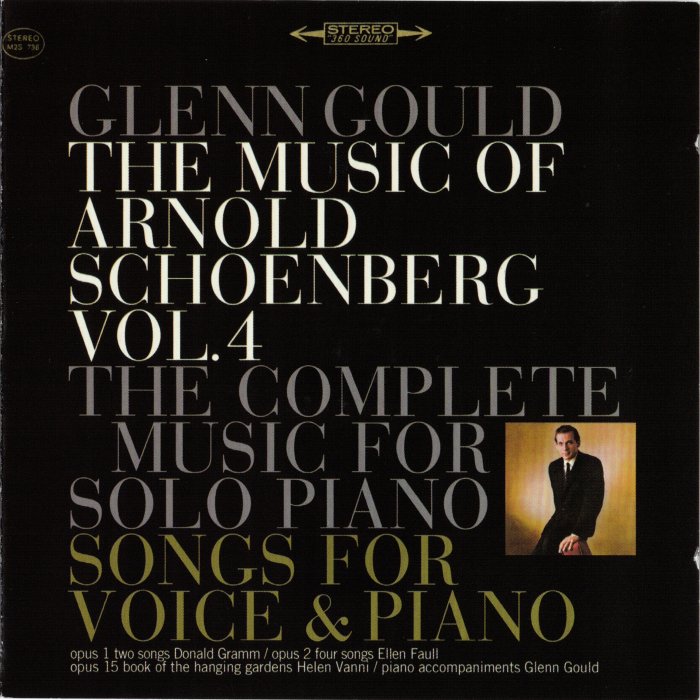
Most popular
The Music of Arnold Schönberg, Vol. 4: The Complete Music for Solo Piano / Songs for Voice & Piano: Opus 1 Two Songs / Opus 2 Four Songs / Opus 15 Book of the Hanging Gardens
2007
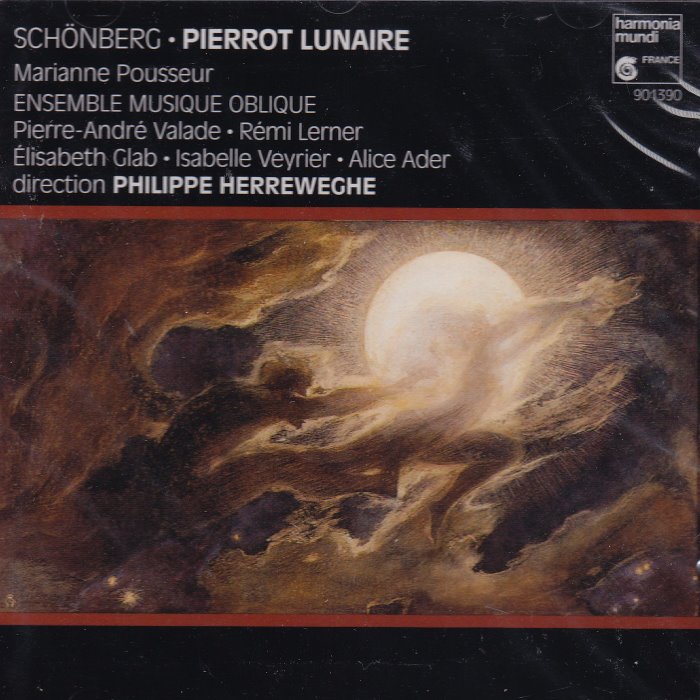
Pierrot Lunaire (Ensemble Musique Oblique feat. conductor: Philippe Herreweghe; soprano: Marianne Pousseur)
1993
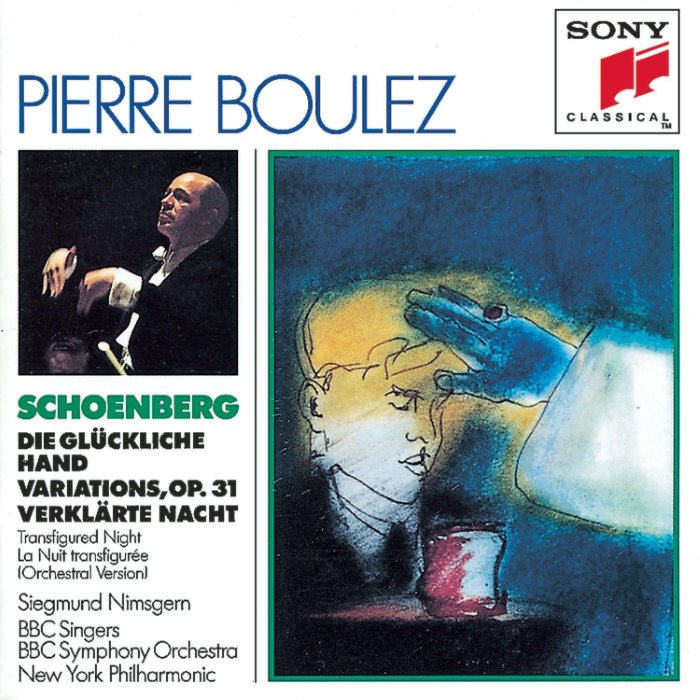
Glückliche Hand / Variations / Verklärte Nacht (Pierre Boulez)
1993
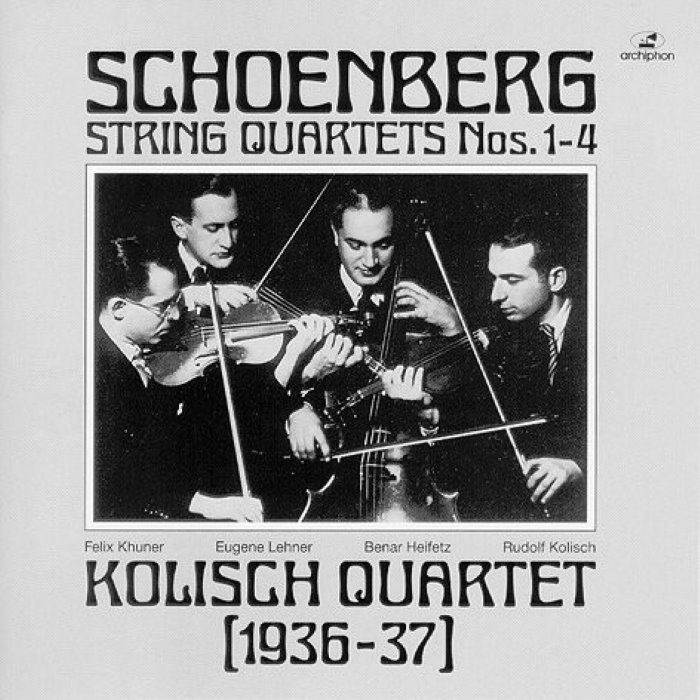
String Quartets Nos. 1-4 (Kolisch Quartet)
1992
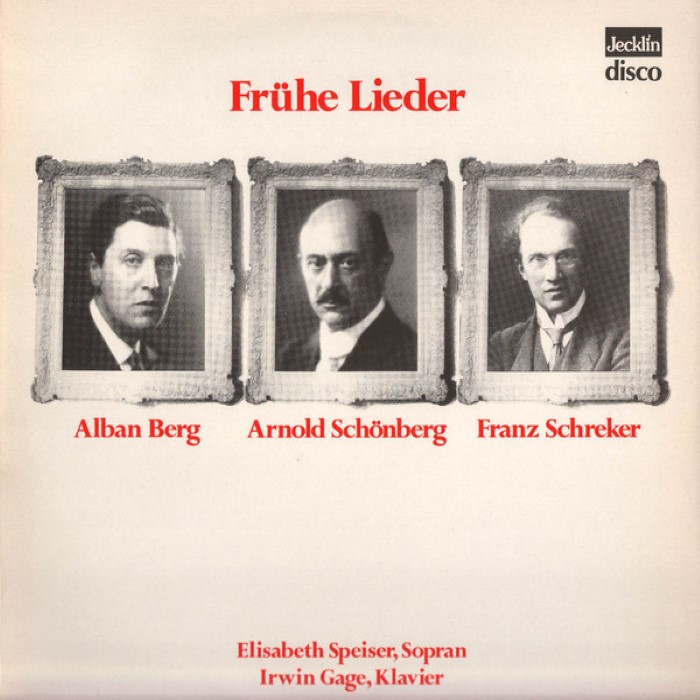
Lieder
1990
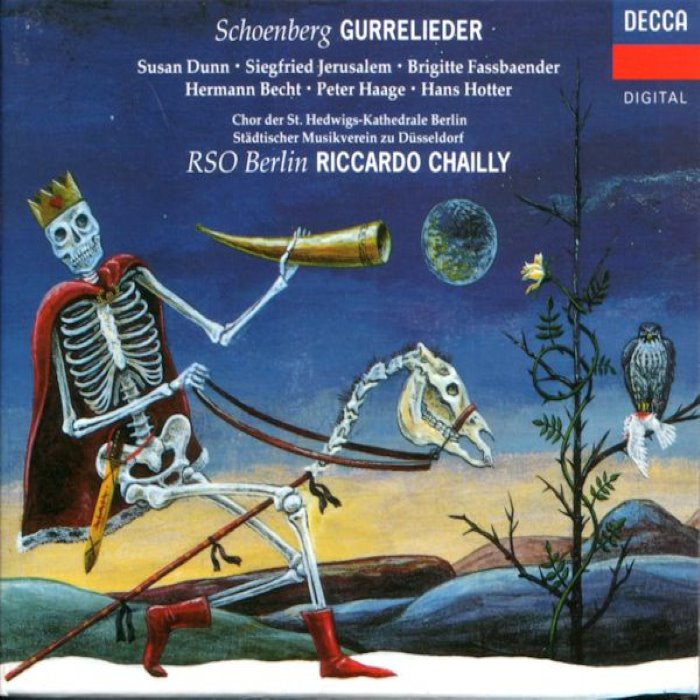
Gurrelieder (Radio-Symphonie-Orchester Berlin feat. conductor: Riccardo Chailly)
1990
- Kammersymphonie Op. 9 / Suite Op. 29 / Kaiserwalzer (Wiener Concert-Verein feat. conductor: Martin Sieghart)
Kammersymphonie Op. 9 / Suite Op. 29 / Kaiserwalzer (Wiener Concert-Verein feat. conductor: Martin Sieghart)
1990
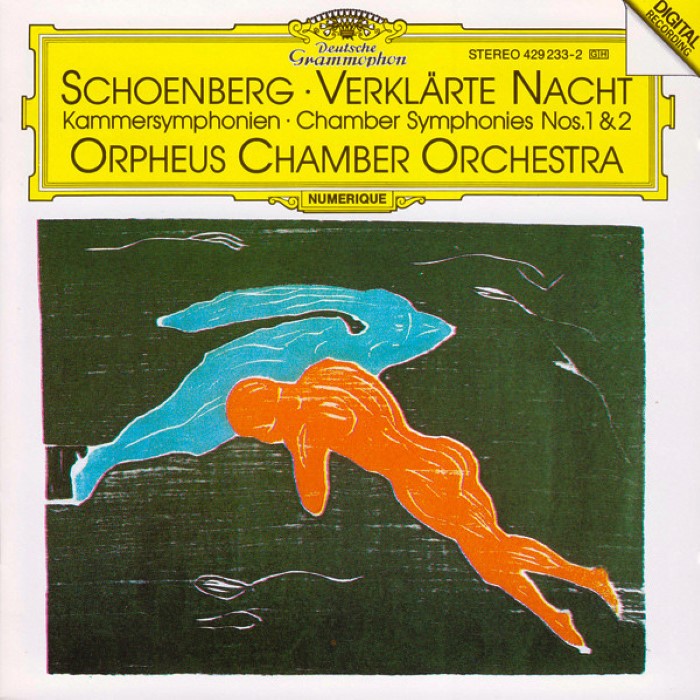
Verklärte Nacht / Kammersymphonien
1990
The Piano Music
1988
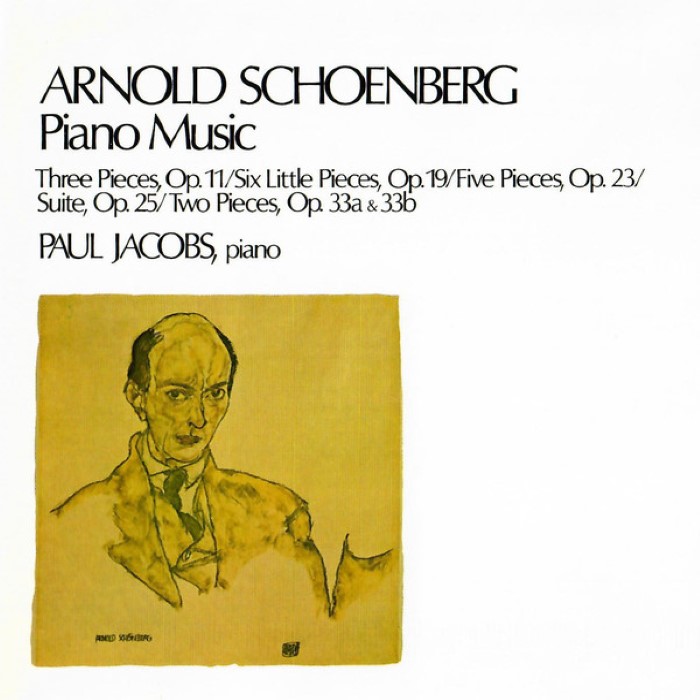
Piano Music
1988
Zemlinsky, Trio Op. 3 / Schönberg, Verklärte Nacht Op. 4 (Clementi-Trio Köln)
1987
Verklärte Nacht (Schönberg Ensemble)
1986
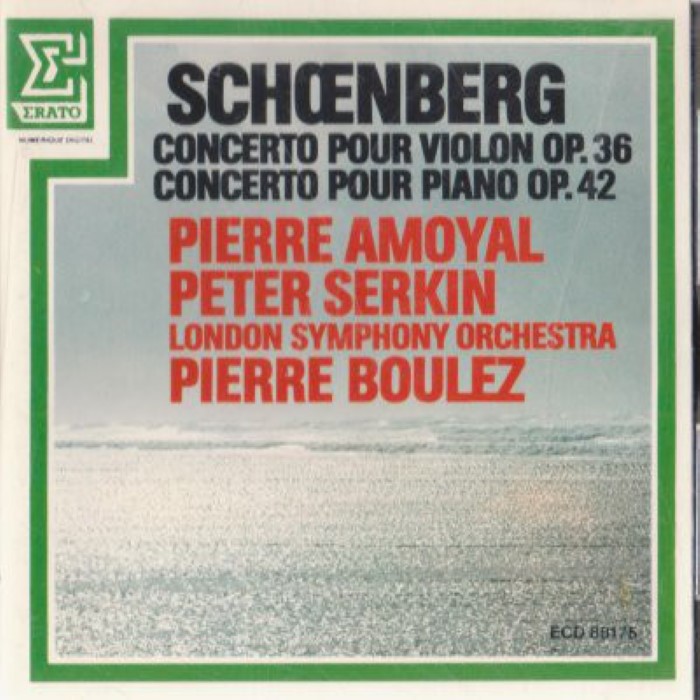
Violin Concerto / Piano Concerto
1986
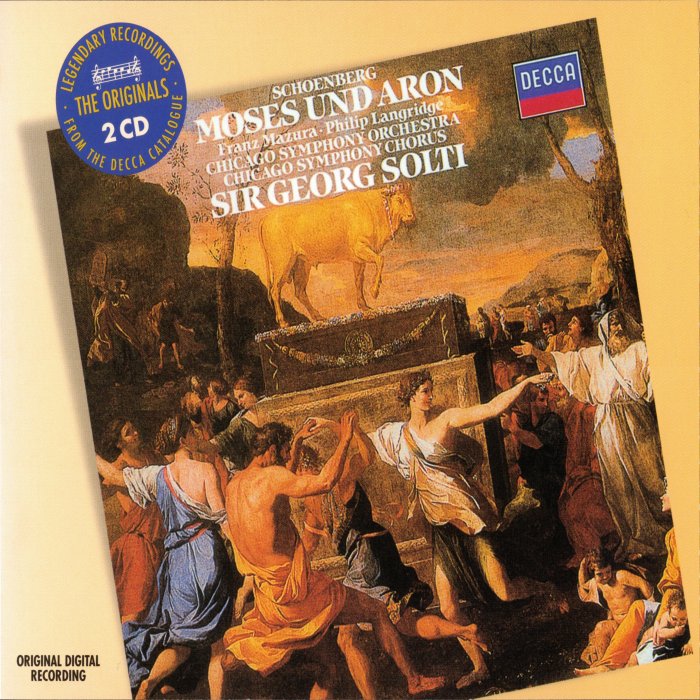
Moses und Aron (Chicago Symphony Orchestra, Chicago Symphony Chorus feat. conductor Sir Georg Solti)
1985
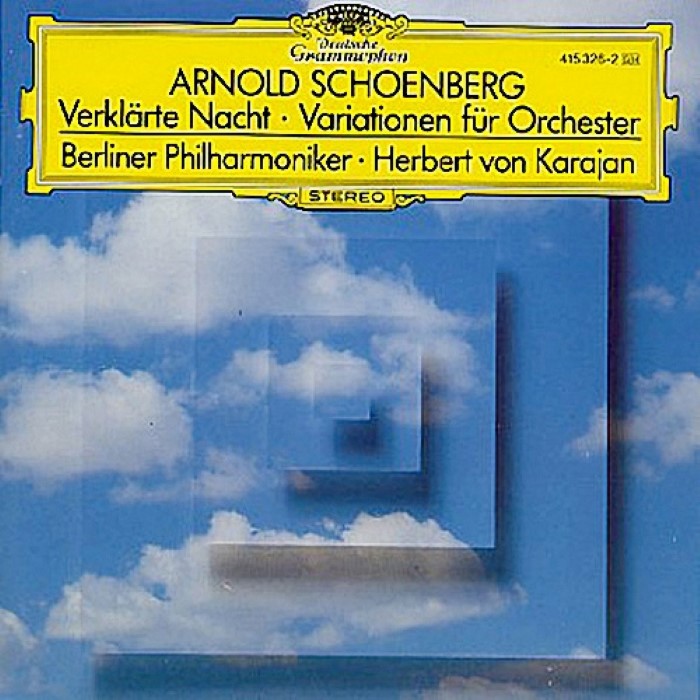
Verklärte Nacht / Variationen für Orchester (Berliner Philharmoniker feat. conductor: Herbert von Karajan)
1985
- Verklärte nacht / Streichtrio (LaSalle Quartet feat. viola: Donald McInnes, cello: Jonathan Pegis)
Verklärte nacht / Streichtrio (LaSalle Quartet feat. viola: Donald McInnes, cello: Jonathan Pegis)
1984
15 Poems from Das Buch der hängenden Gärten / Eight Songs, op. 6
1979
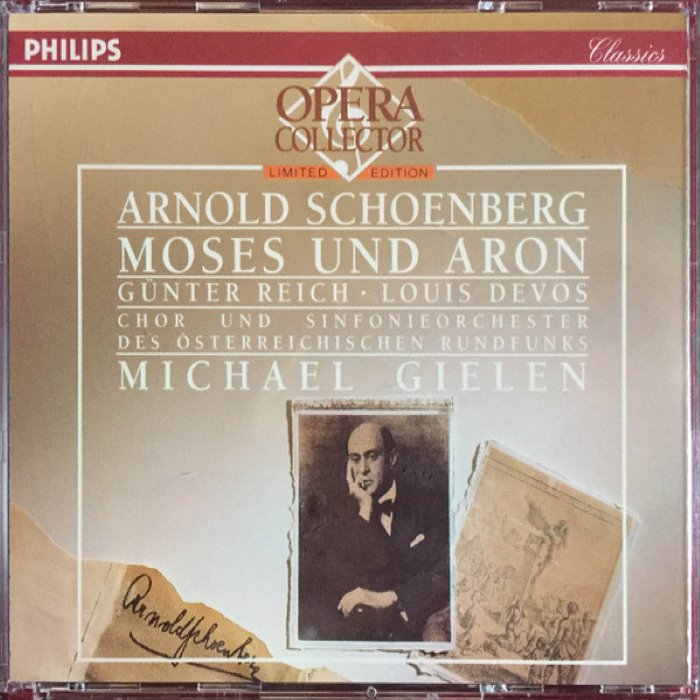
Moses und Aron (Chor und Sinfonieorchester des Österreichischen Rundfunks, feat. conductor: Michael Gielen, singers: Reich, Devos, Csapo, Obrowsky)
1974
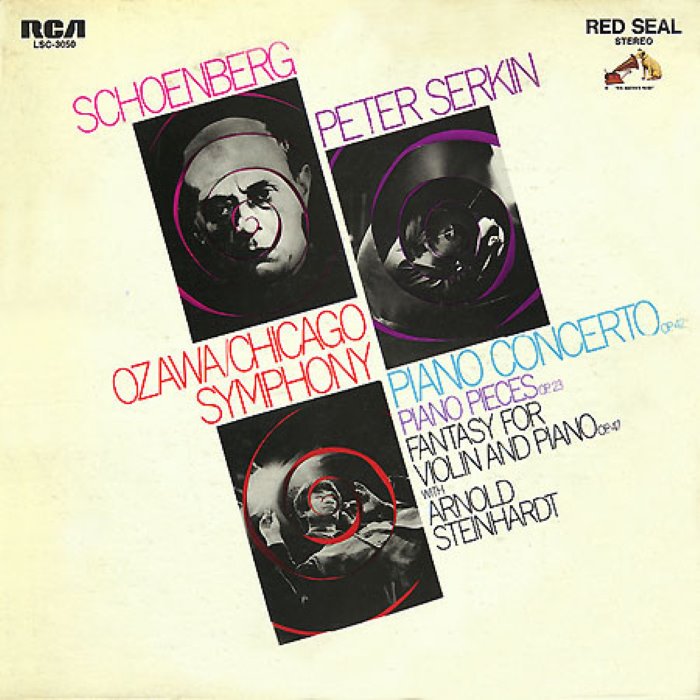
Piano Concerto Op. 42 / Piano Pieces Op. 23 / Fantasy For Violin And Piano Op. 47
1968
Upcoming shows
Community
More about Arnold Schönberg
About
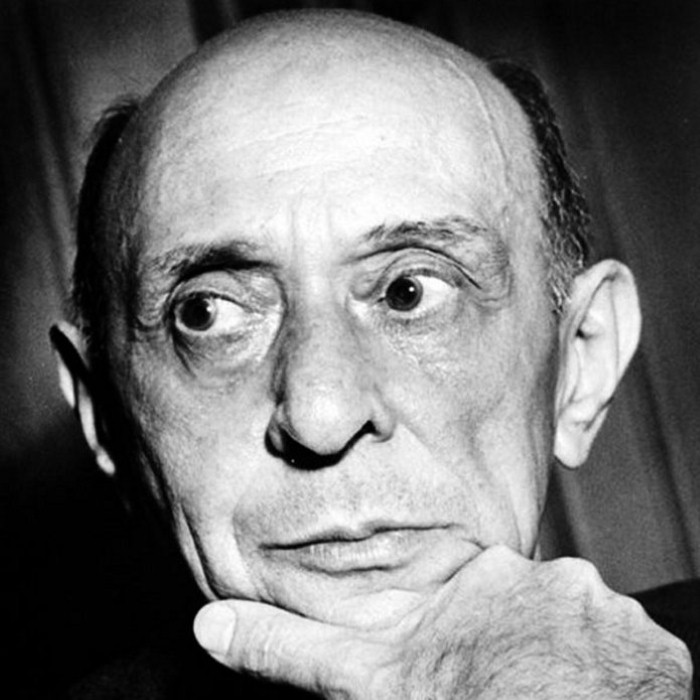
Arnold Schoenberg (German - 13 September 1874 – 13 July 1951) was an Austrian composer and painter, associated with the expressionist movement in German poetry and art, and leader of the Second Viennese School. He used the standard German spelling Schönberg until after his move to the United States in 1934 (Steinberg 1995, 463), whereupon he altered it to Schoenberg "in deference to American practice" (Foss 1951, 401), though one writer claims he made the change a year earlier (Ross 2007, 45). Schoenberg's approach, both in terms of harmony and development, is among the major landmarks of 20th-century musical thought; at least three generations of composers in the European and American traditions have consciously extended his thinking or, in some cases, passionately reacted against it. During the rise of the Nazi Party in Austria, his music was labeled as degenerate.
Read moreRead less
Schoenber was widely known early in his career for his success in simultaneously extending the traditionally opposed German Romantic styles of Brahms and Wagner. Later, his name would come to personify pioneering innovations in atonality (although Schoenberg himself detested the term "atonality" as inaccurate in describing his intentions) that would become the most polemical feature of 20th-century art music. In the 1920s, Schoenberg developed the twelve-tone technique, a widely influential compositional method of manipulating an ordered series of all twelve notes in the chromatic scale. He also coined the term developing variation, and was the first modern composer to embrace ways of developing motifs without resorting to the dominance of a centralized melodic idea. Schoenberg was also a painter, an important music theorist, and an influential teacher of composition; his students included Alban Berg, Anton Webern, Hanns Eisler, Egon Wellesz, and later John Cage, Lou Harrison, Earl Kim, Leon Kirchner, and other prominent musicians. Many of Schoenberg's practices, including the formalization of compositional method, and his habit of openly inviting audiences to think analytically, are echoed in avant-garde musical thought throughout the 20th century. His often polemical views of music history and aesthetics were crucial to many significant 20th-century musicologists and critics, including Theodor W. Adorno, Charles Rosen and Carl Dahlhaus, as well as the pianists Artur Schnabel, Rudolf Serkin, Eduard Steuermann and Glenn Gould.
Arnold Schönberg in brief
- How many Arnold Schönberg releases are on Riffiter?
- 19 releases are catalogued, spanning 1968 to 2007.
- When was Arnold Schönberg formed?
- Arnold Schönberg formed in 1874, in Austrian.
- What is the most recent Arnold Schönberg release on Riffiter?
- The Music of Arnold Schönberg, Vol. 4: The Complete Music for Solo Piano / Songs for Voice & Piano: Opus 1 Two Songs / Opus 2 Four Songs / Opus 15 Book of the Hanging Gardens, released in 2007.