

Anton Webern
Anton Webern is a contemporary classical artist. 13 releases are catalogued on Riffiter.
- 13
- Releases
- 1971–1995
- Active years
Discography
13Rank them 1 vs 1 →Two covers at a time. Pick the one you rate higher, we build the order.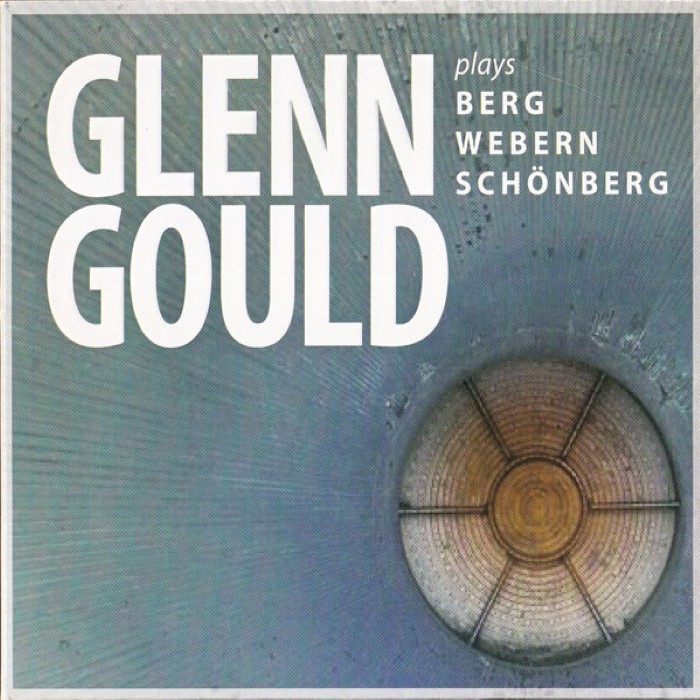
Most popular
Glenn Gould Plays Schoenberg, Berg, Webern
1995 · 16 tracks
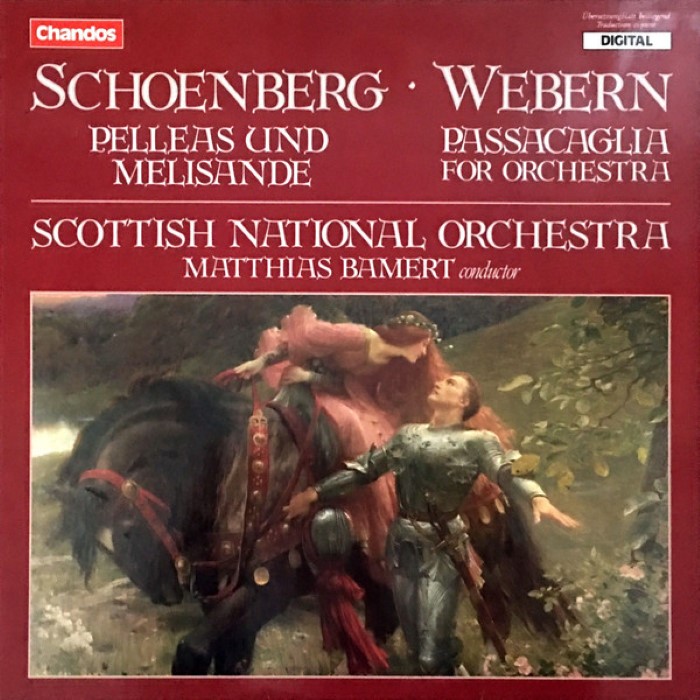
Schoenberg: Pelleas und Melisande / Webern: Passacaglia
1994
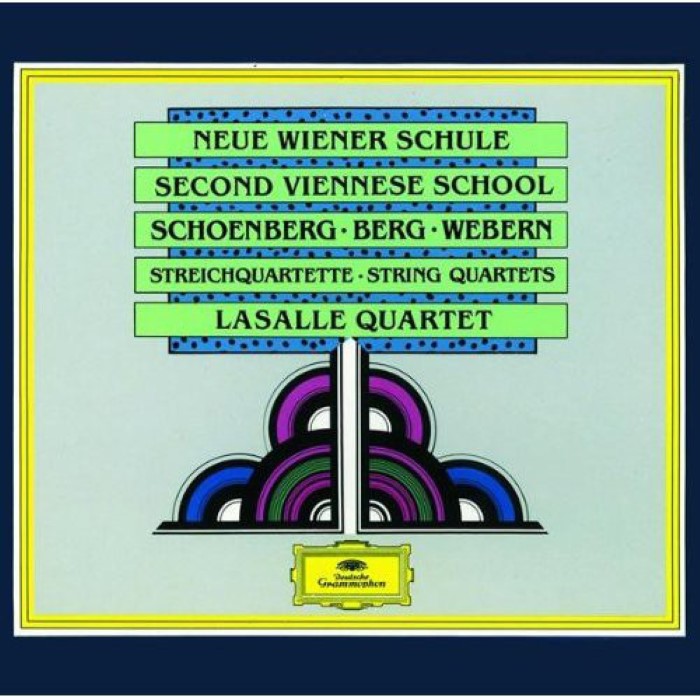
Streichquartette
1994
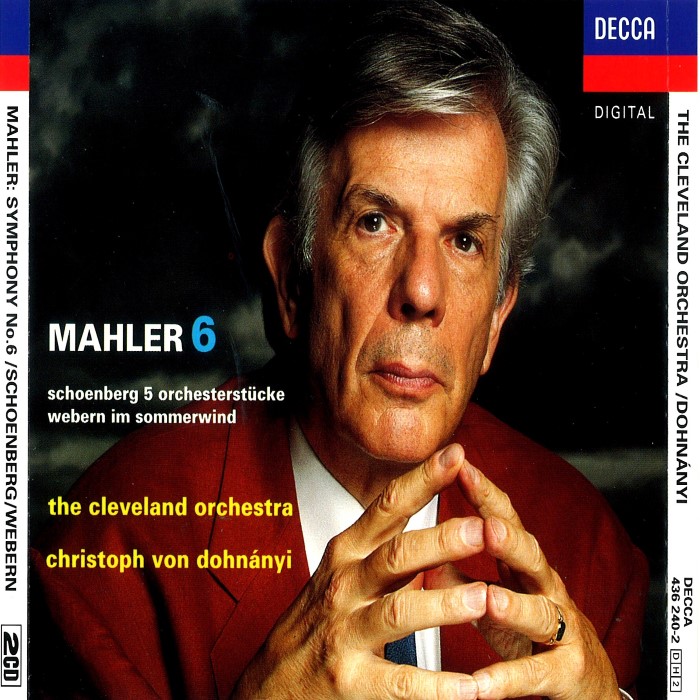
Mahler 6 / Schoenberg: 5 Orchesterstücke / Webern: Im sommerwind
1993
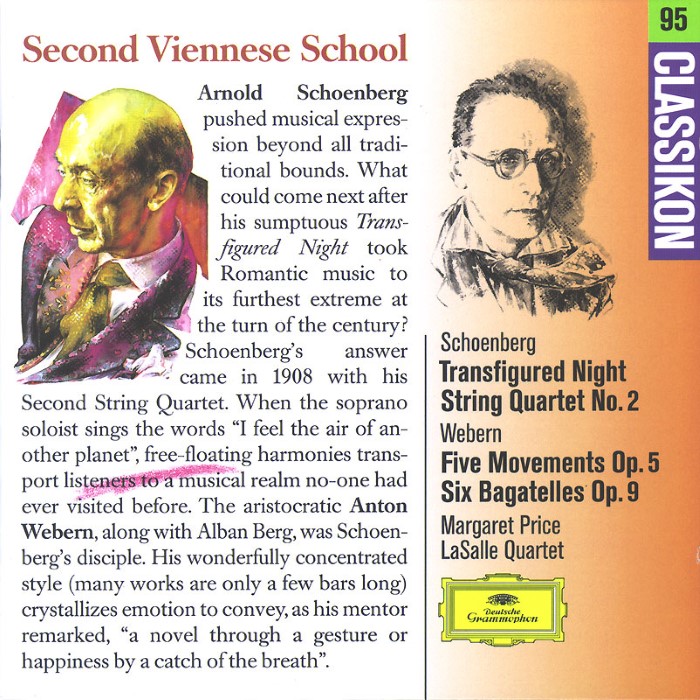
Neue Wiener Schule
1993
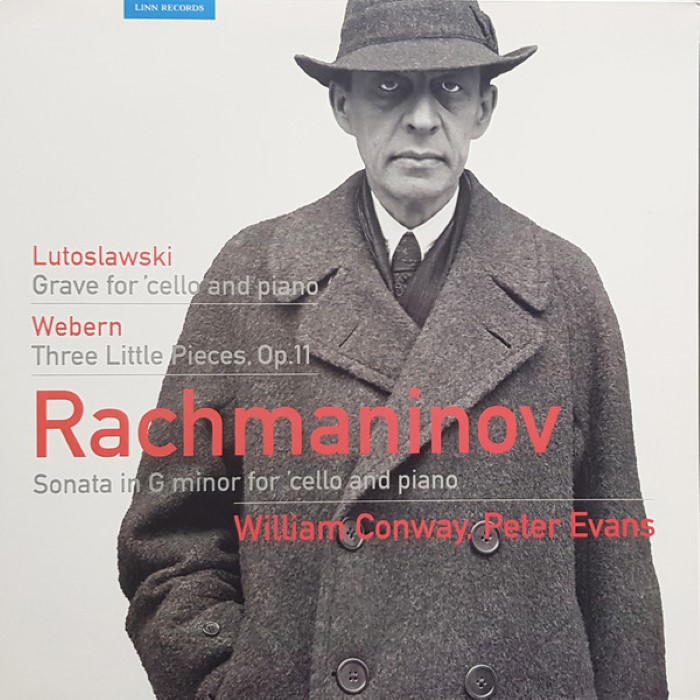
Lutosławski: Grave / Webern: Three Little Pieces / Rachmaninov: Sonata for Cello and Piano in G minor
1992
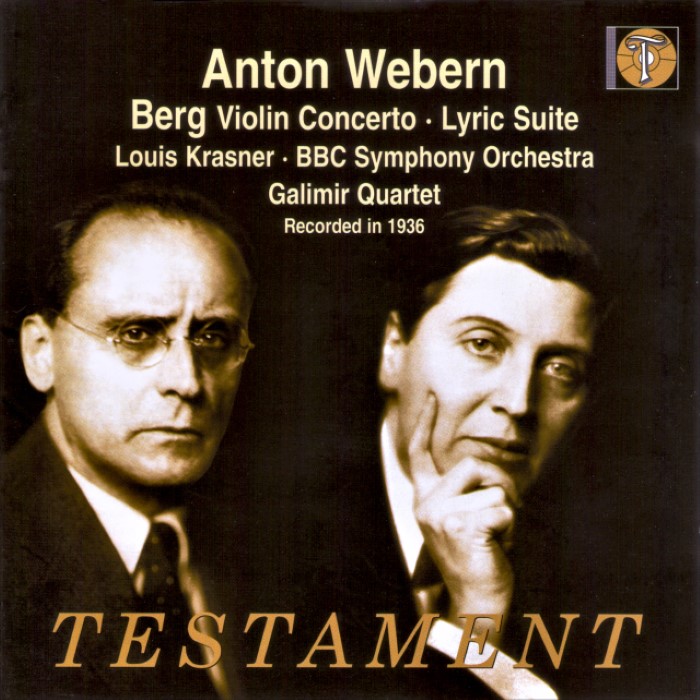
Violin Concerto / Lyric Suite
1991
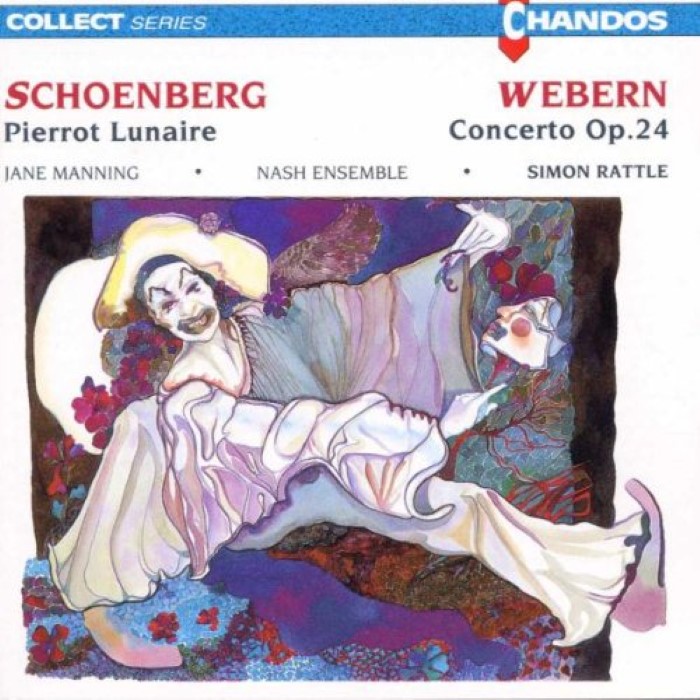
Schoenberg: Pierrot Lunaire / Webern: Concerto, op. 24
1991
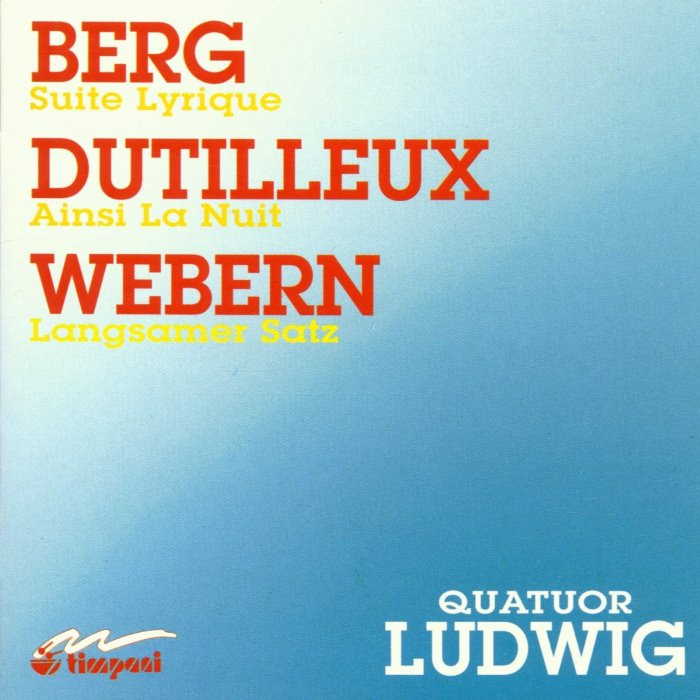
Berg: Suite lyrique / Dutilleux: Ainsi la nuit / Webern: Langsamer Satz
1991
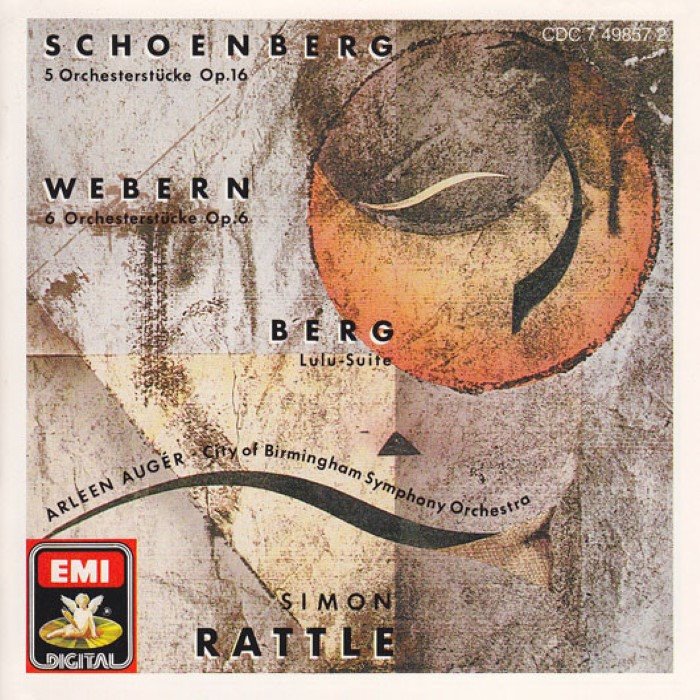
Schoenberg: 5 Orchesterstücke, op. 16 / Webern: 6 Orchesterstücke, op. 6 / Berg: Lulu-Suite
1989
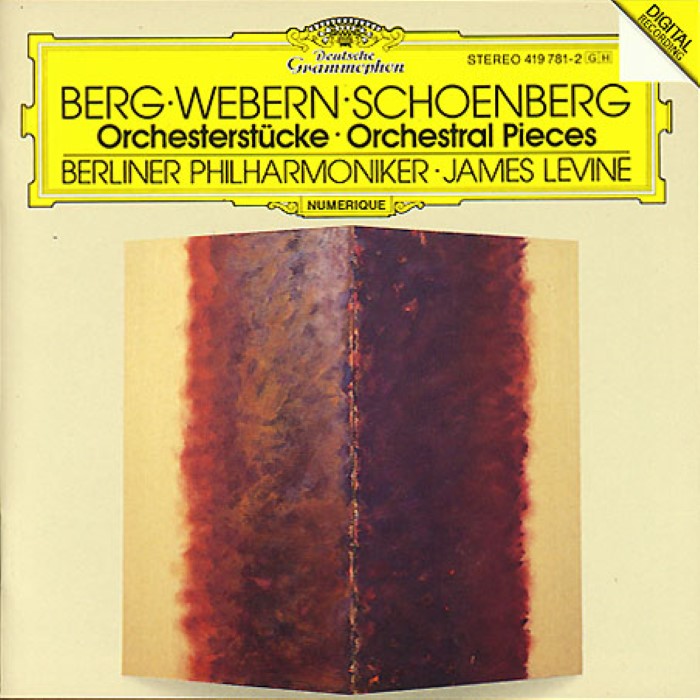
Orchesterstücke
1987
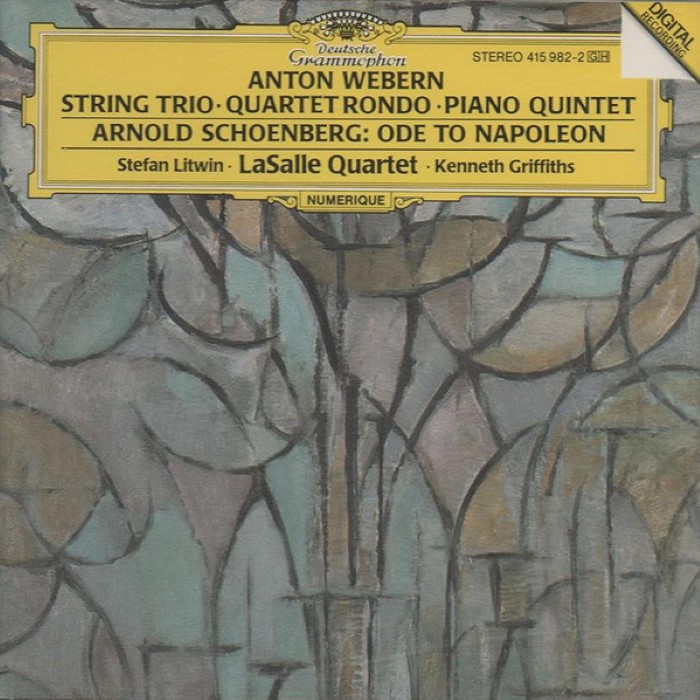
Webern: String Trio / Quartet Rondo / Piano Quintet / Schoenberg: Ode to Napoleon
1986
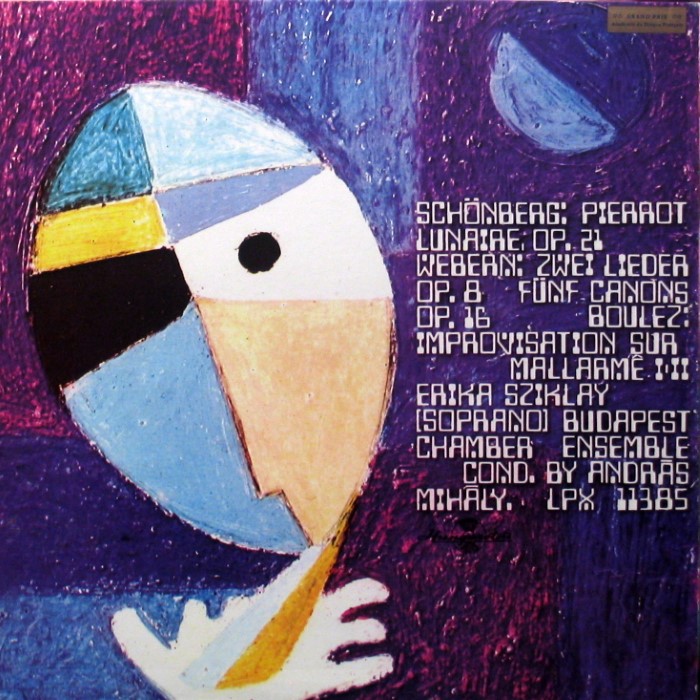
Schoenberg: Pierrot Lunaire / Webern: Zwei Lieder, op. 8 / Fünf Canon, op. 16 / Boulez: Improvisation sur Mallarmé
1971
Appears on
1Releases by other artists featuring Anton Webern.

Featured tracks
3 Webern: Variations for Piano, Op. 27: I. Sehr mäßigDallas Symphony Orchestra · Tsontakis: Man of Sorrows – Berg: Piano Sonata – Webern: Variations
- Webern: Variations for Piano, Op. 27: II. Sehr schnellDallas Symphony Orchestra · Tsontakis: Man of Sorrows – Berg: Piano Sonata – Webern: Variations
- Webern: Variations for Piano, Op. 27: III. Ruhig fließendDallas Symphony Orchestra · Tsontakis: Man of Sorrows – Berg: Piano Sonata – Webern: Variations
Collaborators
1
Upcoming shows
Community
More about Anton Webern
Anton Webern at a glance
- Born in
- Vienna
- From
- Austria
- Active since
- 1908
- Instruments
- piano
- Member of
- Second Viennese School
- Labels
- Deutsche Grammophon, Philips Records, Naxos, Supraphon
- Educated at
- University of Vienna
- Family
- Benno Mattel
Facts from Wikidata (CC0). Children listed are those with their own public record, so the list may be incomplete.
About
Anton Friedrich Wilhelm von Webern (3 December 1883 – 15 September 1945) was an Austrian composer and conductor. Along with his mentor Arnold Schoenberg and his colleague Alban Berg, Webern was in the core of those in the circle of the Second Viennese School, including Ernst Krenek and Theodor W. Adorno. As an exponent of atonality and twelve-tone technique, Webern exerted influence on contemporaries Luigi Dallapiccola, Křenek, and even Schoenberg himself. As a tutor, Webern guided and variously influenced Arnold Elston, Frederick Dorian (Friederich Deutsch), Matty Niël, Fré Focke, Karl Amadeus Hartmann, Philipp Herschkowitz, René Leibowitz, Humphrey Searle, Leopold Spinner, and Stefan Wolpe.
Read moreRead less
Webern's music was among the most radical of its milieu, both in its concision and in its rigorous and resolute apprehension of twelve-tone technique. His innovations in schematic organization of pitch, rhythm, register, timbre, dynamics, articulation, and melodic contour; his eagerness to redefine imitative contrapuntal techniques such as canon and fugue; and his inclination toward athematicism, abstraction, and lyricism all greatly informed and oriented intra- and post-war European, typically serial or avant-garde composers such as Olivier Messiaen, Pierre Boulez, Karlheinz Stockhausen, Luigi Nono, Bruno Maderna, Henri Pousseur, and György Ligeti. In the United States, meanwhile, his music attracted the interest of Elliott Carter, whose critical ambivalence was marked by a certain enthusiasm nonetheless; Milton Babbitt, who ultimately derived more inspiration from Schoenberg's twelve-tone practice than that of Webern; and Igor Stravinsky, to whom it was very fruitfully reintroduced by Robert Craft. During and shortly after the post-war period, then, Webern was posthumously received with attention first diverted from his sociocultural upbringing and surroundings and, moreover, focused in a direction apparently antithetical to his participation in German Romanticism and Expressionism. A richer understanding of Webern began to emerge in the later half of the 20th century, notably in the work of scholars Kathryn Bailey, Julian Johnson, Felix Meyer, Anne Shreffler, as archivists and biographers (most importantly Hans and Rosaleen Moldenhauer) gained access to sketches, letters, lectures, audio recordings, and other articles of or associated with Webern's estate.
Anton Webern in brief
- How many Anton Webern releases are on Riffiter?
- 13 releases are catalogued, spanning 1971 to 1995.
- What genre is Anton Webern?
- Anton Webern is catalogued under Contemporary Classical, Classical.
- What is the most recent Anton Webern release on Riffiter?
- Glenn Gould Plays Schoenberg, Berg, Webern, released in 1995.