

Artist
Acoustic Alchemy
Acoustic Alchemy is a jazz artist from London formed in 1981. 21 releases are catalogued on Riffiter.
Jazz · London · Best jazz albums
- 21
- Releases
- 1987–2025
- Active years
- 1981
- Formed
Discography
20
Most popular
The Very Best of Acoustic Alchemy
2002 · 16 tracks
Radio Contact
2003

The Beautiful Game
2000
This Way
2007
AArt
2001
Live in London
2014
Roseland
2011

American/English
2005
Against the Grain
1994
Positive Thinking...
1998
Arcanum
1996
Natural Elements
1988
Early Alchemy
1992
The New Edge
1993
Back on the Case
1991
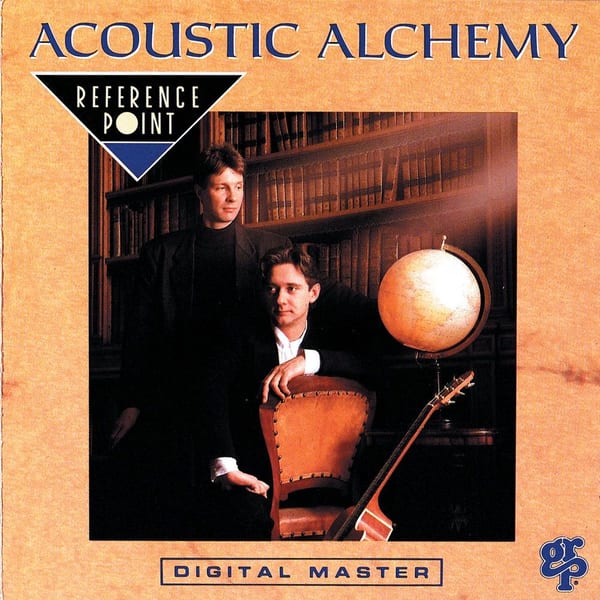
Reference Point
1990
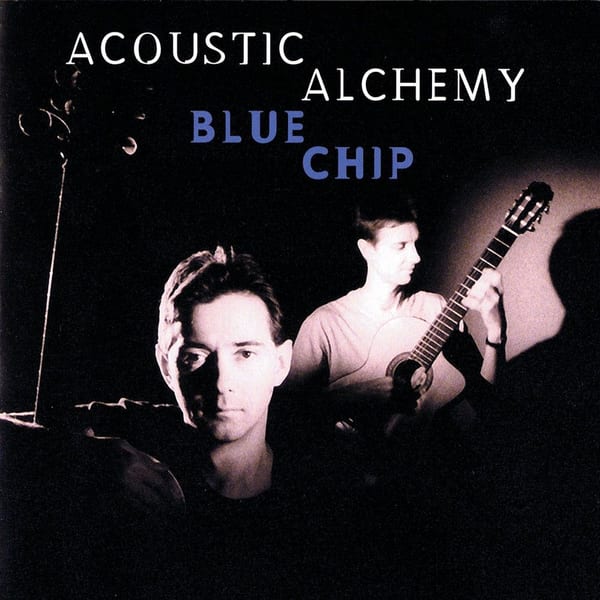
Blue Chip
1989

Thirty Three and a Third
2018

Red Dust & Spanish Lace
1995
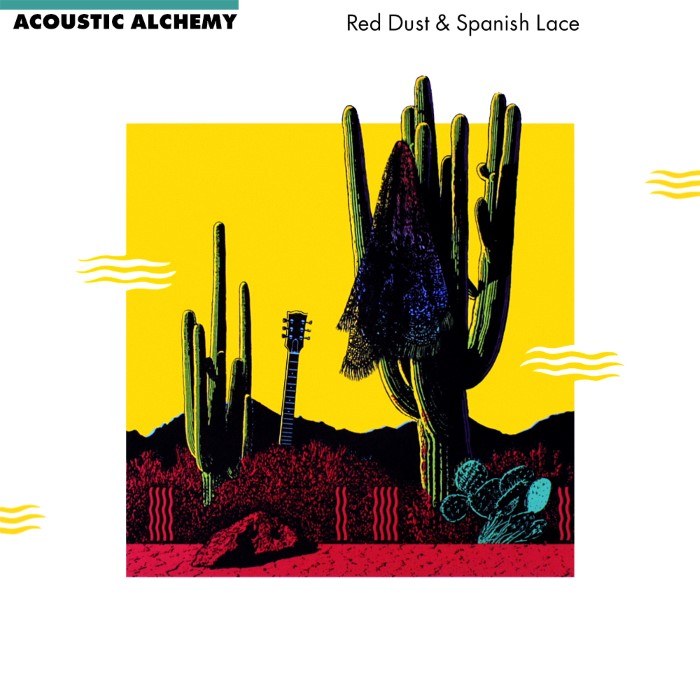
Red Dust and Spanish Lace
1987


Popular tracks
Trending this week
Singles & EPs
1
Upcoming shows
Past shows
Community
More about Acoustic Alchemy
About
Acoustic Alchemy is an English contemporary instrumental and smooth jazz band formed in England in the early 1980s (c. 1981), originally fronted by acoustic guitarists Nick Webb and Simon James. The band is currently fronted by Greg Carmichael and Miles Gilderdale. 1981–1989: Early days : Acoustic Alchemy was formed around the acoustic guitars of Simon James (nylon string) and Nick Webb (steel string), often backed up by double bass, percussion, and string quartet the Violettes. The band made two albums that were unprofitable. In the mid-1980s, James left, and in the 1990s he formed Kymaera, a similar, though more Latin oriented band.
Read moreRead less
In 1985, Webb discovered Greg Carmichael, a guitarist with a London pub band called the Holloways (not affiliated with the indie band of the same name) who became James' successor. The new pairing got work as an in-flight band on Virgin Atlantic flights to and from the United States. Six weeks after sending demos to MCA Records, the band was called to record their first album, which was released in 1987 titled Red Dust and Spanish Lace. Appearing on the album were Mario Argandoña on percussion and Bert Smaak on drums. The album was the first of many to be recorded at the Hansa Haus Studios, in Bonn, Germany, where they met sound engineer Klaus Genuit, who has worked on many of the band's albums. Two more albums followed with MCA: Natural Elements (1988) and Blue Chip (1989). The title track from Natural Elements became was the theme music for the BBC TV program Gardeners' World. 1990–1998: Mainstream success Acoustic Alchemy were soon moved to jazz label, GRP Records as MCA bought GRP in February 1990. Six more albums followed, starting with the Reference Point (1990), featuring a cover of "Take Five" by Dave Brubeck, and Back on the Case (1991). Webb also uncovered fourteen early tracks from 1982 to 1987, featuring Simon James, which were released as a compilation called Early Alchemy (1992). The New Edge (1993) and Against the Grain (1994) followed. For their eighth album, Arcanum (1996), the band re-recorded some of its popular tracks. The album was recorded in London's Pinewood Studios with the string section of the London Metropolitan Orchestra. The collection included three new tracks, "Columbia", "Something She Said", and "Chance Meeting". Personnel on the recording was Webb, Carmichael, Sheppard, Murphy and Parsons. It was produced by Aubry "Po" Powell, who worked with Pink Floyd, Paul McCartney, Jimmy Page, and Robert Plant. Positive Thinking (1998) was to be Acoustic Alchemy's last album with original frontman Nick Webb. It was recorded over a week's time in a Manor House near Bath, England in Monkton Combe. Recorded by Steve Jones, the musicians were Greg Carmichael (guitar), John Sheppard (drums), and Dennis Murphy (bass). Webb was diagnosed with pancreatic cancer before working on the album and became worse throughout the project. In the end, he could only offer inspiration, as he was too weak to play at recording sessions. He died on 5 February 1998. 1999: Reform and changes After Webb's death, Greg Carmichael brought in Miles Gilderdale as his partner, and the band moved label to EMI's Higher Octave Music. The debut album on the label, The Beautiful Game, (2000) was more experimental, borrowing from several genres of music. It featured the introduction of Anthony "Fred" White on keyboards. AArt (2001) was released a year later. With assistance from saxophonist Jeff Kashiwa, it was nominated for a Grammy Award for Best Contemporary Instrumental Album. Their 1990 album Reference Point was also nominated for a Grammy. Radio Contact (2003), featured the band's first track to include a vocal, "Little Laughter", performed by Jo Harrop. Harrop was a backing vocalist, found by Gilderdale while doing a session with Latin singer Enrique Iglesias. Early in 2006, bassist Frank Felix left the band to concentrate on other projects. The position was filled by two bass players: former Incognito and Down to the Bone bassist, Julian Crampton for UK dates and guitarist Gary Grainger (brother of longtime drummer Greg Grainger) in the US. GRP re-released a documentary-style video of Acoustic Alchemy entitled Best Kept Secret on 25 July 2006. It was released in DVD format and contained archived live and documentary footage, featuring Nick Webb. A Region Free version, for international fans, was released 25 September 2006. This Way (2007) featured guest appearances from trumpeter Rick Braun and Down to the Bone. Roseland followed in 2011.
Acoustic Alchemy in brief
- How many Acoustic Alchemy releases are on Riffiter?
- 21 releases are catalogued, spanning 1987 to 2025.
- When was Acoustic Alchemy formed?
- Acoustic Alchemy formed in 1981, in London.
- What genre is Acoustic Alchemy?
- Acoustic Alchemy is catalogued under Jazz.
- What is the most recent Acoustic Alchemy release on Riffiter?
- The Empire of Lights, released in 2025.